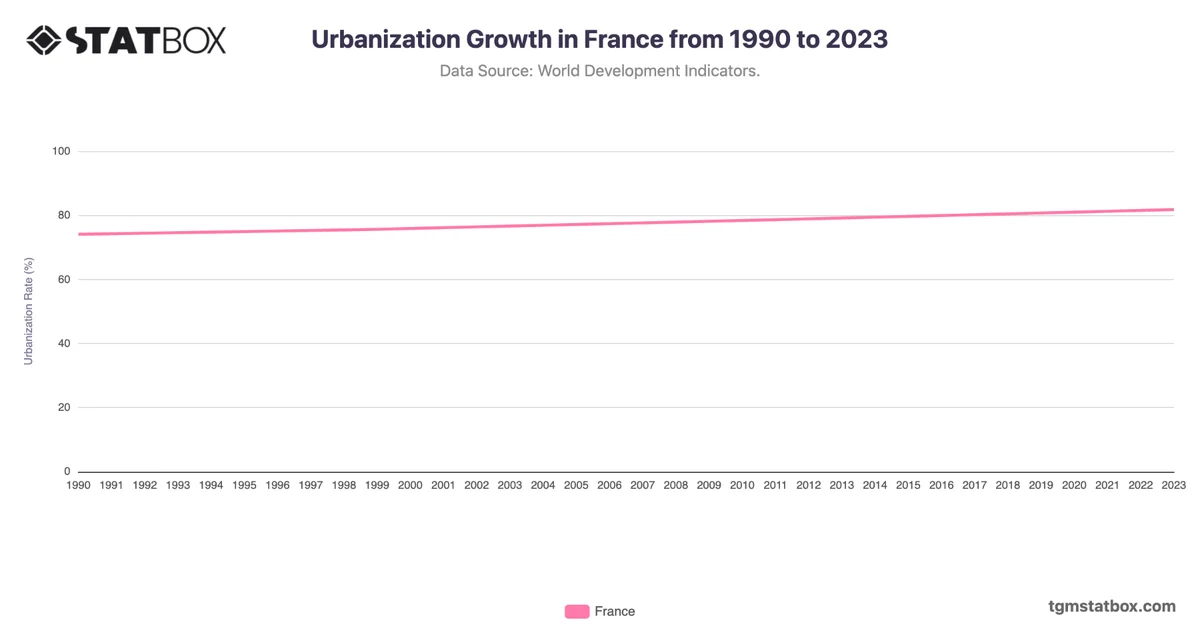
France's median age has steadily increased from 36.7 years in 2000 to a forecasted 43 years by 2030, reflecting an aging population influenced by high life expectancy and lower birth rates in urban settings. By 2010, the median age had reached 39.0, a shift driven by urbanization and social policies encouraging smaller family units. France’s robust healthcare and social services have also supported longer life expectancies, particularly in urban areas with access to advanced healthcare and economic resources.
As of 2023, the median age is 41.8, and this number is set to rise steadily, underscoring the implications of an aging populace. By 2030, the demographic shift points to a more mature population structure that may influence economic and healthcare policy. The shift in France’s median age highlights the combined effects of urbanization, lifestyle changes, and healthcare improvements on the country’s aging demographic.
As of 2023, the median age is 41.8, and this number is set to rise steadily, underscoring the implications of an aging populace. By 2030, the demographic shift points to a more mature population structure that may influence economic and healthcare policy. The shift in France’s median age highlights the combined effects of urbanization, lifestyle changes, and healthcare improvements on the country’s aging demographic.
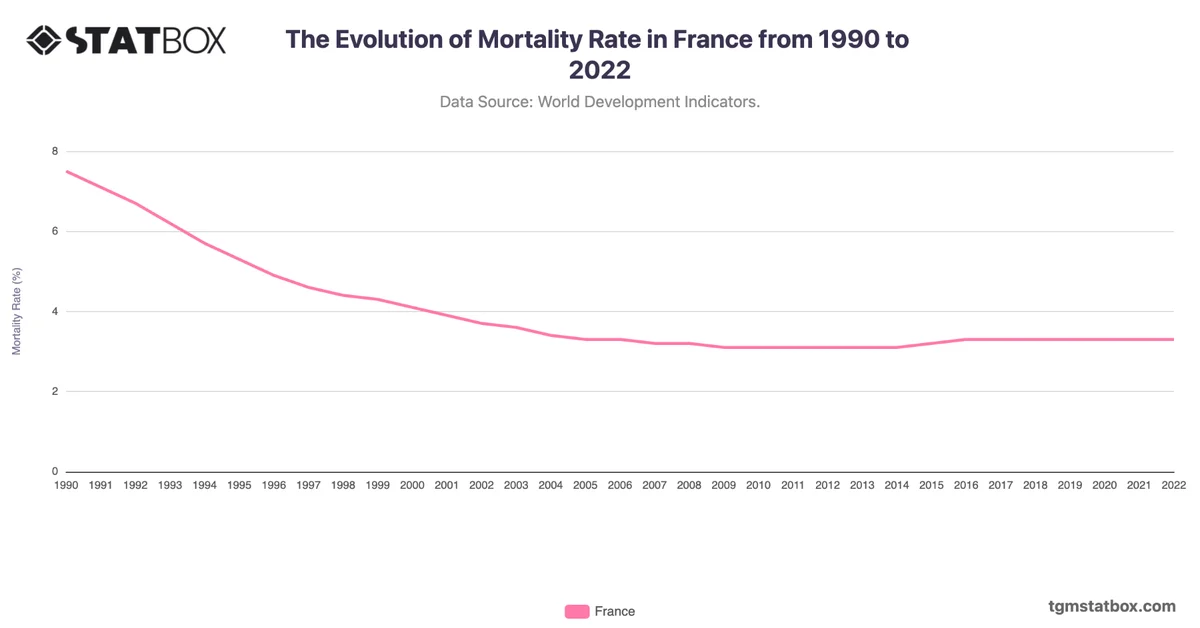
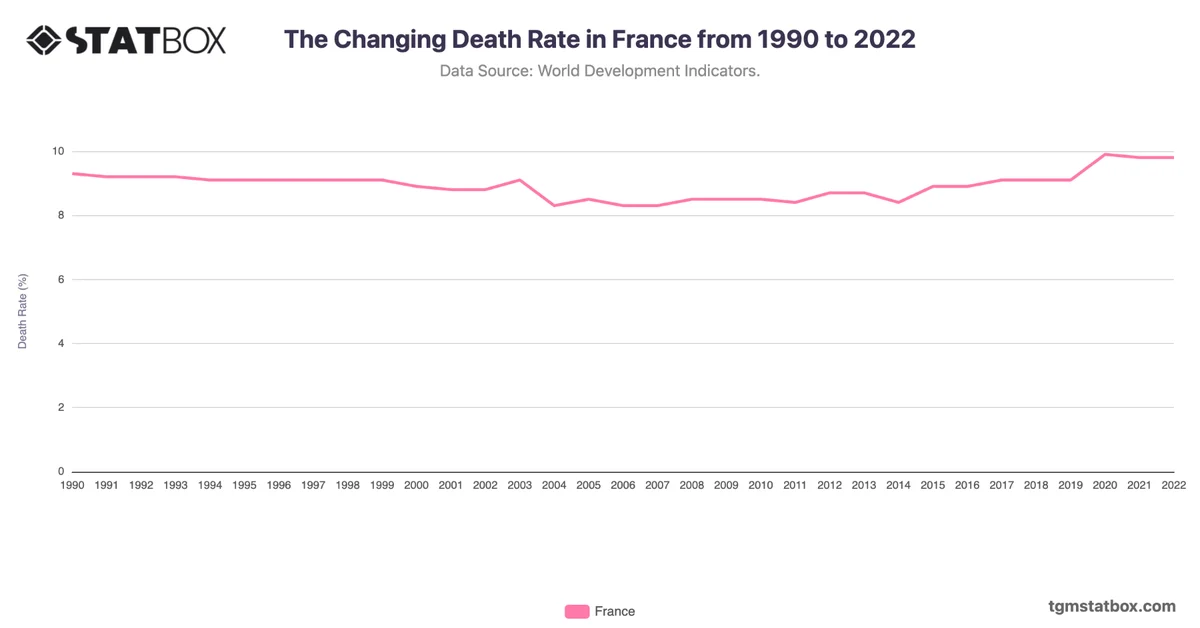
For a deeper dive into the topic, explore shifts in France’s death rate, life span at birth in France, France’s mortality rate trend.