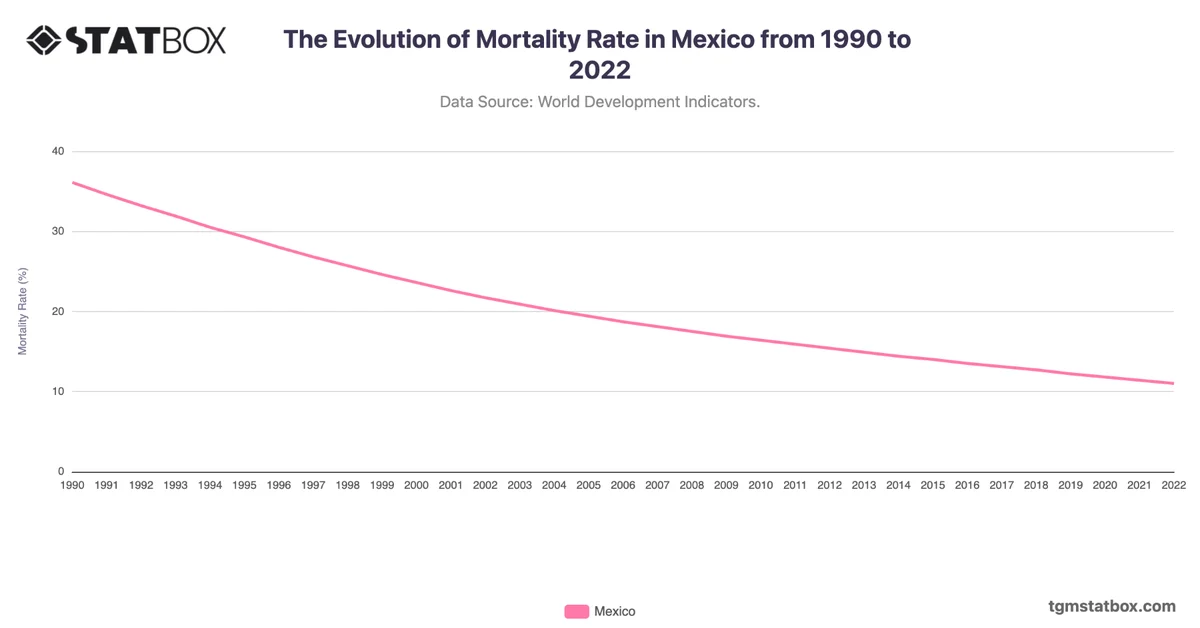
Mexico's death rate showed a gradual decline from 5.8 in 1990 to 4.9 by 2002, reflecting improvements in healthcare access, public health initiatives, and economic growth. However, a steady increase began in 2015, reaching 6.9 in 2019. This rise is linked to factors such as an aging population, chronic disease prevalence, and public health challenges, including violence and limited rural healthcare infrastructure.
The sharp spike to 9.3 in 2020 and 9.4 in 2021 correlates with the COVID-19 pandemic, which heavily impacted Mexico due to healthcare strain and high mortality rates. By 2022, the rate decreased to 6.7, indicating partial recovery, though underlying healthcare system weaknesses remain a concern.
The sharp spike to 9.3 in 2020 and 9.4 in 2021 correlates with the COVID-19 pandemic, which heavily impacted Mexico due to healthcare strain and high mortality rates. By 2022, the rate decreased to 6.7, indicating partial recovery, though underlying healthcare system weaknesses remain a concern.
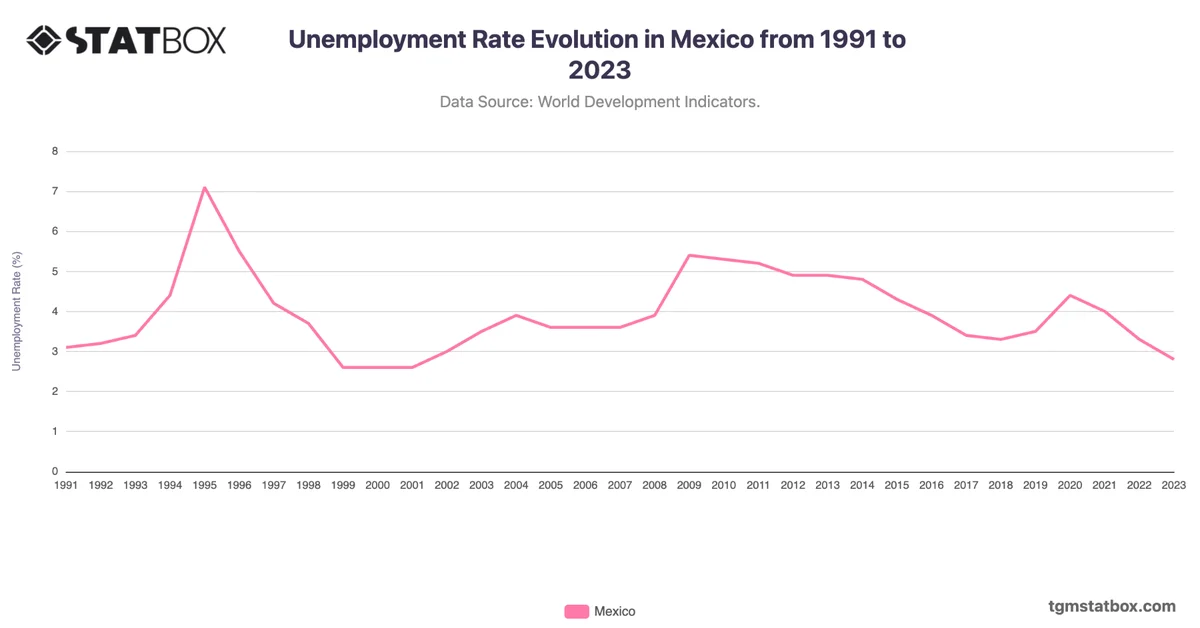
For a broader context, visit other statistics on Mexico’s population growth rate, Mexico’s unemployment rate trends, Mexico’s mortality rate trend.