Indonesia’s fertility rate showed a consistent decline from 1990 to 2022, moving from 3.1 in 1990 to 2.2 by 2022. This downward trend is largely attributed to the government's family planning initiatives, such as the “Dua Anak Cukup” (Two Children Are Enough) campaign. Economic growth and improved access to education, particularly for women, also contributed to declining birth rates.
The slight stagnation in fertility rates around 2006–2012 at 2.5 suggests a period of slower programmatic effectiveness or cultural resistance to further reductions. Despite the decline, Indonesia’s fertility rate remains above replacement level, reflecting its large, youthful population base and diverse socio-economic challenges.
The slight stagnation in fertility rates around 2006–2012 at 2.5 suggests a period of slower programmatic effectiveness or cultural resistance to further reductions. Despite the decline, Indonesia’s fertility rate remains above replacement level, reflecting its large, youthful population base and diverse socio-economic challenges.
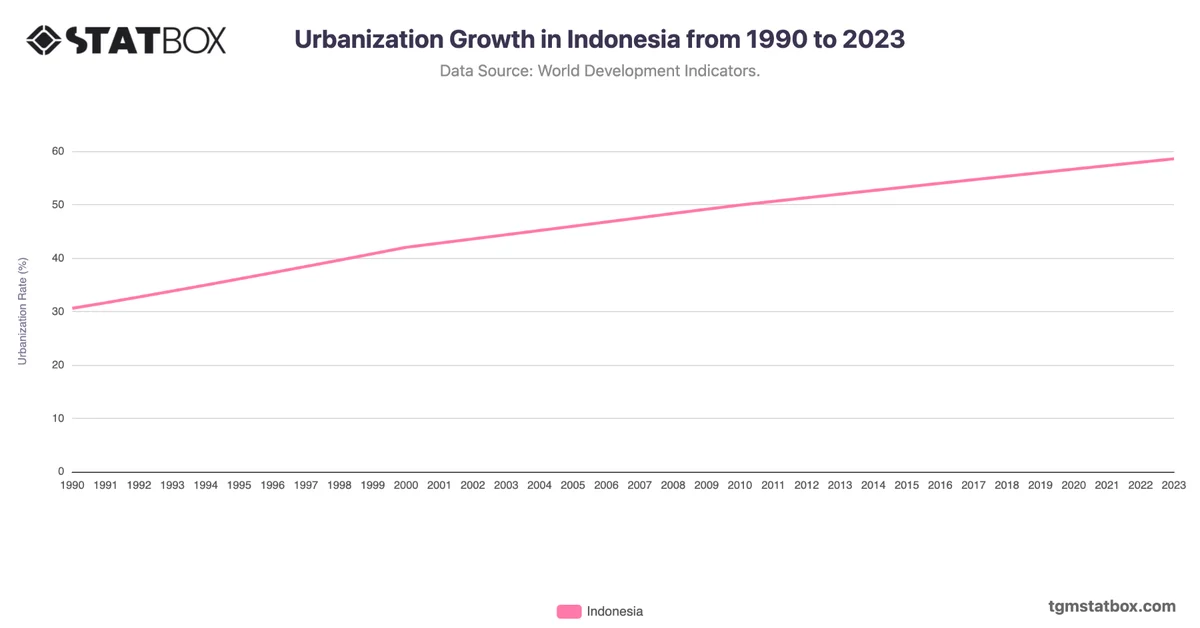
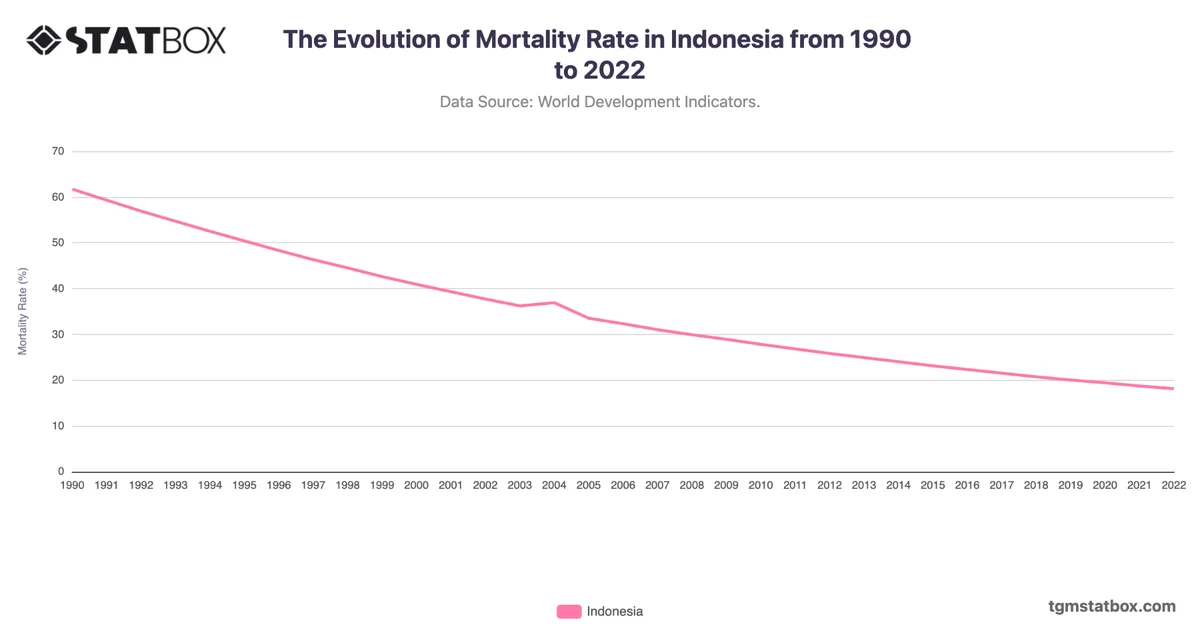
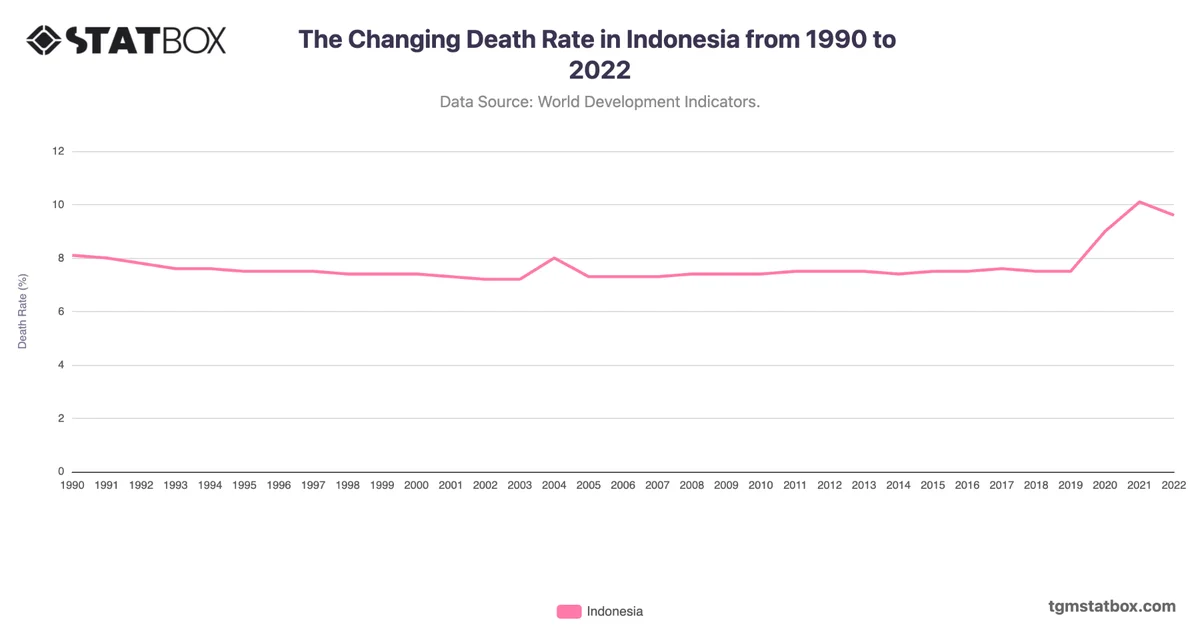
Discover additional trends and data on Indonesia’s population growth trends, Indonesia’s urbanization increase, Indonesia’s mortality rate trend.