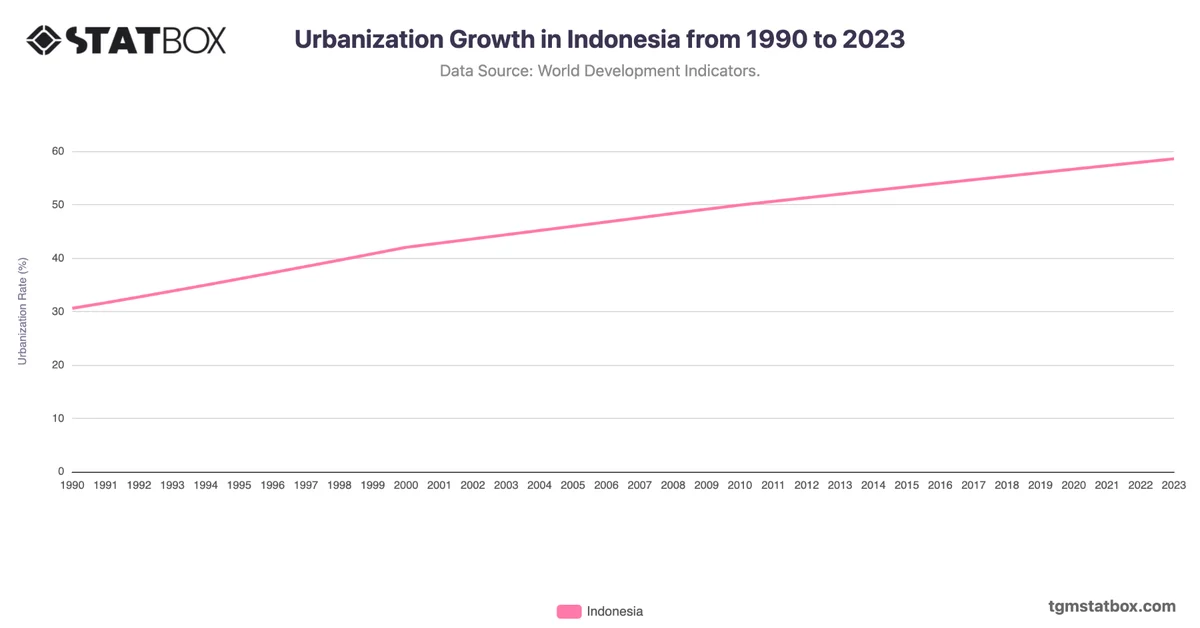
Indonesia’s population density steadily increased from 101 people per square kilometer in 1990 to 145 in 2021, driven by robust urbanization and population growth. Major cities such as Jakarta, Surabaya, and Bandung saw significant population increases due to rural-to-urban migration and a youthful population. By the early 2000s, urban density surged, reflecting Indonesia's rapid economic growth and urban sprawl, especially on the densely populated island of Java.
From 2010 onward, density continued to rise as urban centers expanded to accommodate population growth. Despite the increase, the government has introduced measures to decentralize population centers, shifting development focus to other islands such as Sumatra and Sulawesi. However, Java remains a primary hub of population concentration, contributing to Indonesia’s high national density, especially in recent years as urban areas absorb population increases.
From 2010 onward, density continued to rise as urban centers expanded to accommodate population growth. Despite the increase, the government has introduced measures to decentralize population centers, shifting development focus to other islands such as Sumatra and Sulawesi. However, Java remains a primary hub of population concentration, contributing to Indonesia’s high national density, especially in recent years as urban areas absorb population increases.
For a broader context, visit other statistics on Indonesia’s median population age, Indonesia’s population figures, Indonesia’s population growth trends.