Singapore's military expenditure reflects its strategic imperative of maintaining a strong defense as a small, resource-limited nation. In the early years of its independence, spending hovered around 5%, peaking at 5.7% in 1977. This focus stemmed from Singapore’s vulnerability and the need to build a robust military capability.
Over time, expenditure decreased as the economy grew and defense efficiency improved. By the 2000s, spending stabilized around 3%, reflecting sustained investment in advanced technology and training rather than sheer volume. The consistent rate of 2.8% from 2018 to 2022 underscores Singapore's approach of maintaining readiness while aligning with economic priorities.
Over time, expenditure decreased as the economy grew and defense efficiency improved. By the 2000s, spending stabilized around 3%, reflecting sustained investment in advanced technology and training rather than sheer volume. The consistent rate of 2.8% from 2018 to 2022 underscores Singapore's approach of maintaining readiness while aligning with economic priorities.
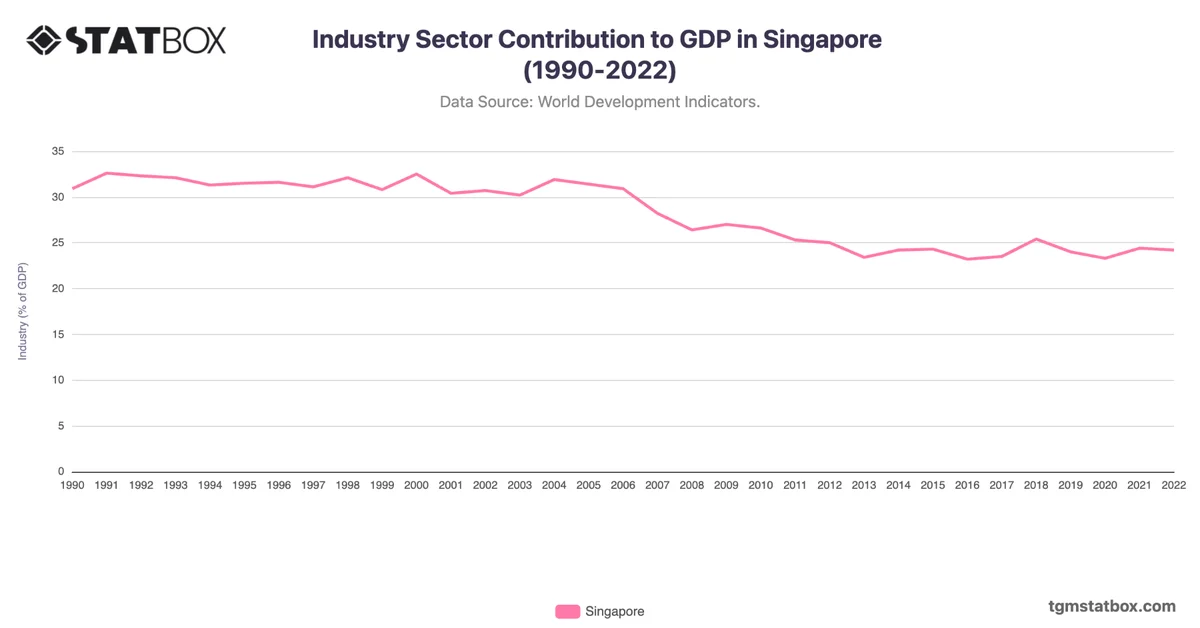
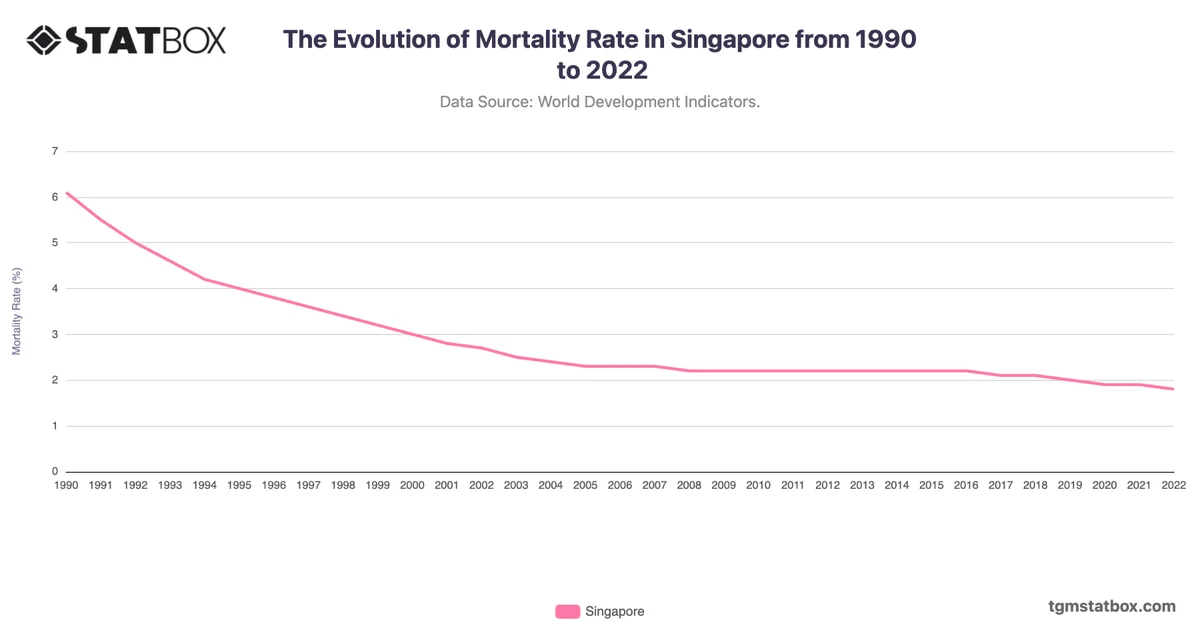
Gain a broader perspective by reviewing Singapore’s mortality rate changes, Singapore’s agriculture sector share, Singapore’s manufacturing sector share in GDP.