Nigeria's military spending has mirrored its political history, particularly during periods of conflict and regime change. Expenditure surged dramatically from 1.1% of GDP in 1966 to 10.3% in 1969 during the Nigerian Civil War (1967–1970), reflecting the resource demands of this prolonged conflict. After the war, spending sharply declined to 3.3% by 1980 as the country transitioned to post-conflict recovery and economic development.
Throughout the 1980s and 1990s, military expenditure dropped to less than 1% of GDP, driven by economic downturns and political instability. However, spending increased marginally in the early 2000s, influenced by the rise of insurgencies like Boko Haram. Recent years saw a moderate rise, reaching 1.0% in 2021, before falling to 0.6% in 2022, indicating ongoing security challenges but a focus on economic stabilization.
Throughout the 1980s and 1990s, military expenditure dropped to less than 1% of GDP, driven by economic downturns and political instability. However, spending increased marginally in the early 2000s, influenced by the rise of insurgencies like Boko Haram. Recent years saw a moderate rise, reaching 1.0% in 2021, before falling to 0.6% in 2022, indicating ongoing security challenges but a focus on economic stabilization.
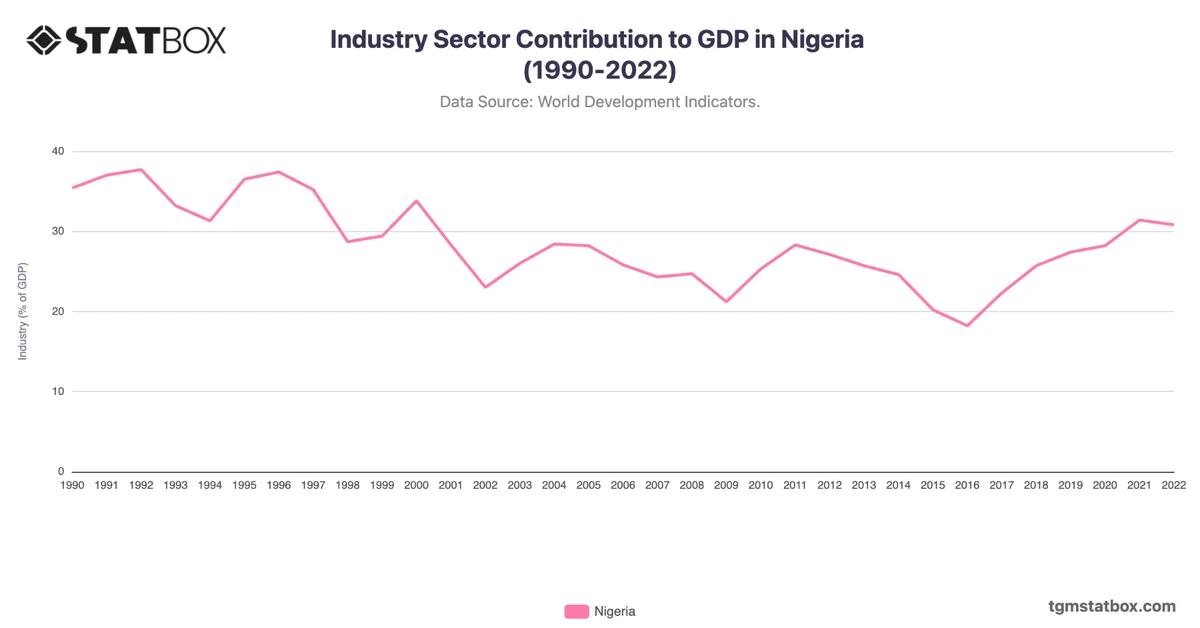
Gain a broader perspective by reviewing Nigeria’s industry sector GDP contribution, Nigeria’s annual GDP growth rate, Nigeria’s military personnel history.