The chart shows a gradual decline in growth rates over the decades, reflecting Morocco’s demographic shift towards lower fertility and urbanization.
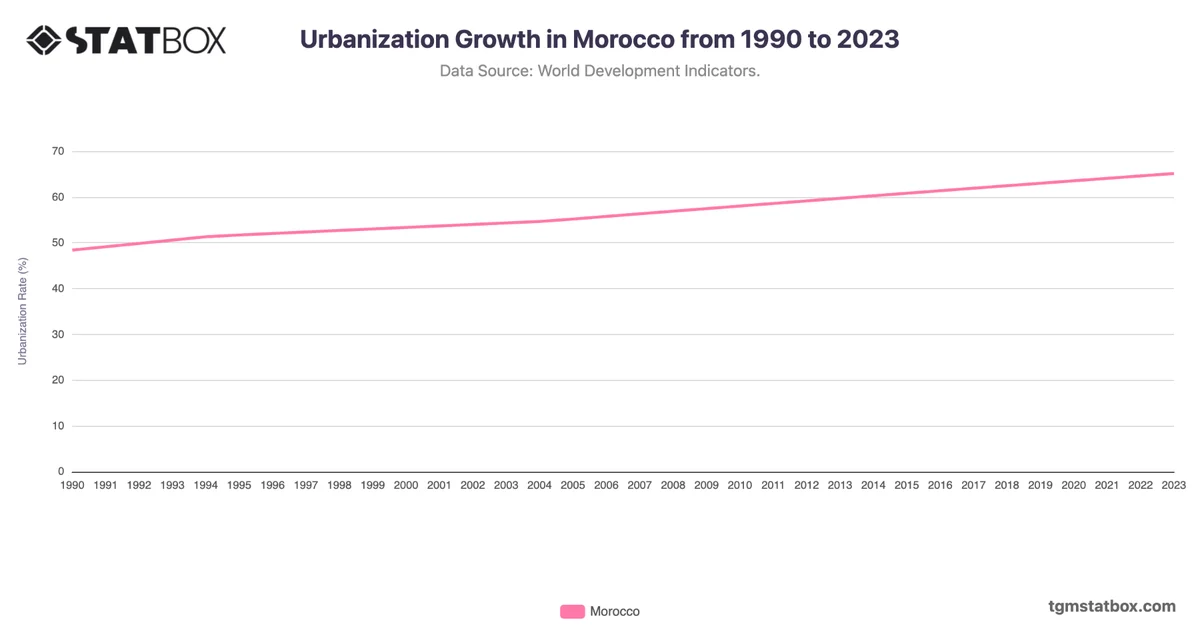
In 1990, Morocco’s population growth rate stood at 1.7%, but it began a steady decline in the early 1990s, reaching 1.3% by 2000. This initial drop corresponds to increased urbanization and greater access to family planning, leading to smaller family sizes and slower population expansion. Economic factors and shifting social norms also played a role as Morocco’s population increasingly moved to urban centers, where larger families are less common.
Through the 2000s, the growth rate remained relatively stable, averaging around 1.3%, with only minor fluctuations as Morocco’s healthcare and living standards improved. From 2016 onward, a gradual downward trend resumed, reaching 1.0% by 2023. This recent decline is influenced by continued urbanization, improvements in education, and evolving family dynamics that favor fewer children.
In 1990, Morocco’s population growth rate stood at 1.7%, but it began a steady decline in the early 1990s, reaching 1.3% by 2000. This initial drop corresponds to increased urbanization and greater access to family planning, leading to smaller family sizes and slower population expansion. Economic factors and shifting social norms also played a role as Morocco’s population increasingly moved to urban centers, where larger families are less common.
Through the 2000s, the growth rate remained relatively stable, averaging around 1.3%, with only minor fluctuations as Morocco’s healthcare and living standards improved. From 2016 onward, a gradual downward trend resumed, reaching 1.0% by 2023. This recent decline is influenced by continued urbanization, improvements in education, and evolving family dynamics that favor fewer children.
For additional information, visit statistics on Morocco’s median population age, Military personnel proportion in Morocco, Morocco’s urbanization rate.