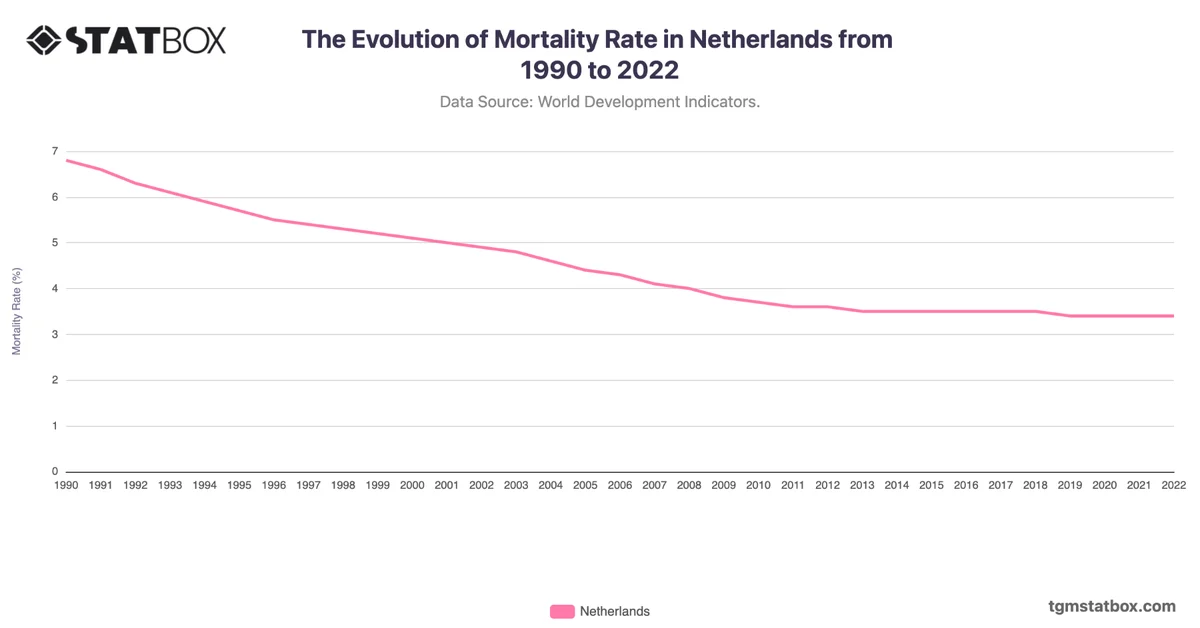
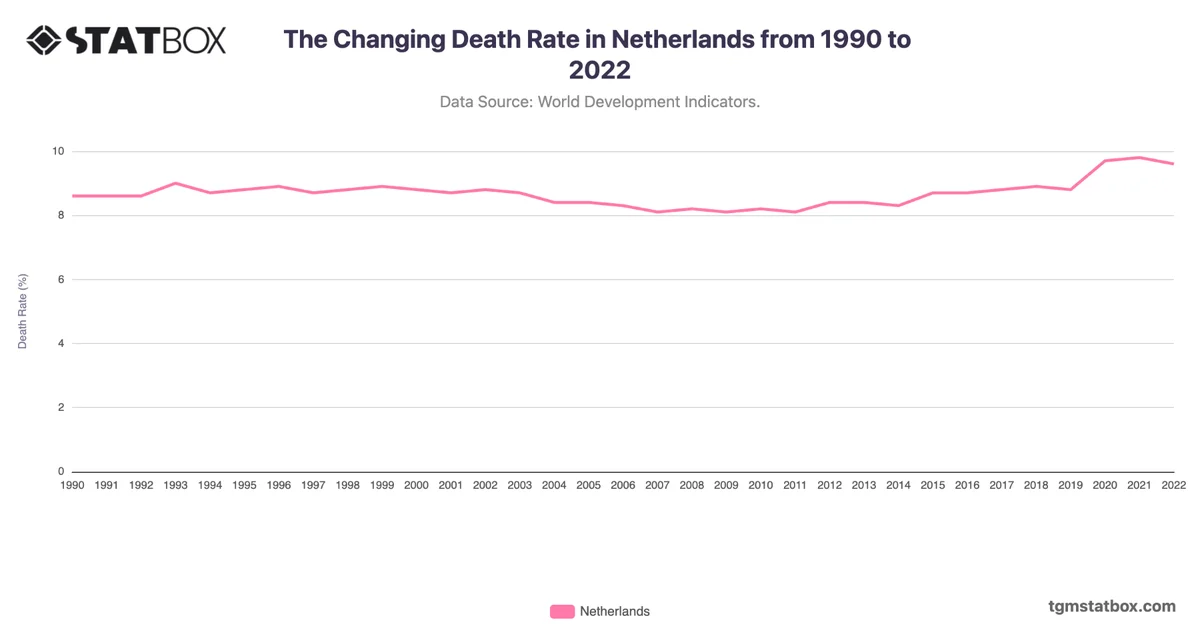
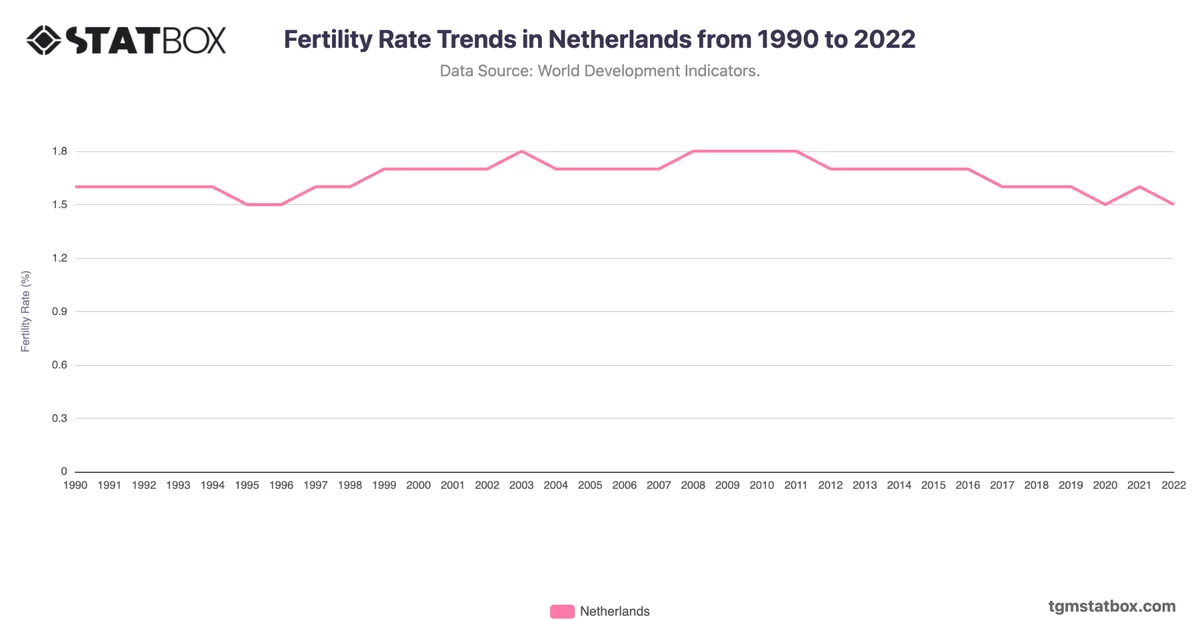
The Netherlands sees its median age rise from 36.2 in 2000 to an estimated 42.0 by 2030. From 2000 to 2010, the country’s median age rises to 39.7, driven by lower birth rates and an aging population as healthcare advancements extend life expectancy. This trend reflects a stable, urbanized society with strong healthcare infrastructure, which supports an aging demographic.
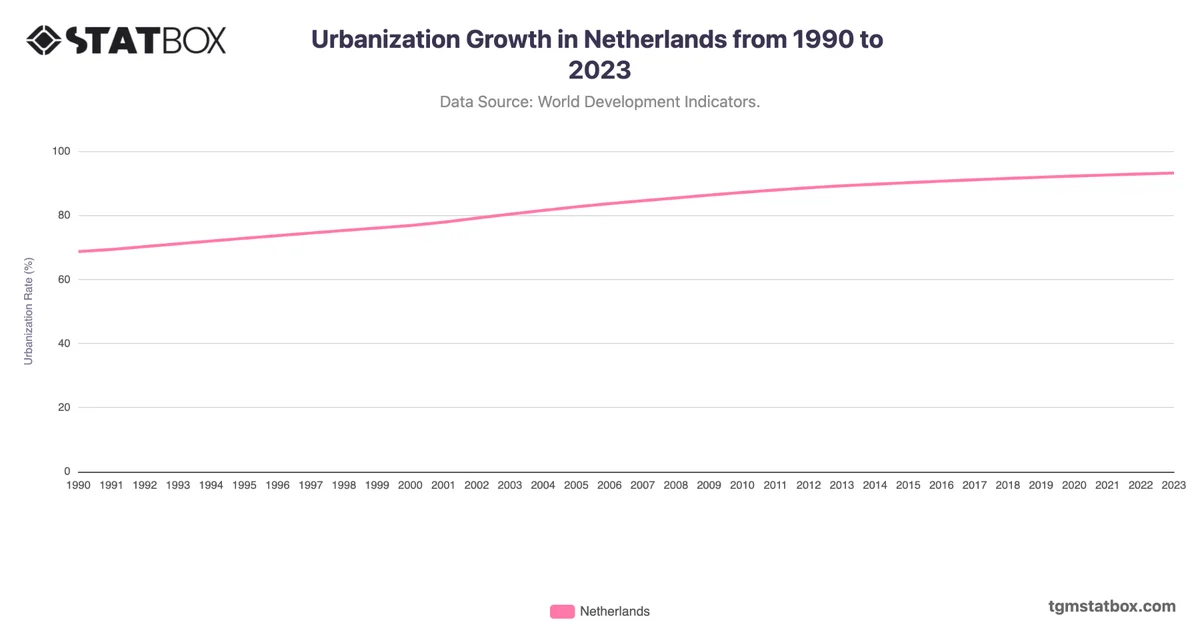
Between 2010 and 2020, the median age increases to 41.5 but plateaus, fluctuating slightly between 41.5 and 41.6 before reaching 42.0 by 2030. This trend indicates a balance between birth and death rates, as younger populations remain stable in urban centers. The Netherlands’ age structure, with its high urbanization, points to sustained growth in the median age due to minimal increases in birth rates.
Between 2010 and 2020, the median age increases to 41.5 but plateaus, fluctuating slightly between 41.5 and 41.6 before reaching 42.0 by 2030. This trend indicates a balance between birth and death rates, as younger populations remain stable in urban centers. The Netherlands’ age structure, with its high urbanization, points to sustained growth in the median age due to minimal increases in birth rates.
For a deeper dive into the topic, explore Netherlands’ population density, Netherlands’ mortality rate trends, Netherlands’s population count.