New Zealand's GDP reflects its transition from an agriculture-based economy to a diversified modern market. From $5.7 billion in 1961, GDP saw gradual growth, hitting $23.2 billion by 1980 due to expanded trade and economic reforms. The 1980s and early 1990s experienced fluctuations as market liberalization policies took effect, with GDP recovering to $46.7 billion in 1993.
The 2000s marked accelerated growth, with GDP peaking at $253.6 billion in 2023. Key drivers included exports of agricultural products, renewable energy advancements, and a growing technology sector, demonstrating resilience despite challenges such as the global financial crisis and the COVID-19 pandemic.
The 2000s marked accelerated growth, with GDP peaking at $253.6 billion in 2023. Key drivers included exports of agricultural products, renewable energy advancements, and a growing technology sector, demonstrating resilience despite challenges such as the global financial crisis and the COVID-19 pandemic.
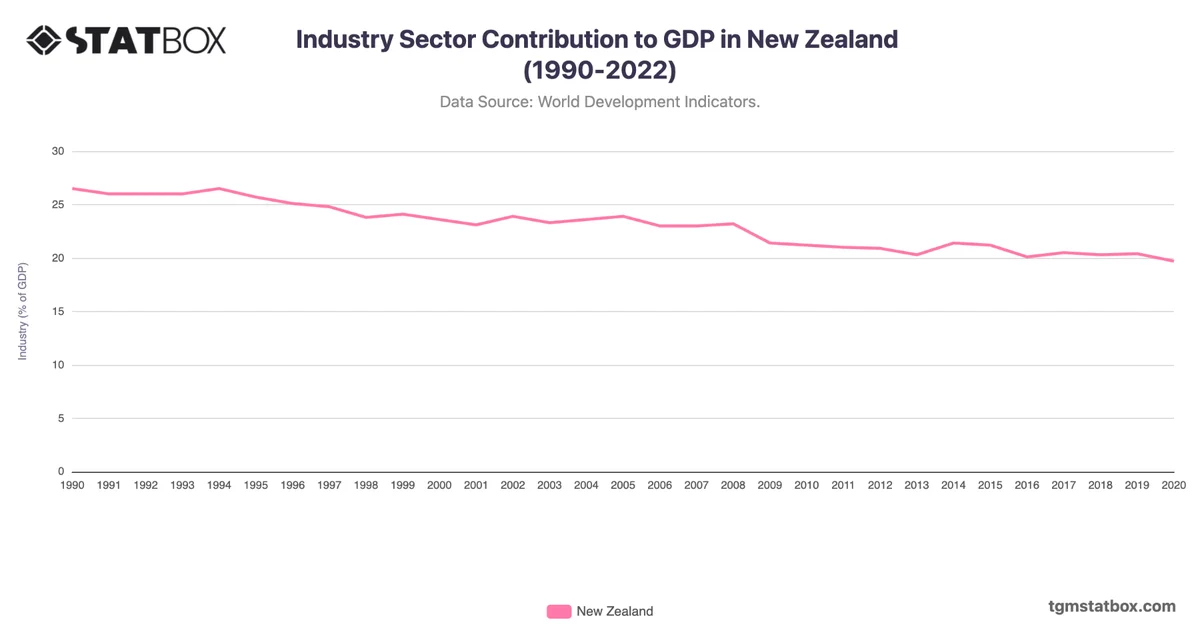
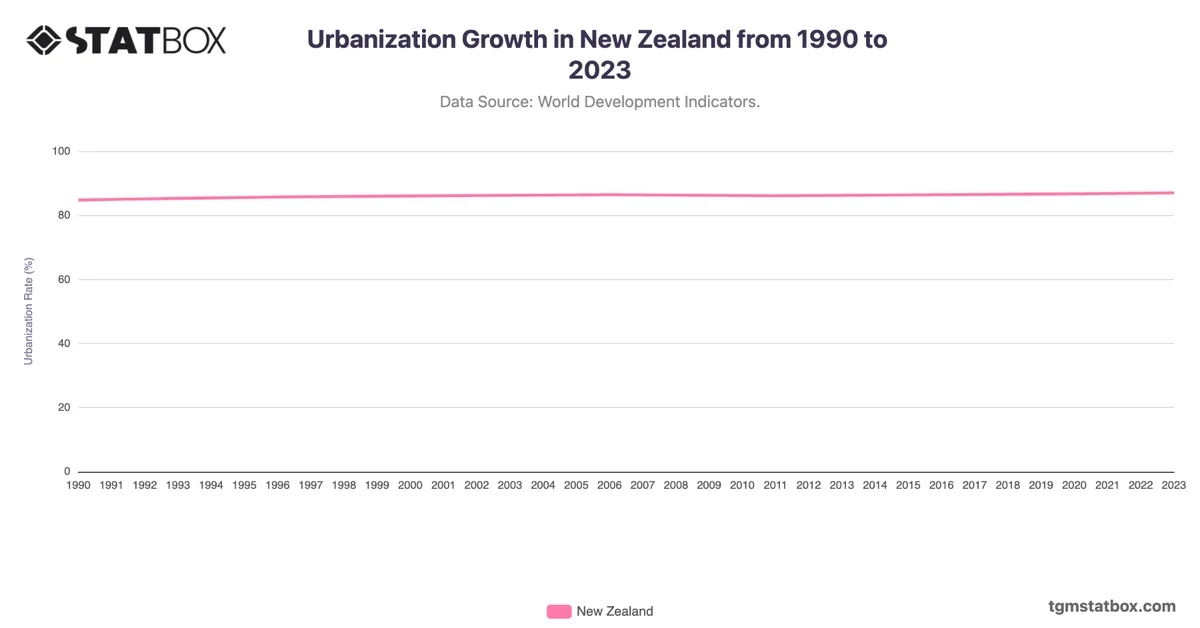
Find out more through related statistics on growth of urbanization in New Zealand, New Zealand’s manufacturing sector GDP share, New Zealand’s population numbers.