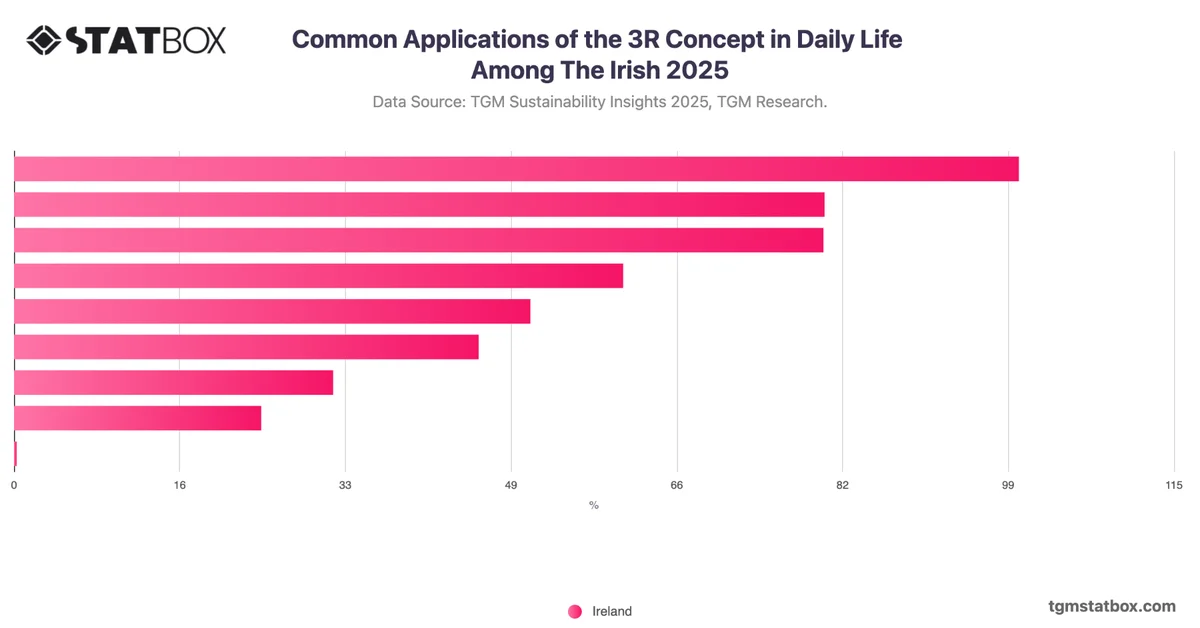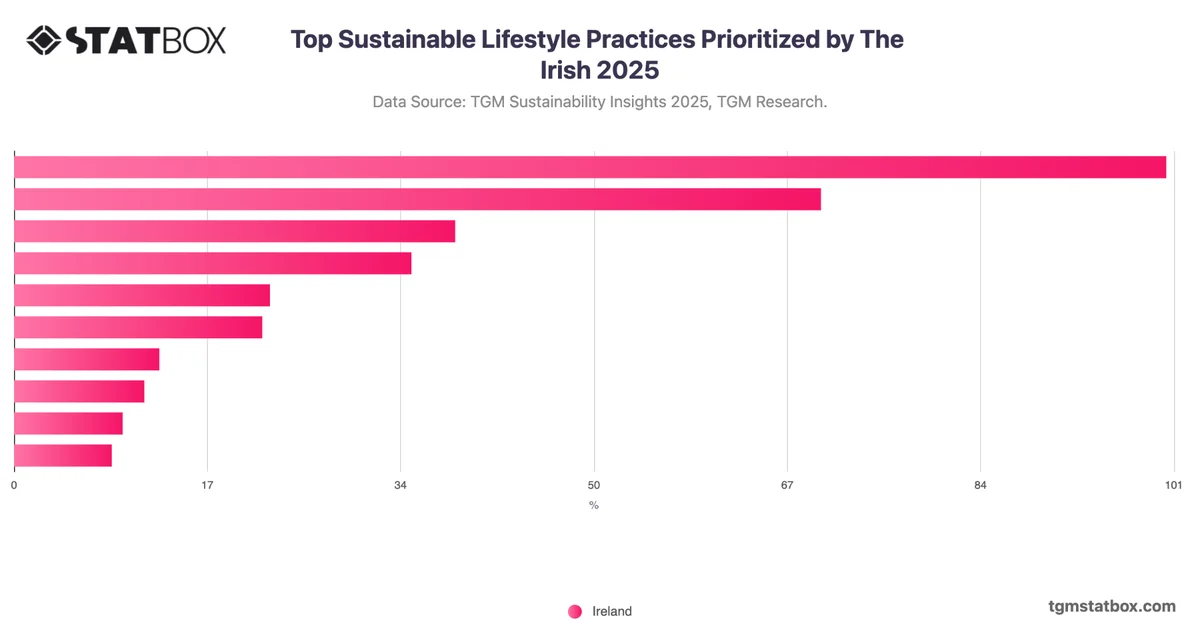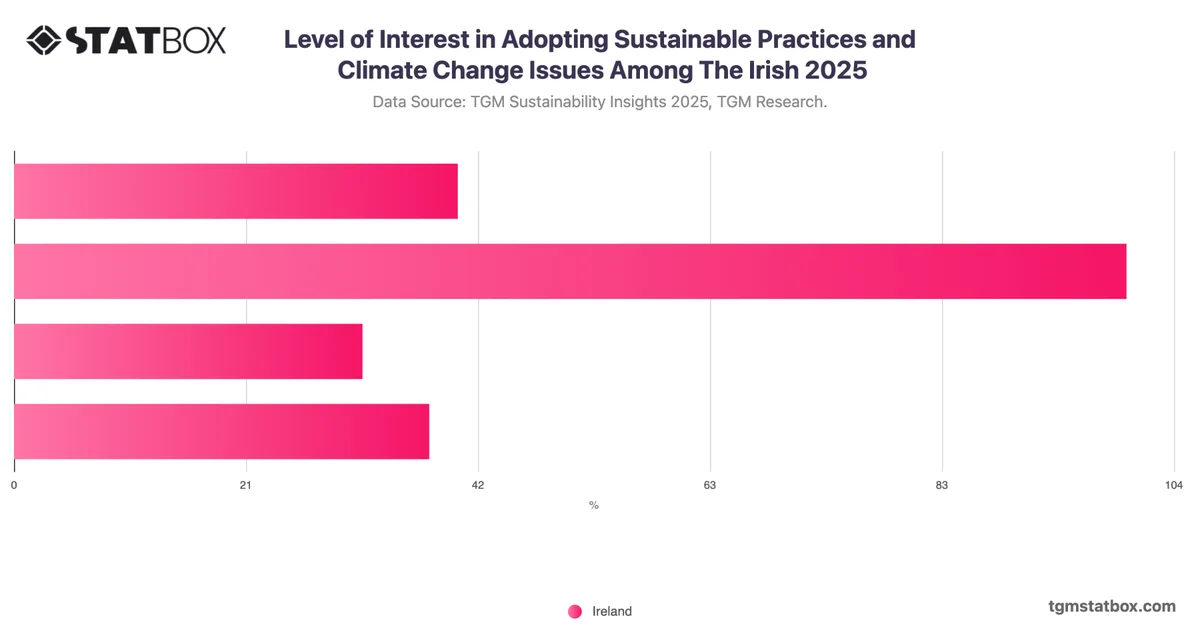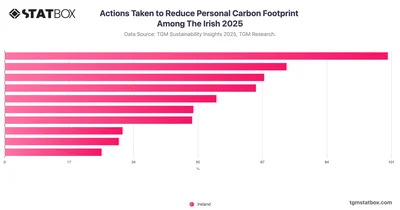
In Ireland, the first step toward lowering carbon footprints is clear: recycling and composting tops the chart with , showing widespread alignment with national waste management campaigns and local council efforts. Next comes water conservation at , a priority that likely stems from seasonal shortages and rising metered costs. Low-emission transport follows close behind. are using public transit, cycling, or carpooling, signaling a shift driven partly by fuel prices and urban congestion in cities like Dublin and Cork. Energy efficiency also gains traction, with opting for low-consumption appliances and lighting. Notably, m ore deliberate choices—like buying local food () and consuming less meat ()—show slower adoption, revealing that Irish efforts are still strongest where convenience and infrastructure support action. The relatively low uptake in renewables () underscores access and cost challenges, especially for renters. The pattern speaks volumes: surface-level changes are embraced, but deeper carbon-cutting behaviors remain a frontier Ireland must still conquer.
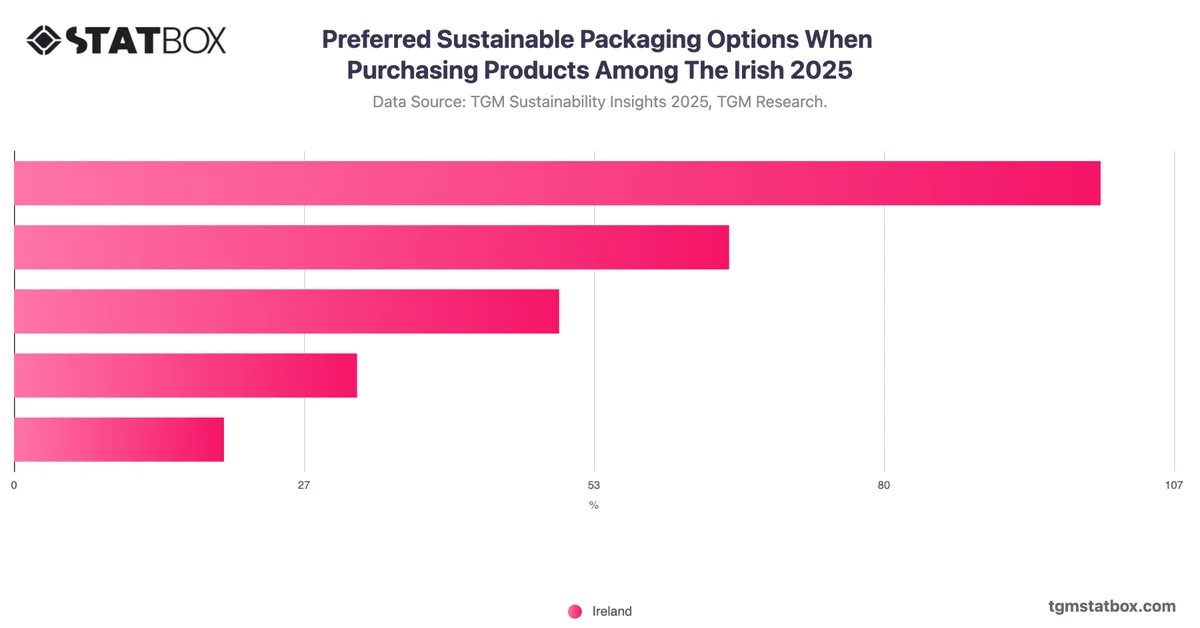
For a deeper dive into the topic, explore Obstacles to sustainable lifestyle adoption, preferred sustainable packaging options in Ireland, who should tackle climate change in Ireland?.