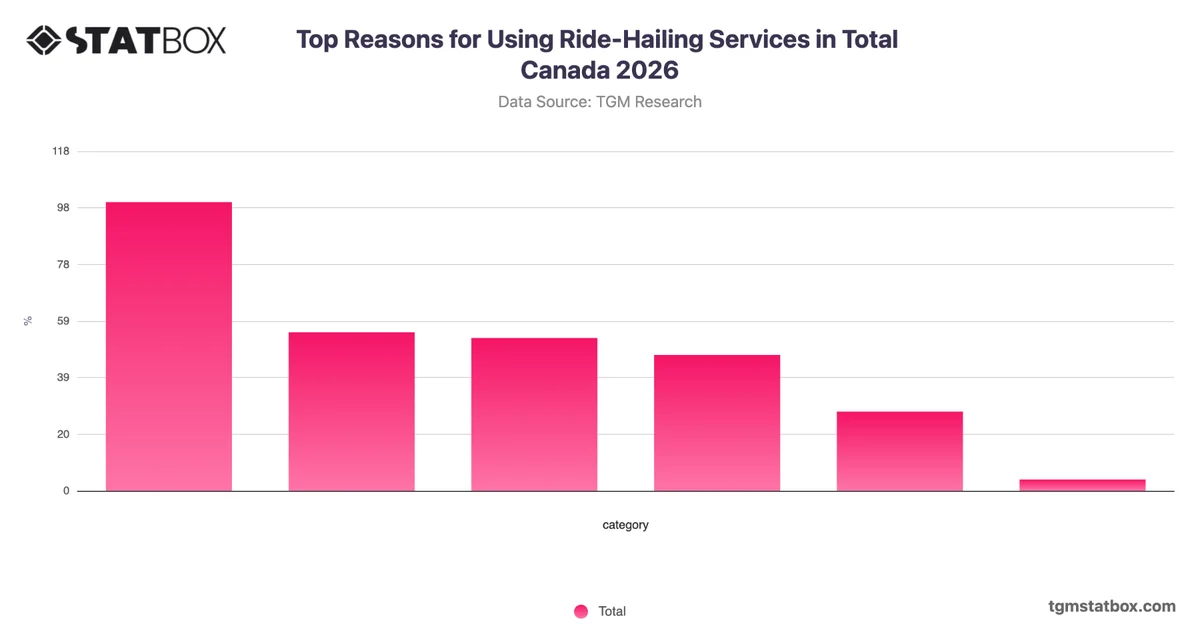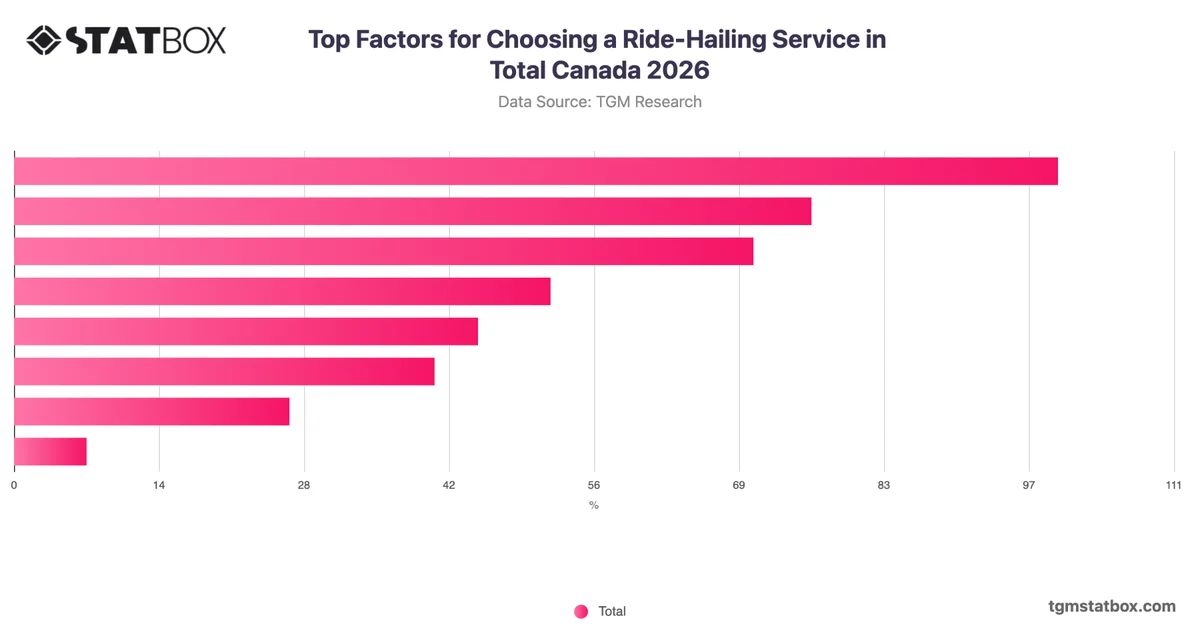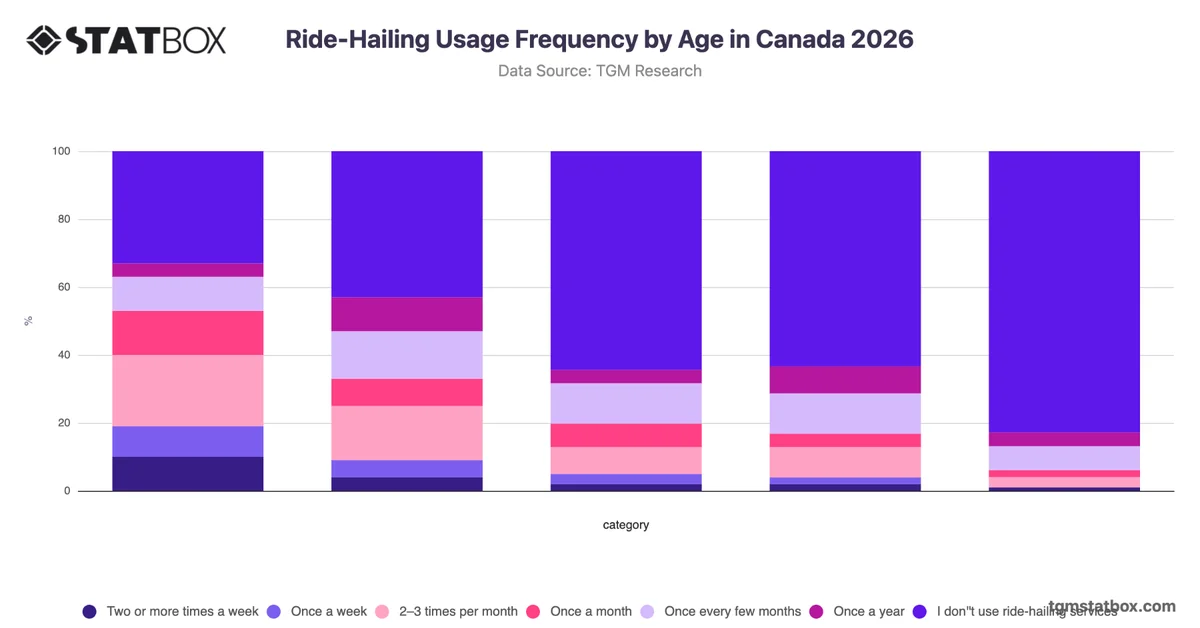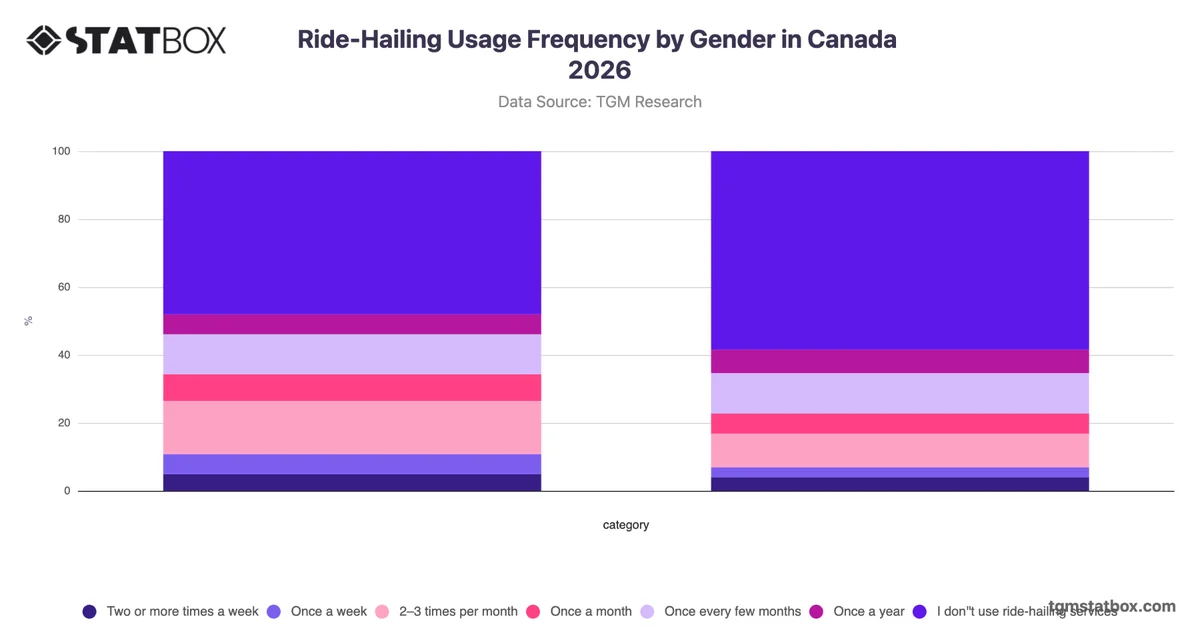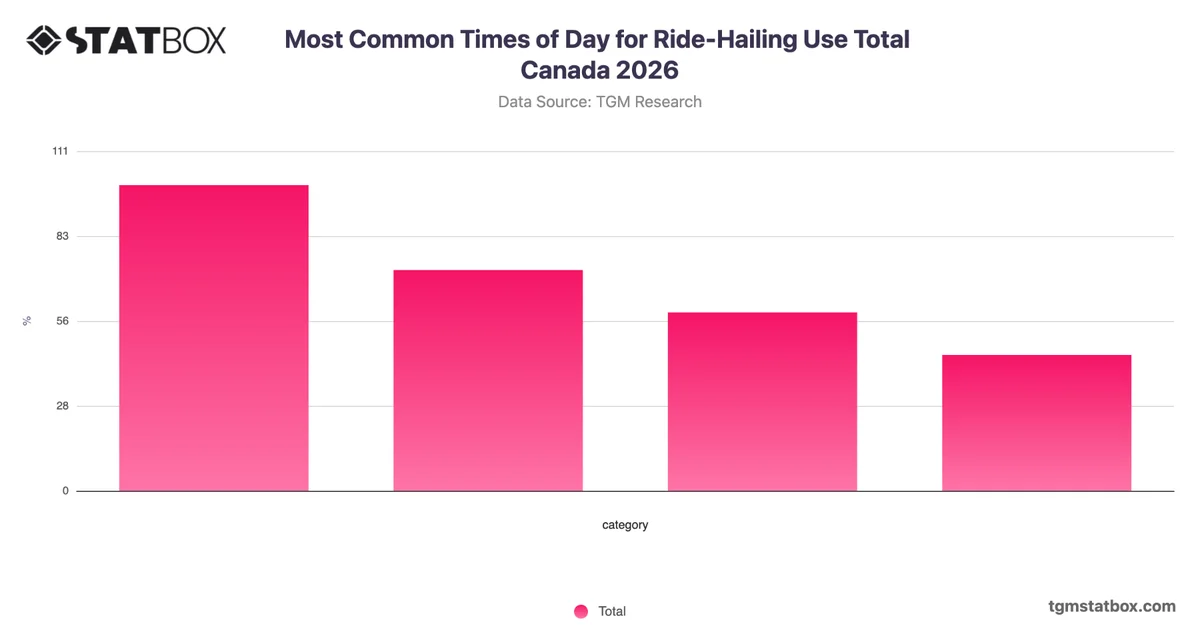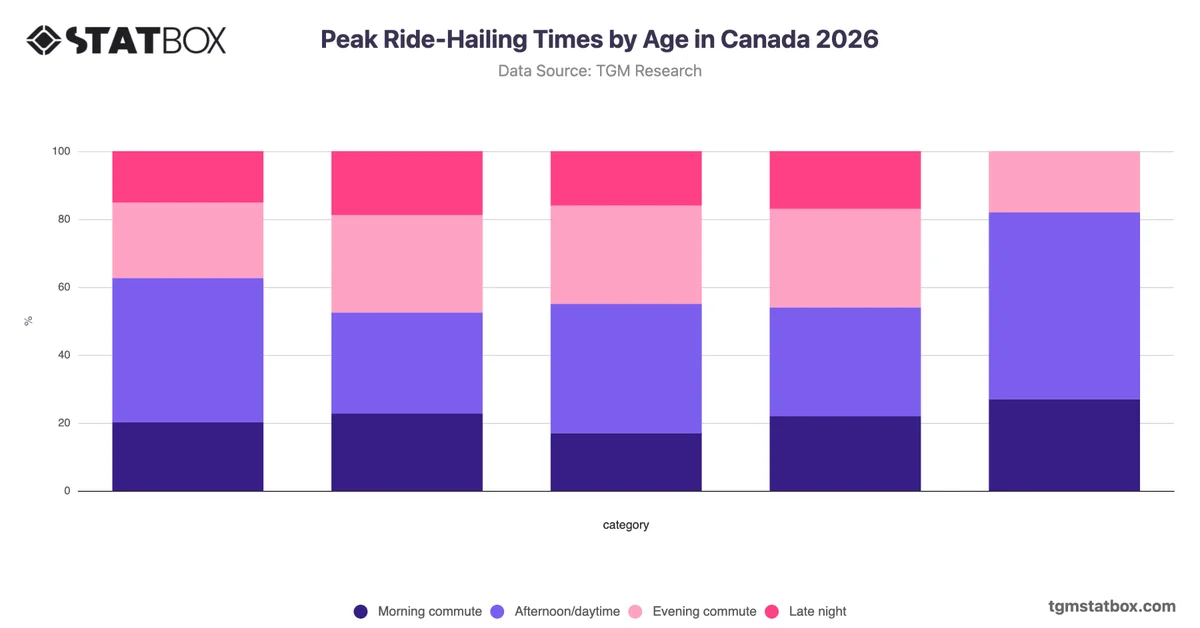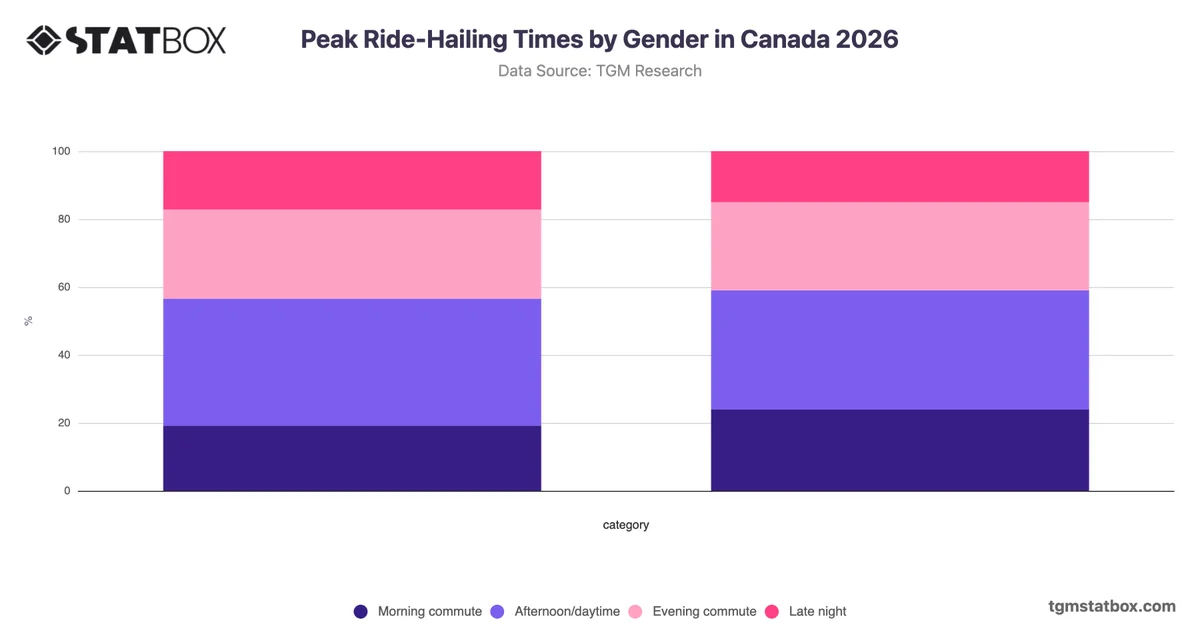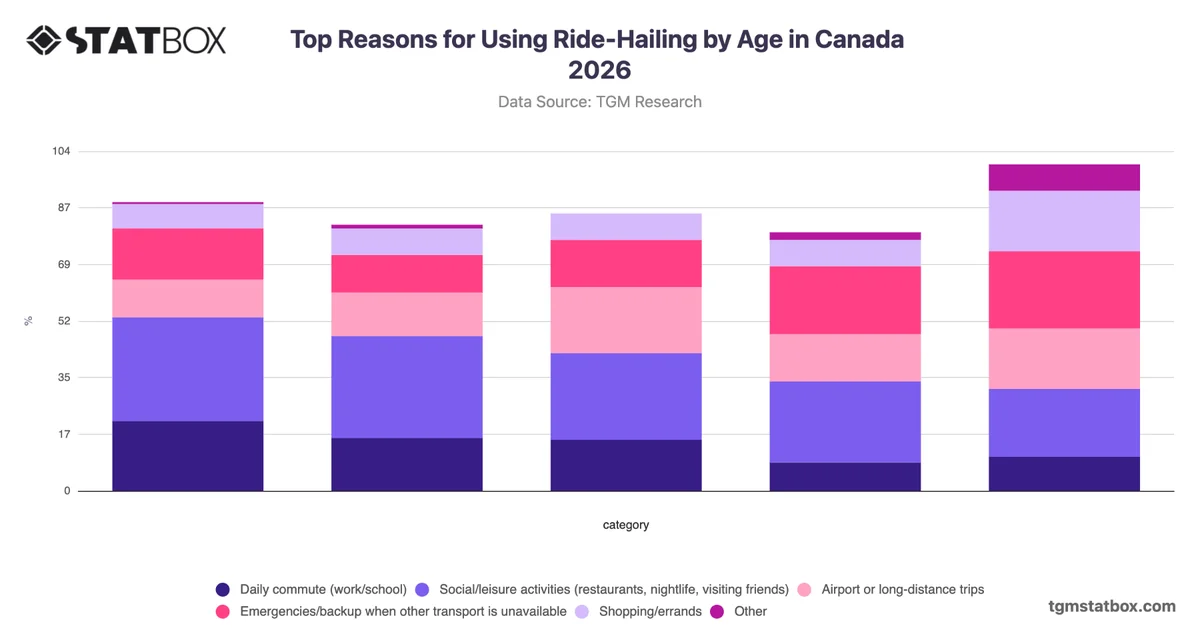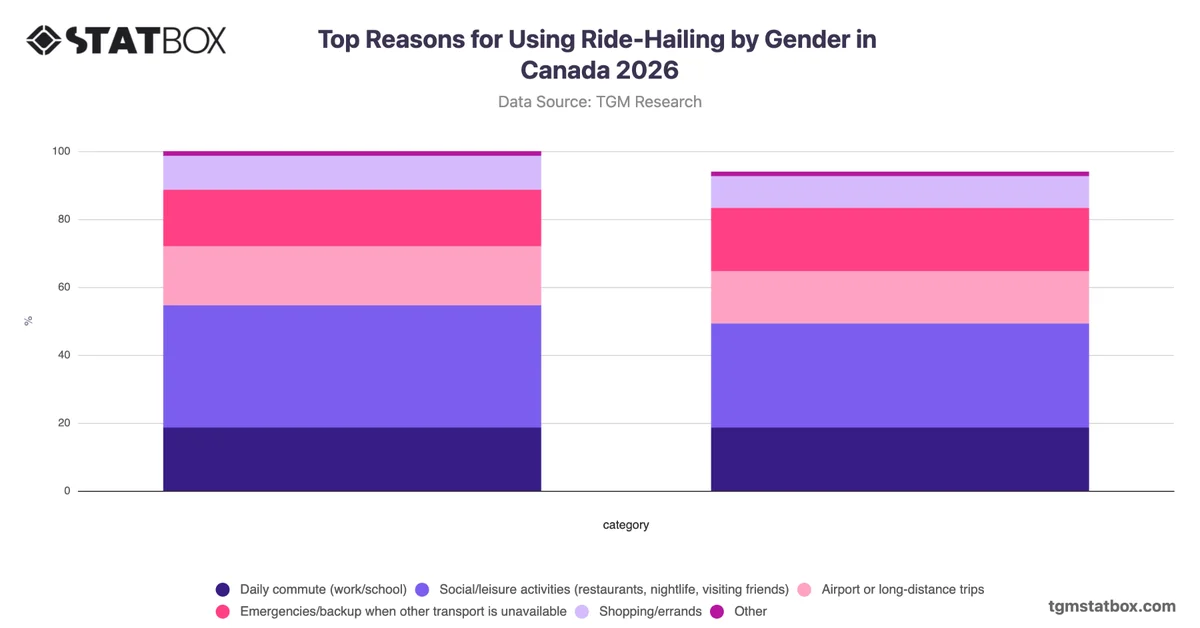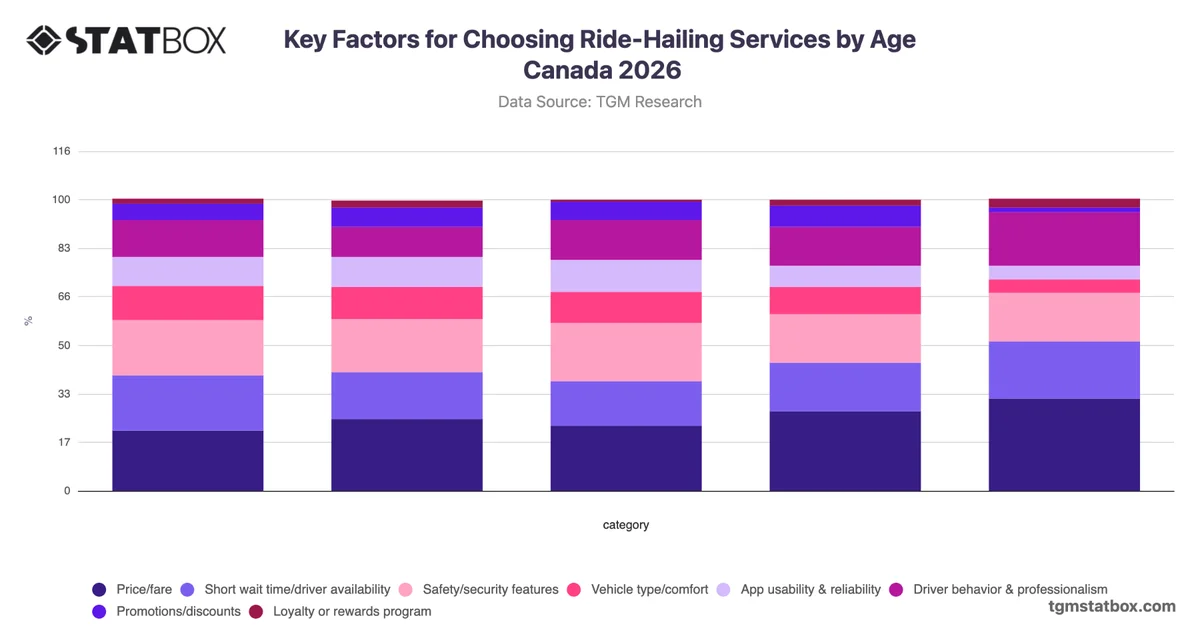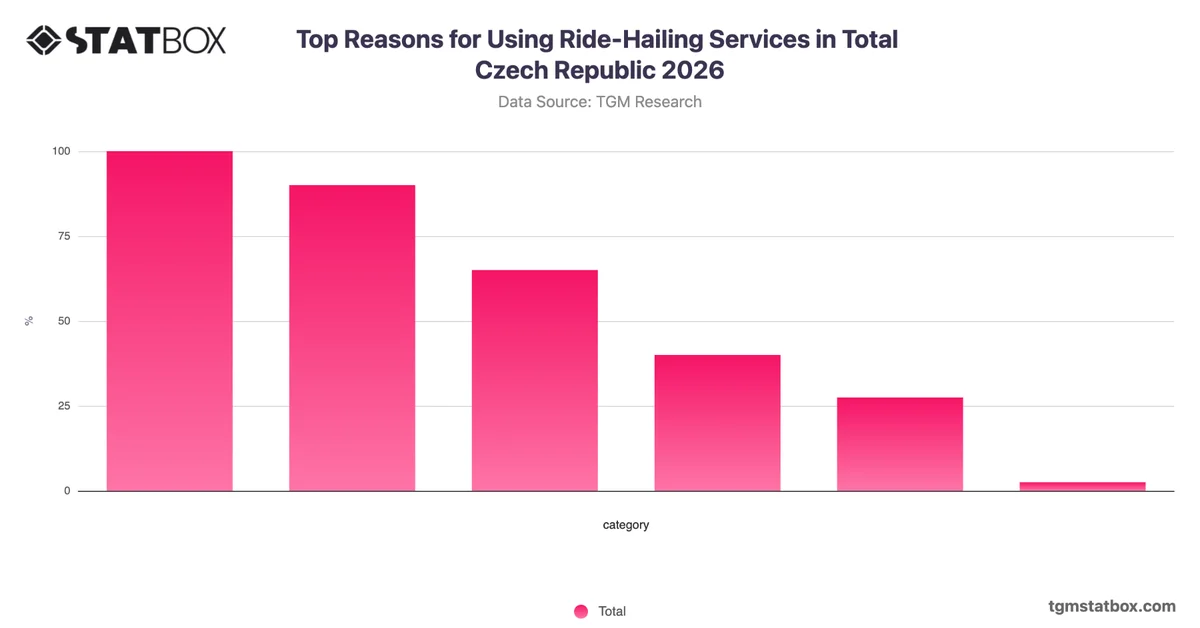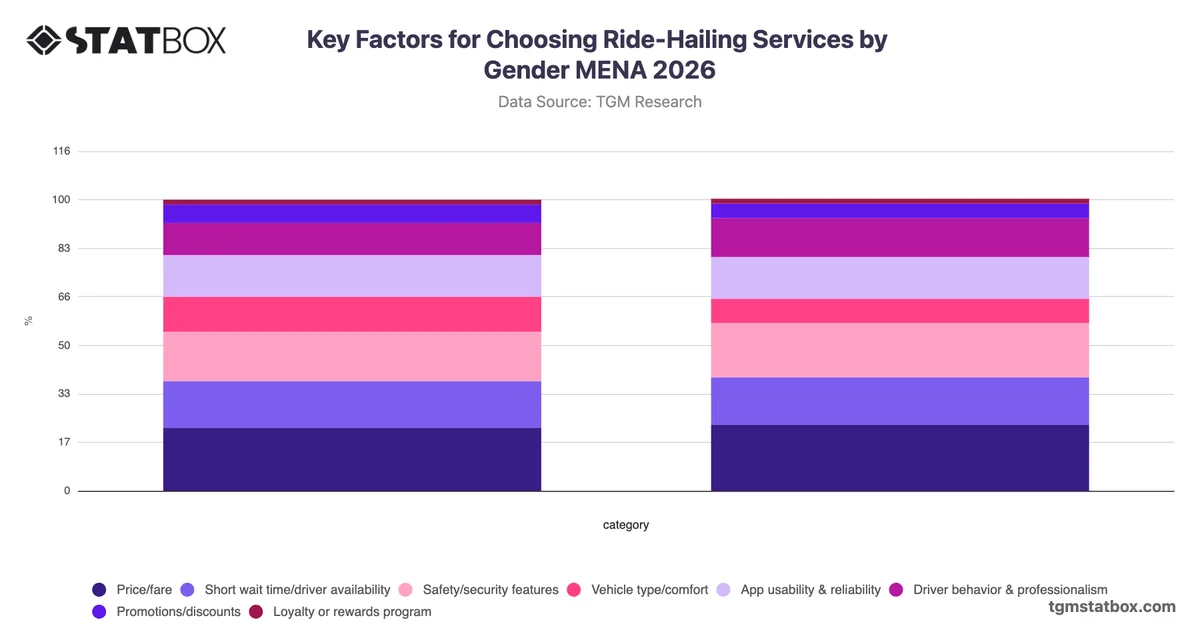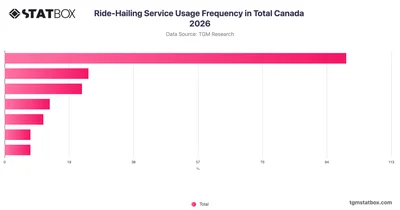
Ride-hailing services such as Uber and Lyft offer Canadians a flexible, on-demand alternative to traditional transportation, particularly useful in urban centres where parking is limited and public transit may not cover all routes. These platforms benefit riders through convenience, real-time tracking, and cashless payments, while also providing income opportunities for drivers. Understanding how frequently Canadians turn to these services helps businesses, city planners, and investors gauge the true role ride-hailing plays in everyday mobility. The data reveals a market where occasional or non-use dominates, pointing to room for growth through targeted engagement strategies.