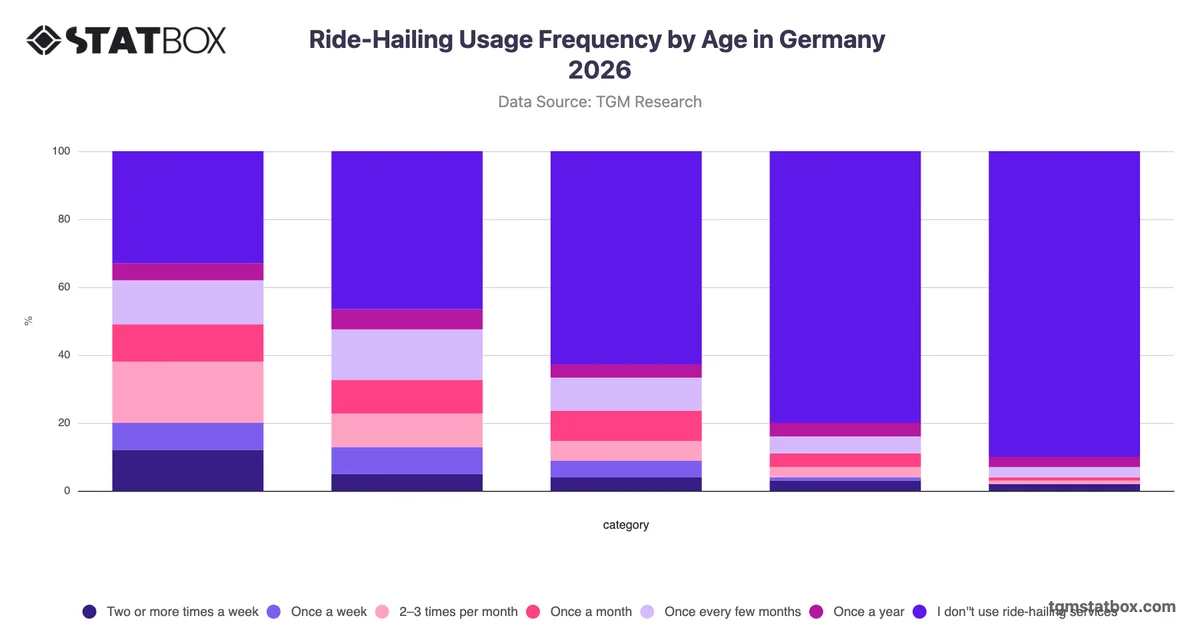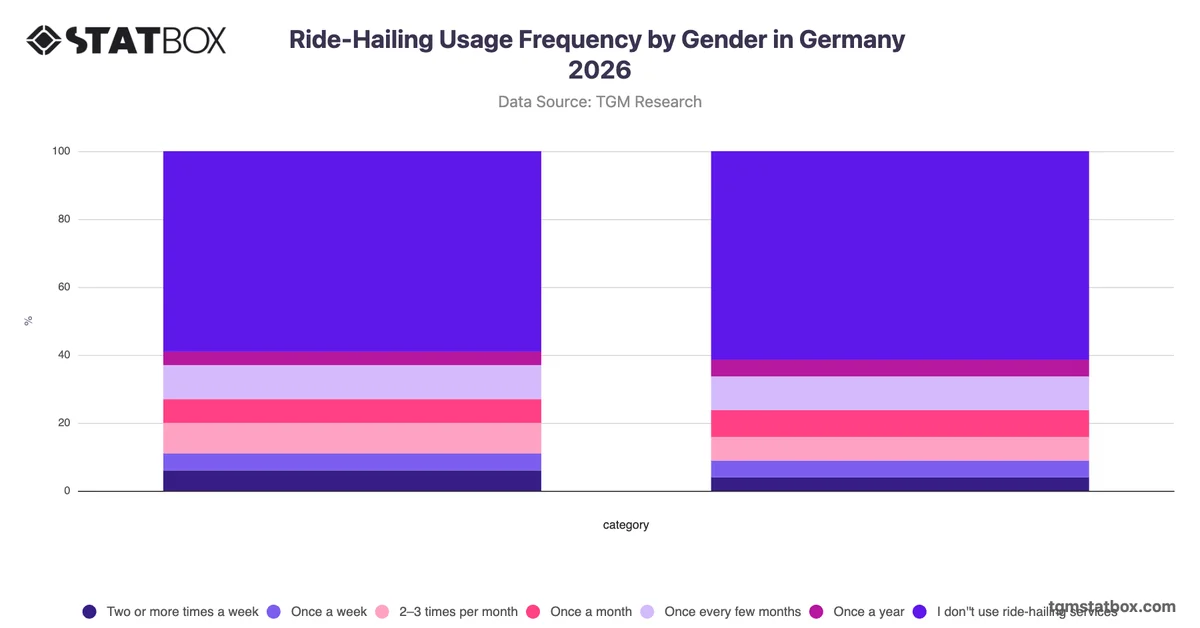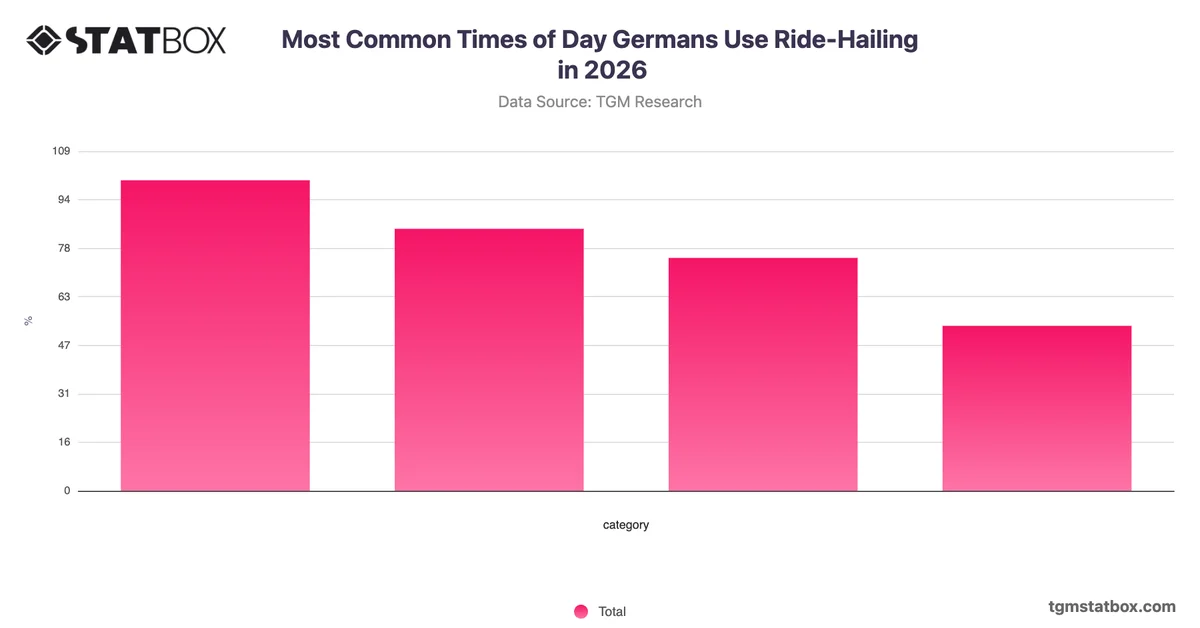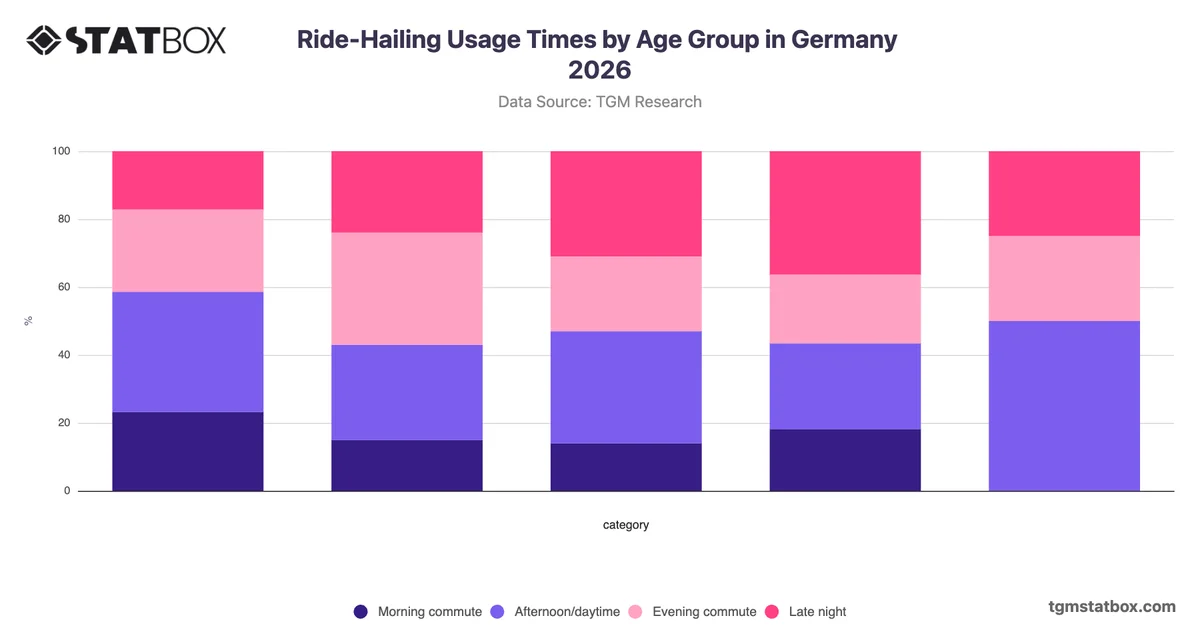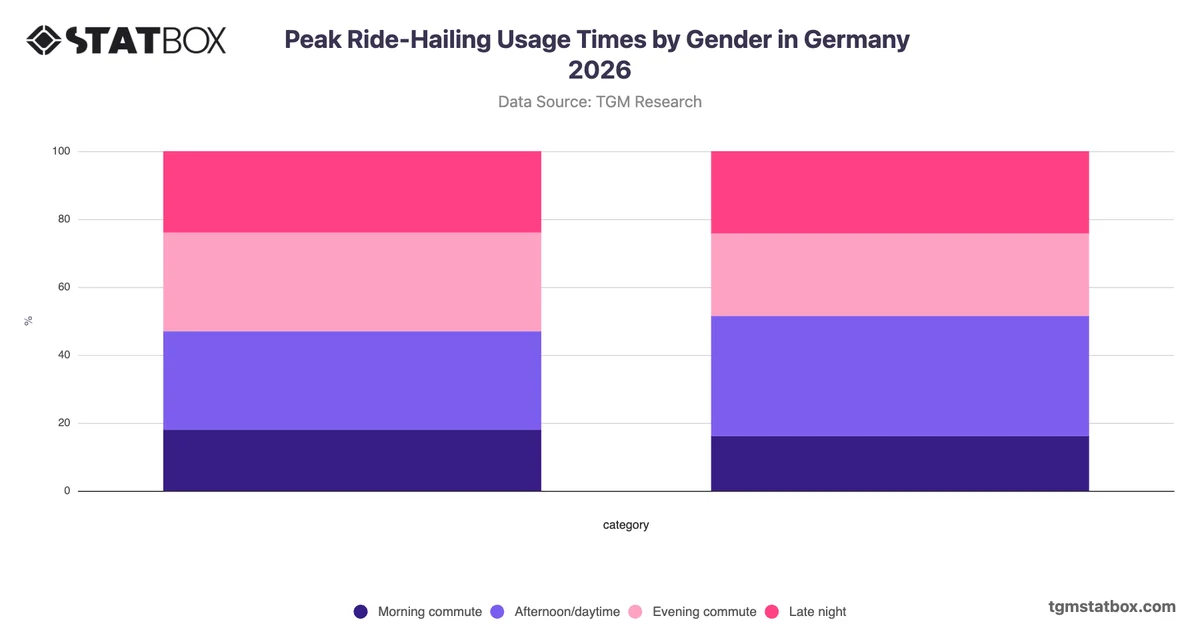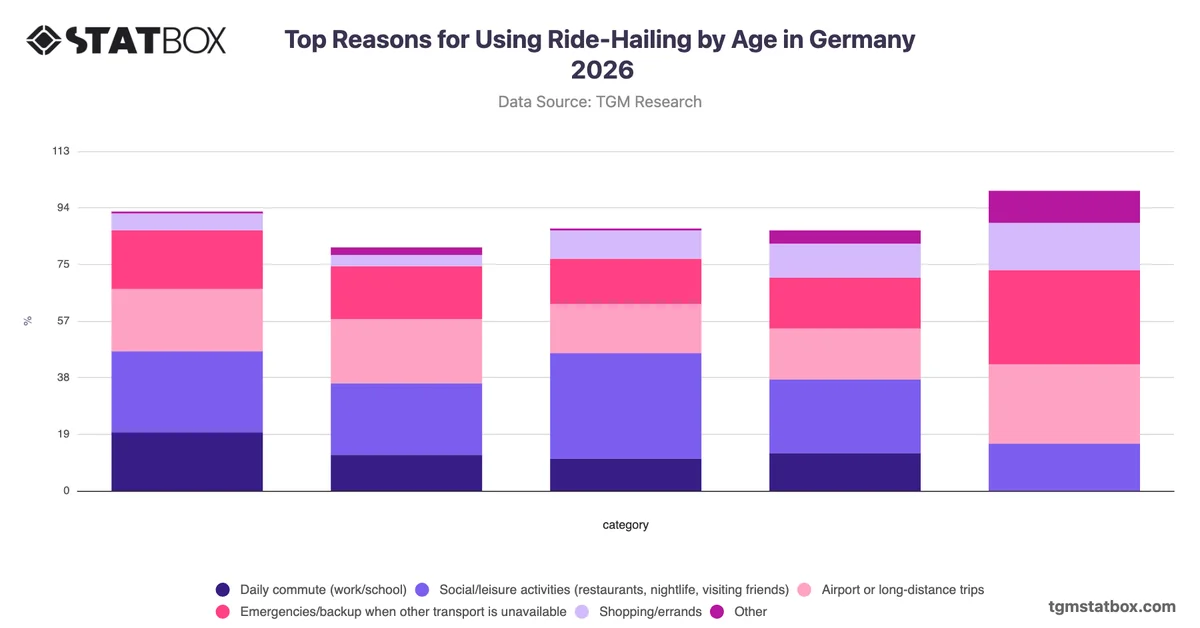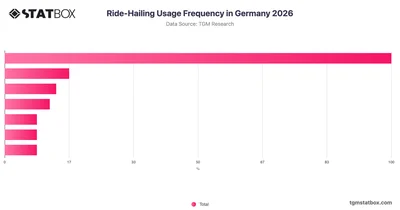
Ride-hailing services such as Uber and Bolt offer urban commuters a flexible, on-demand alternative to public transport and private car ownership, with particular value in reducing wait times and providing door-to-door convenience. In Germany, where public transit infrastructure is well-developed, the role of ride-hailing tends to complement rather than replace existing mobility options. Understanding how frequently Germans turn to these services helps providers identify where demand is concentrated and where growth opportunities remain. The data suggests that ride-hailing in Germany is still far from becoming a routine habit for the general population.