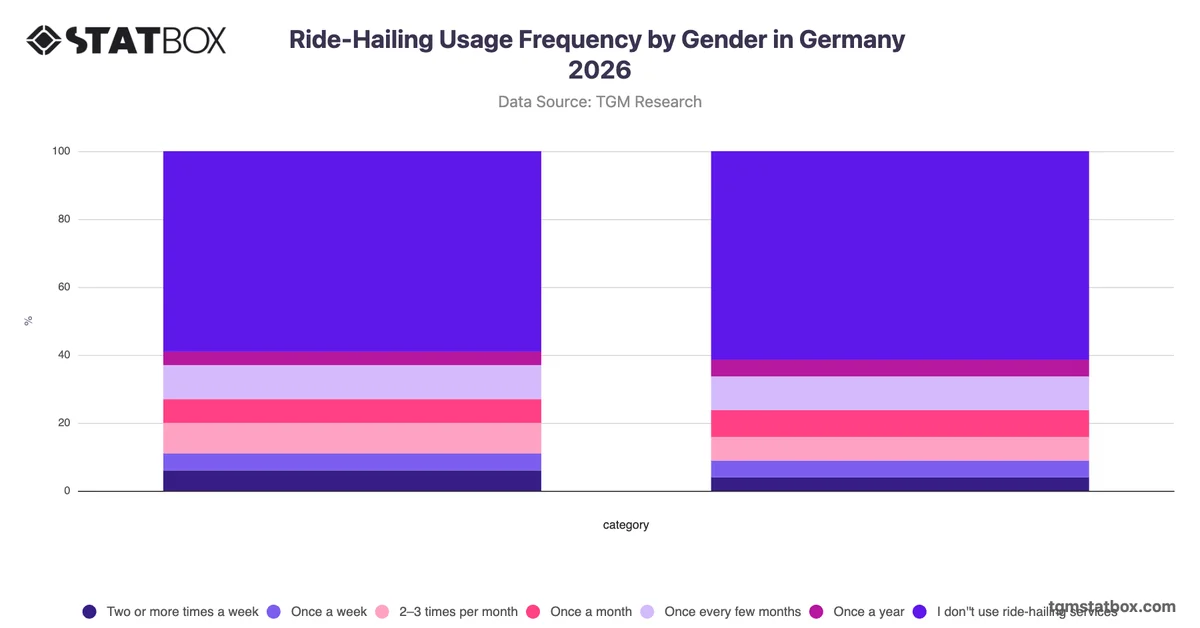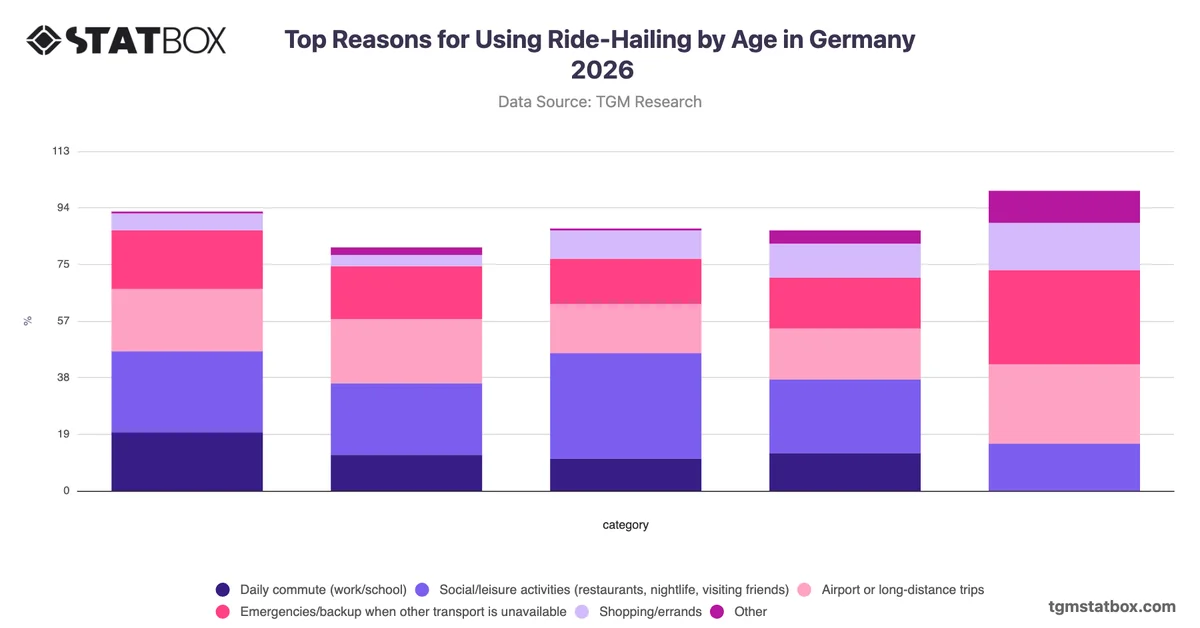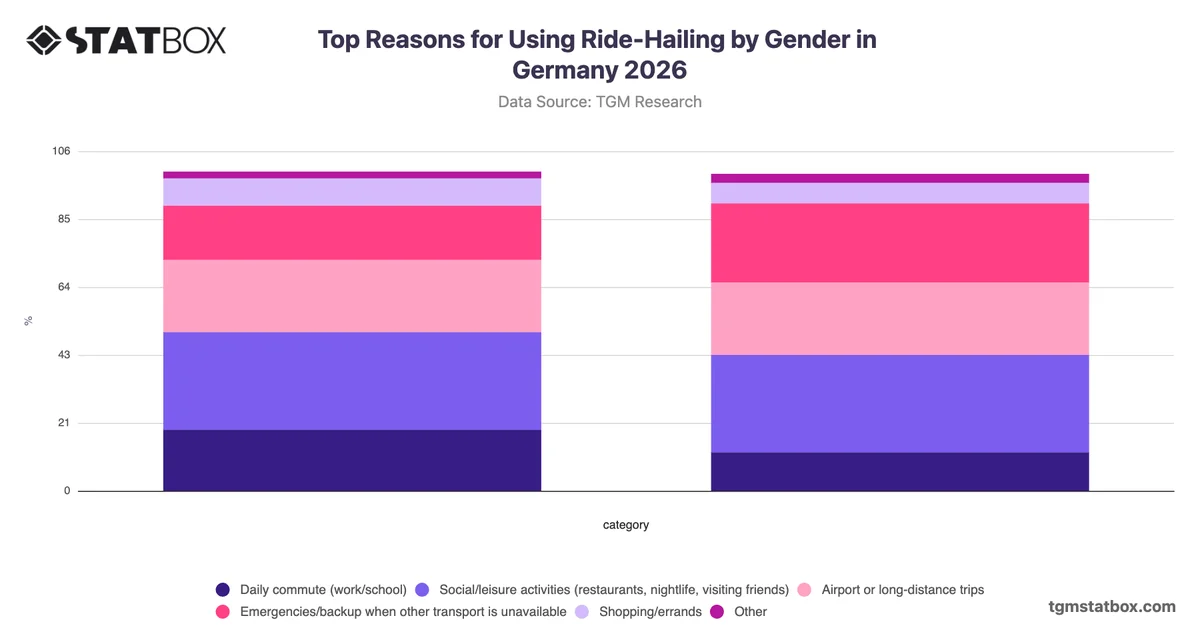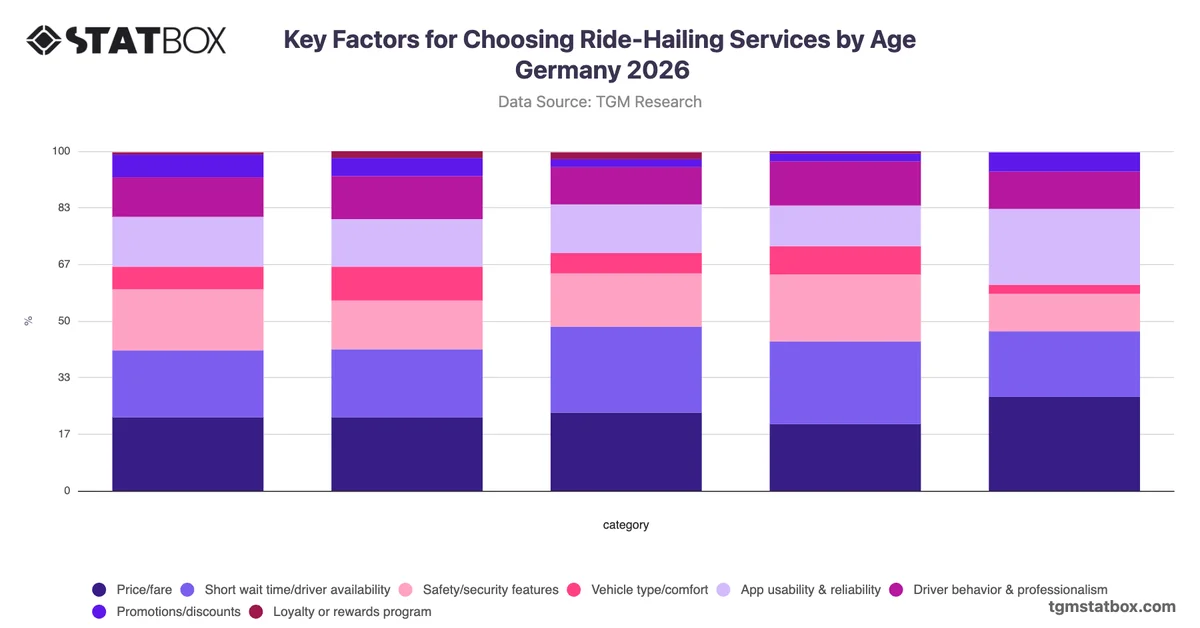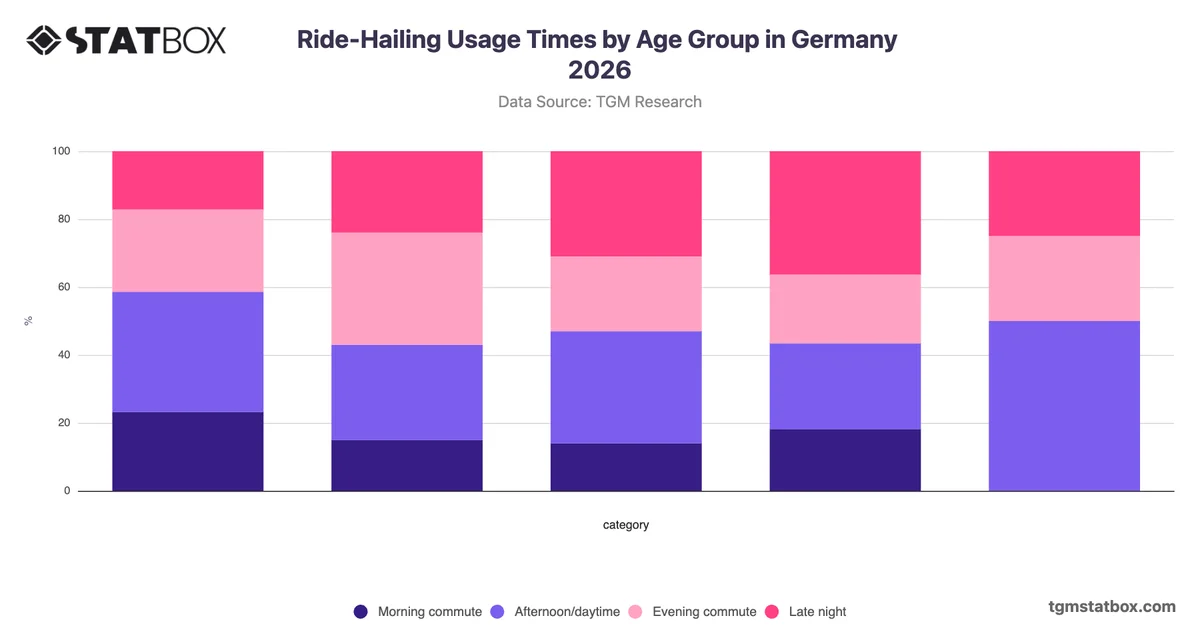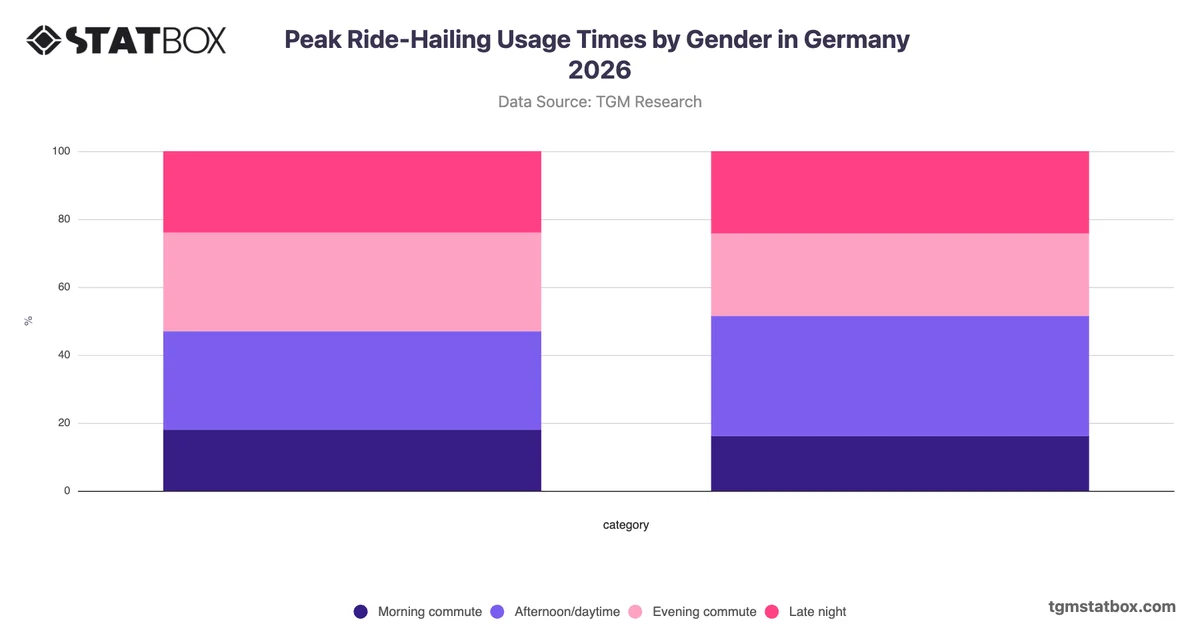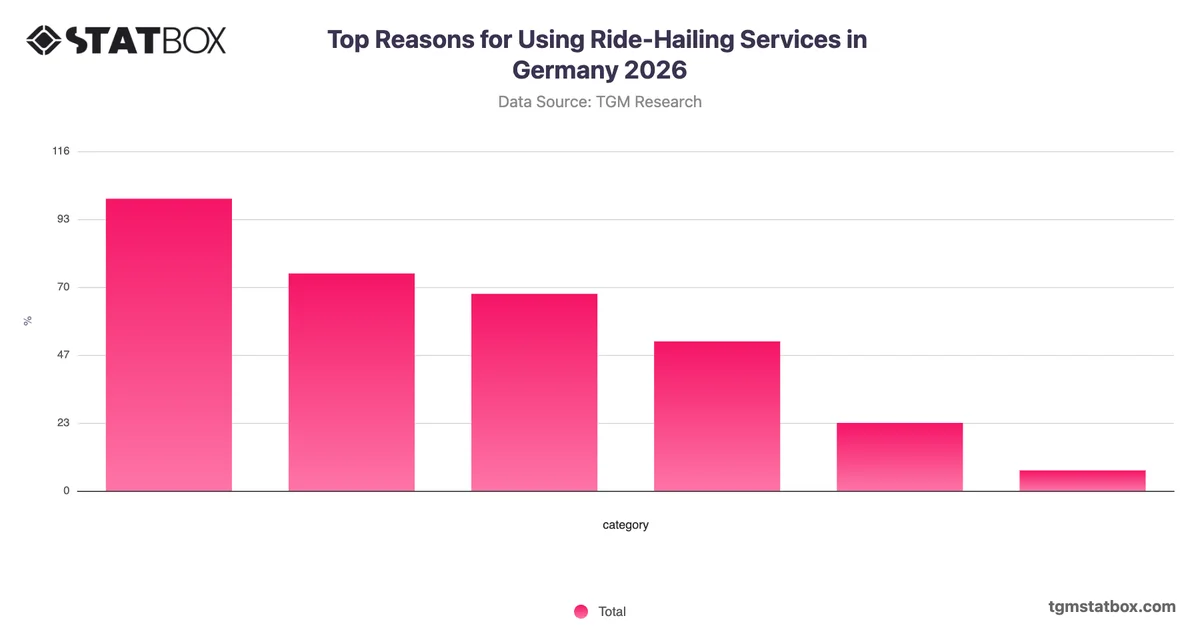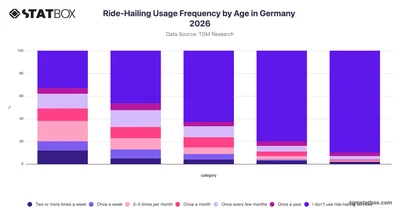
Ride-hailing services such as Uber and Bolt offer urban travelers a convenient, app-based alternative to public transport and private car ownership, with particular appeal for those seeking flexible, on-demand mobility. In Germany, where car ownership remains high and public transit networks are well developed, the role of ride-hailing varies considerably across age groups. Younger adults tend to integrate these services into regular routines, while older generations rely on them far less frequently. Understanding how usage patterns differ by age helps ride-hailing platforms prioritize marketing, pricing, and service design for the segments most likely to drive growth.