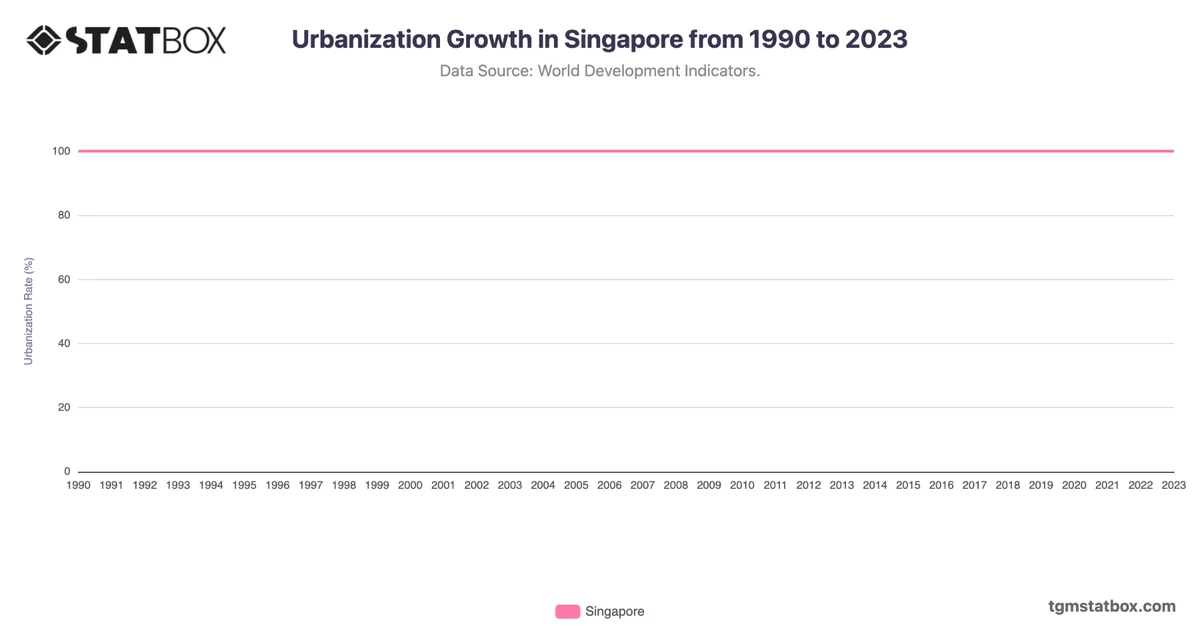
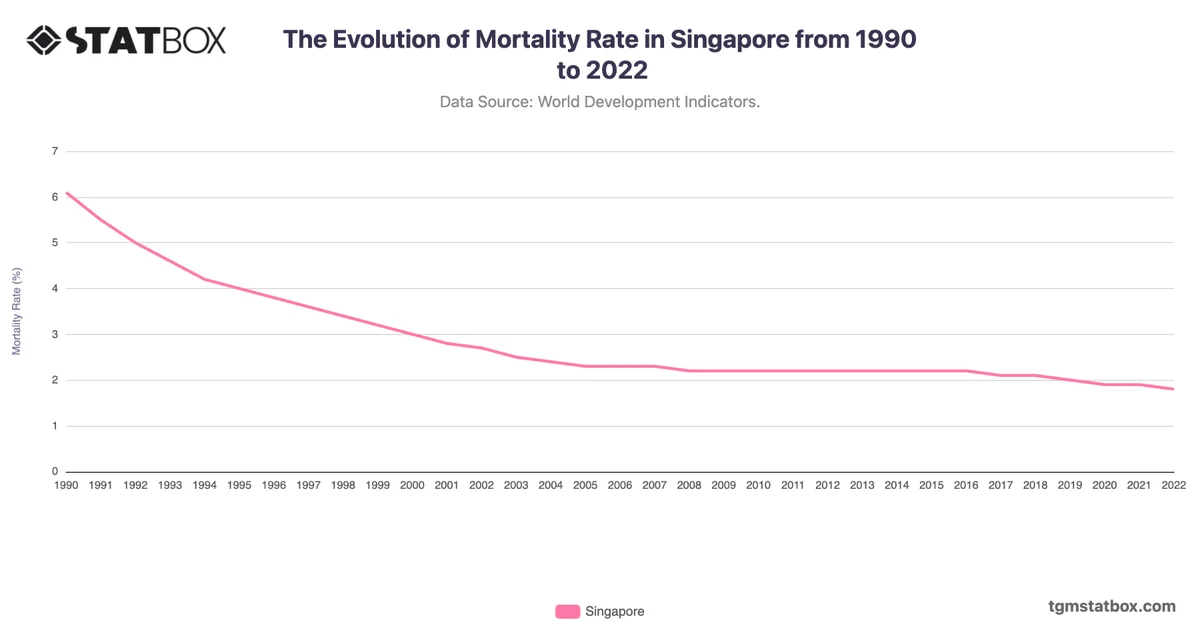
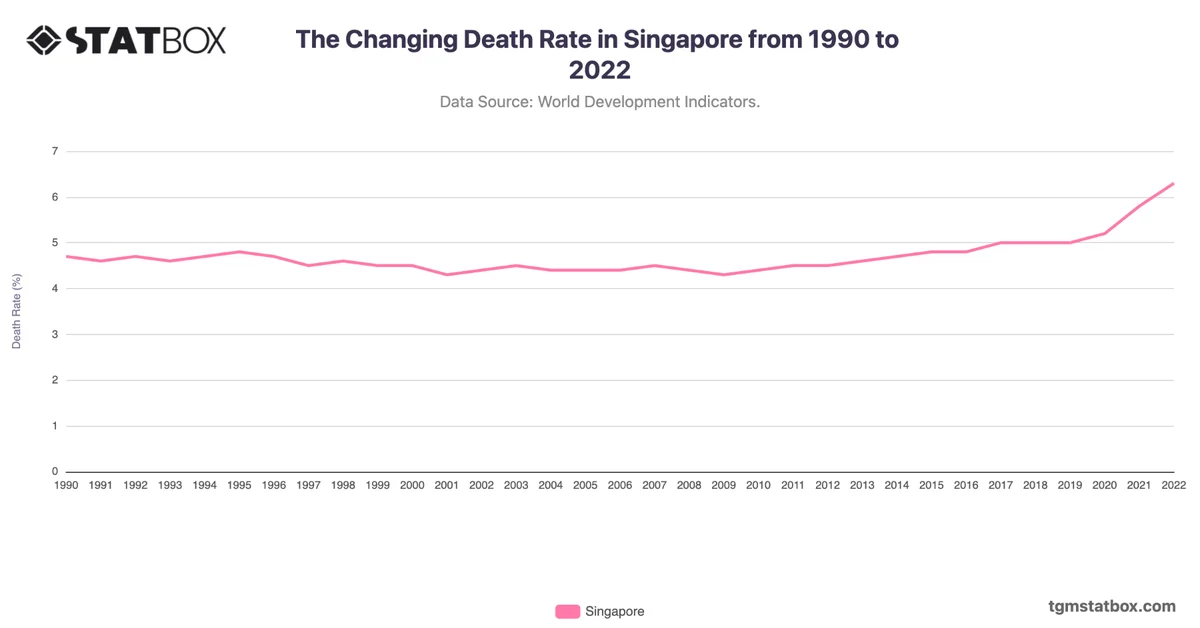
Singapore’s median age has shifted from 31.2 years in 2000 to a projected 39.1 years by 2030, driven by one of the world's highest urbanization rates and low birth rates. In the early 2000s, as Singapore’s urban density increased, family sizes decreased due to changing lifestyle preferences in a highly urbanized environment. This led to an increase in the median age as birth rates declined and life expectancy rose. By 2010, Singapore’s median age reached 32.7, highlighting a steady trend toward an aging society.
The trend intensified in the 2020s as the median age reached 34.8 in 2021. Singapore's rapid economic growth and highly urbanized environment, while supporting high standards of living, have continued to influence family size and birth rates, pushing the median age upwards. Projected to reach 39.1 by 2030, Singapore's aging population signals a demographic shift that could influence healthcare, housing, and social policies in the years ahead.
The trend intensified in the 2020s as the median age reached 34.8 in 2021. Singapore's rapid economic growth and highly urbanized environment, while supporting high standards of living, have continued to influence family size and birth rates, pushing the median age upwards. Projected to reach 39.1 by 2030, Singapore's aging population signals a demographic shift that could influence healthcare, housing, and social policies in the years ahead.
Gain a broader perspective by reviewing Singapore’s annual GDP growth rate, Singapore’s population density data, Singapore’s working-age population share.