Singapore exhibited dynamic population growth patterns, driven by its role as a global economic hub. Growth peaked at 5.3% in 2008, reflecting high immigration and robust economic activity. However, the 2010s saw growth taper off due to tightened immigration policies and an aging population, reaching as low as 0.1% in 2017.
The pandemic era marked a decline, with growth falling to -4.2% in 2021 due to reduced immigration and economic disruptions. By 2023, growth rebounded sharply to 4.9%, reflecting a resurgence in global mobility and Singapore’s focus on attracting talent. This recovery underscores the city-state’s resilience and strategic planning in addressing demographic shifts.
The pandemic era marked a decline, with growth falling to -4.2% in 2021 due to reduced immigration and economic disruptions. By 2023, growth rebounded sharply to 4.9%, reflecting a resurgence in global mobility and Singapore’s focus on attracting talent. This recovery underscores the city-state’s resilience and strategic planning in addressing demographic shifts.
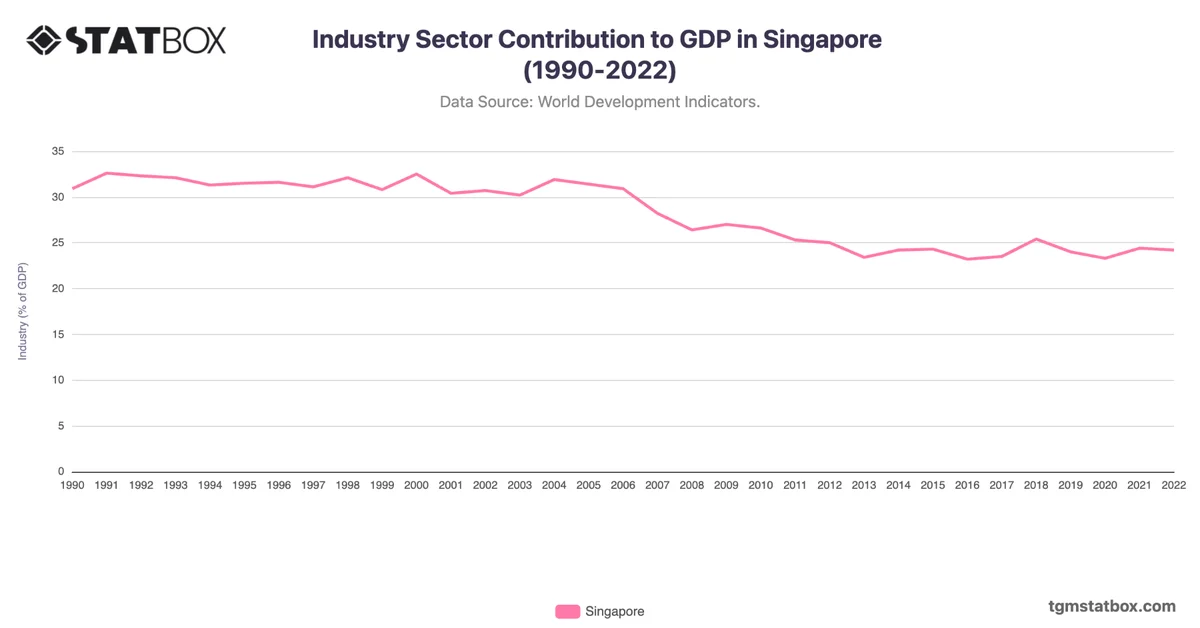
For additional information, visit statistics on military personnel proportion in Singapore, Singapore’s working-age population share, Industry sector’s share in Singapore’s GDP.