South Africa's central government debt rose from 27.97% in 1990 to 43.66% in 1995, reflecting the fiscal pressures of transitioning from apartheid. Between 1996 and 2008, debt declined to 24.04% due to fiscal consolidation and economic reforms. However, the 2009 global financial crisis pushed debt back up, reaching 34.74% by 2011.
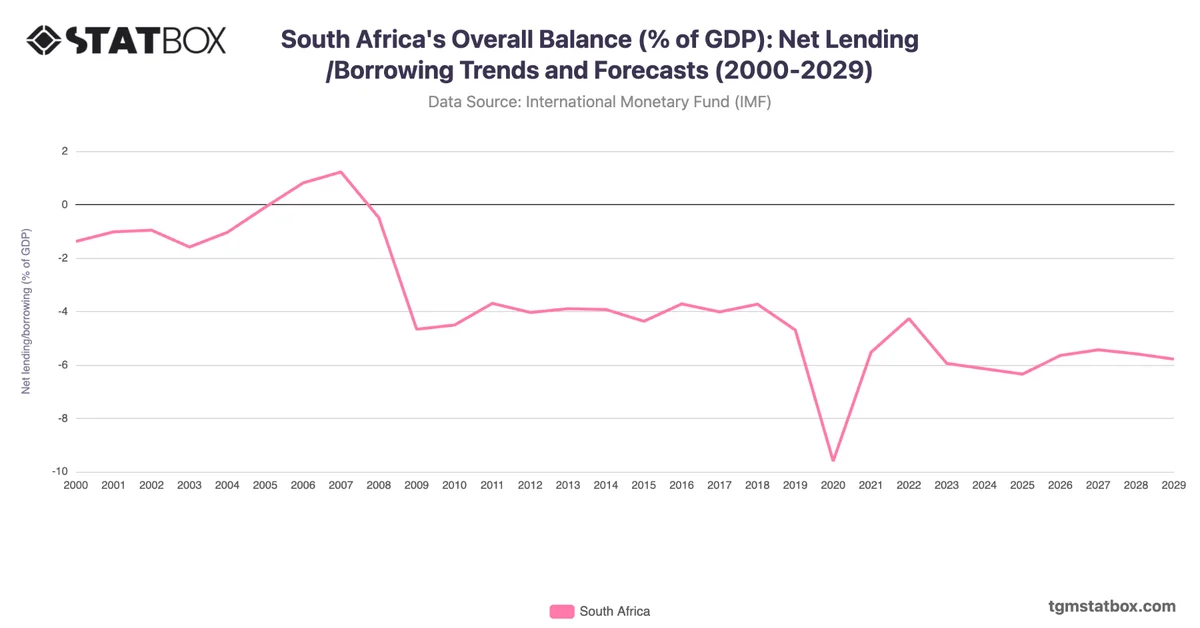
From 2012 onward, rising fiscal deficits and low economic growth caused debt to climb steadily, peaking at 71.02% in 2022. This increase was accelerated by the COVID-19 pandemic, which necessitated additional borrowing to fund healthcare and economic support measures.
From 2012 onward, rising fiscal deficits and low economic growth caused debt to climb steadily, peaking at 71.02% in 2022. This increase was accelerated by the COVID-19 pandemic, which necessitated additional borrowing to fund healthcare and economic support measures.
For additional information, visit statistics on South Africa’s GDP (%): net lending/borrowing forecast, agriculture’s share in South Africa’s GDP, South Africa’s annual GDP growth rate.