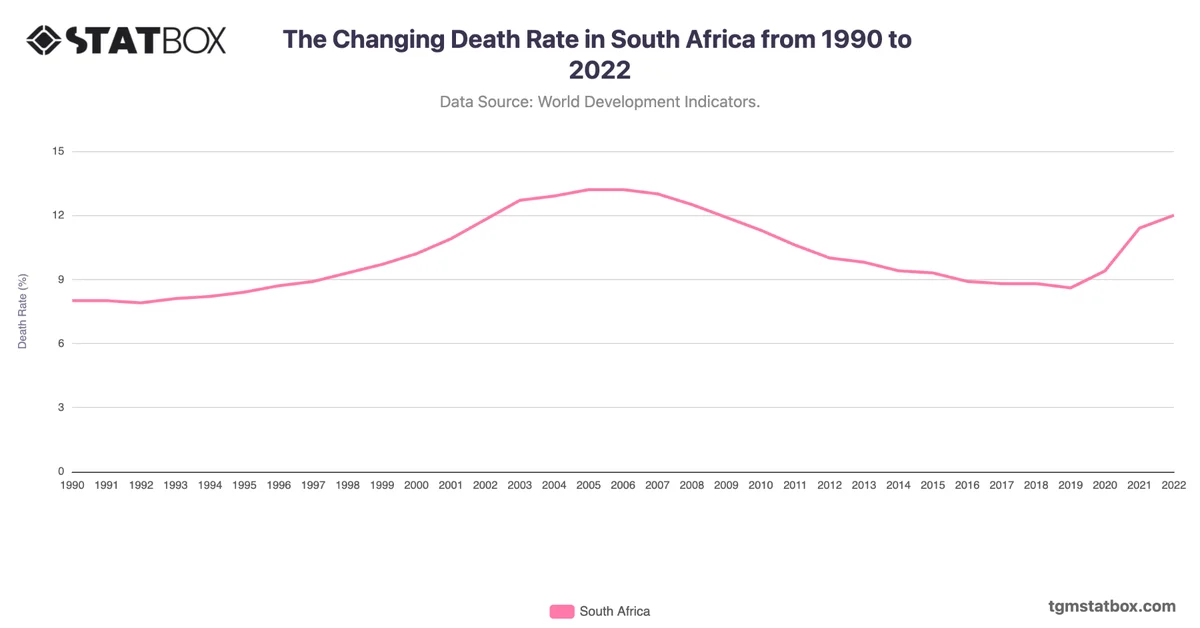
South Africa’s mortality rate exhibited a unique trend, initially increasing from 47.9 in 1990 to a peak of 49.9 in 2005, reflecting the devastating impact of the HIV/AIDS epidemic. The government’s delayed response to the crisis and limited access to antiretroviral therapy contributed to this rise.
From 2006 onward, the rate began a significant decline, dropping to 35.7 by 2010 and 27.7 by 2022. Expanded access to antiretroviral treatments and intensified public health interventions played a critical role in reversing the trend. Despite these gains, South Africa continues to face challenges related to healthcare access and managing the ongoing HIV/AIDS burden.
From 2006 onward, the rate began a significant decline, dropping to 35.7 by 2010 and 27.7 by 2022. Expanded access to antiretroviral treatments and intensified public health interventions played a critical role in reversing the trend. Despite these gains, South Africa continues to face challenges related to healthcare access and managing the ongoing HIV/AIDS burden.
Find out more through related statistics on South Africa’s population size, agriculture’s share in South Africa’s GDP, evolving death rate in South Africa.