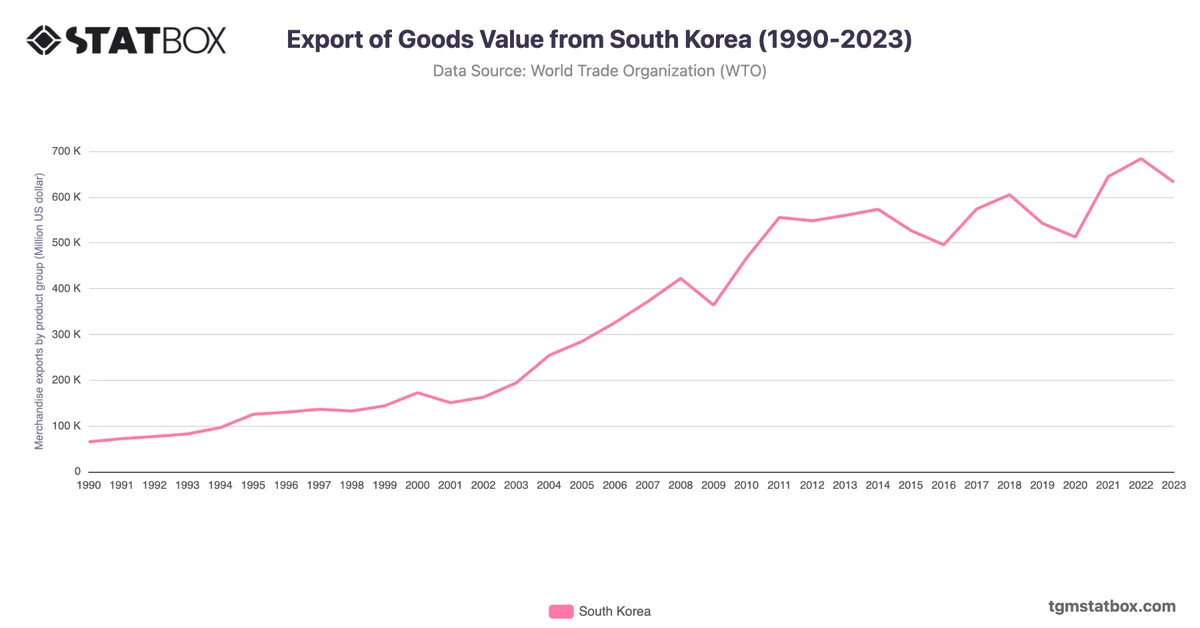
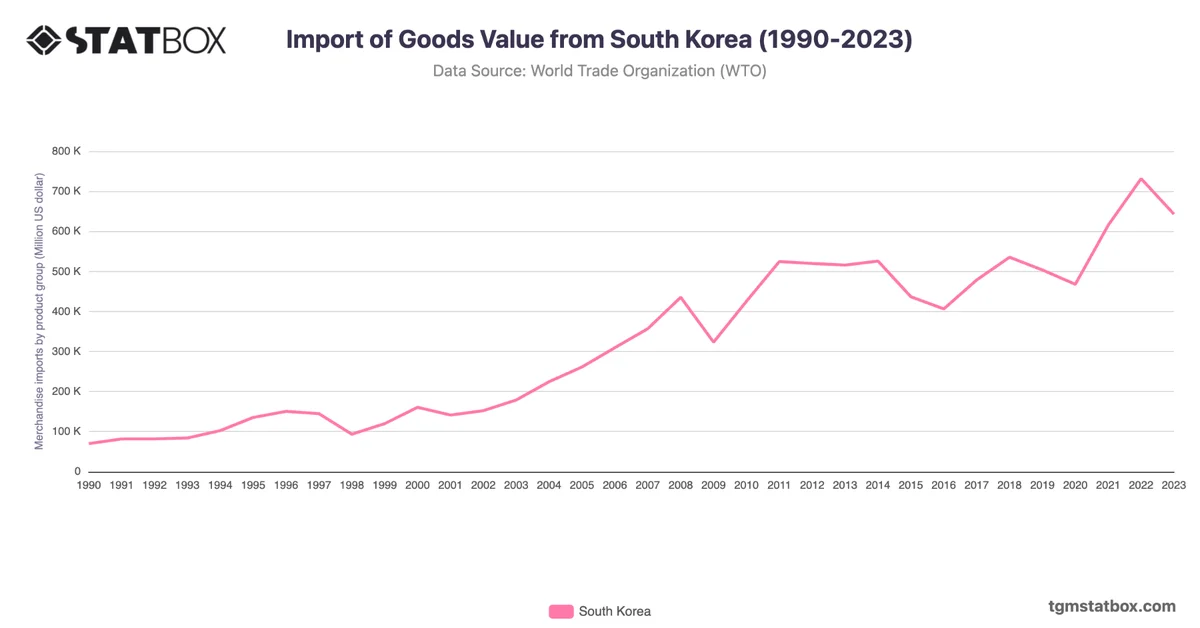
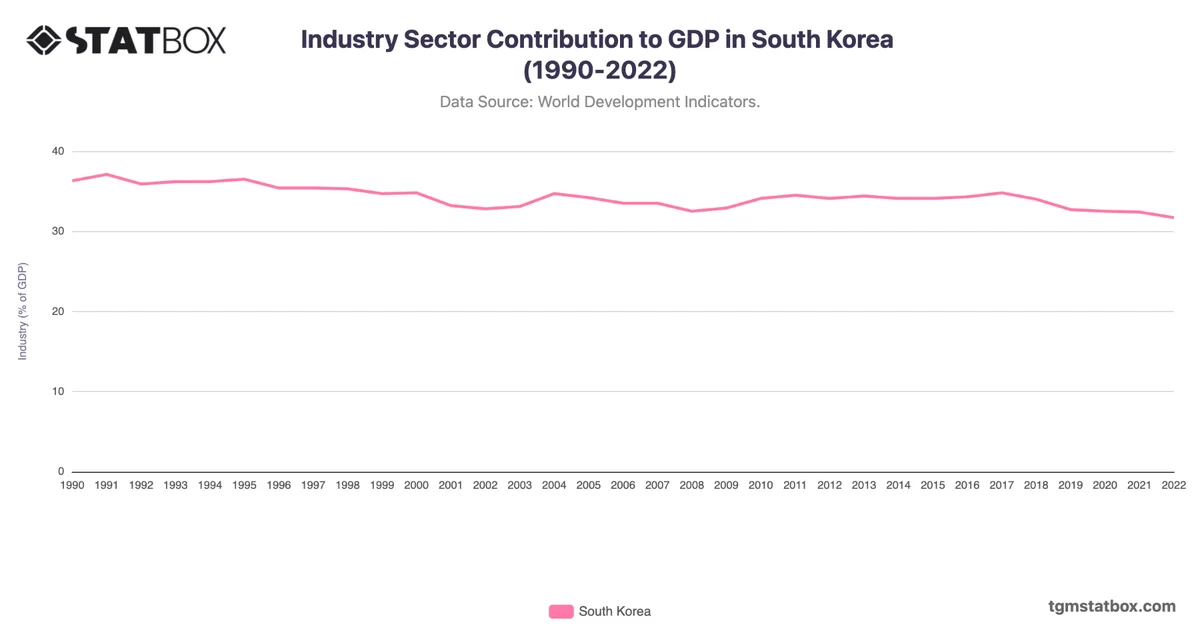
South Korea’s unemployment rate saw varied shifts due to economic changes and external shocks. Starting at 2.5% in 1990, it remained low until the Asian Financial Crisis in 1997, which pushed the rate to 7.0% in 1998. South Korea quickly rebounded with a focus on structural reforms and export-driven growth, reducing unemployment to 3.0% by 2002, which continued in a low range throughout the 2000s.
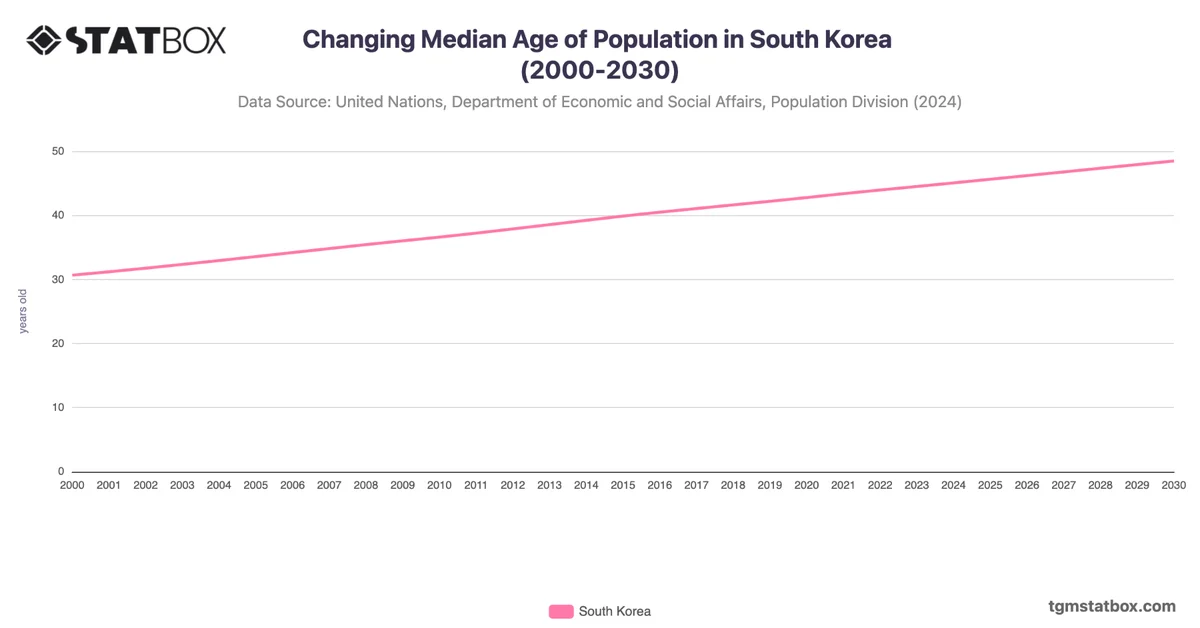
The COVID-19 pandemic in 2020 caused a brief increase to 3.9%, but by 2023, the rate fell to 2.7%, marking a return to pre-pandemic levels. This overall stability reflects South Korea's economic resilience and the efficacy of employment policies focused on innovation and global competitiveness, though the aging population remains a future challenge for workforce growth.
The COVID-19 pandemic in 2020 caused a brief increase to 3.9%, but by 2023, the rate fell to 2.7%, marking a return to pre-pandemic levels. This overall stability reflects South Korea's economic resilience and the efficacy of employment policies focused on innovation and global competitiveness, though the aging population remains a future challenge for workforce growth.
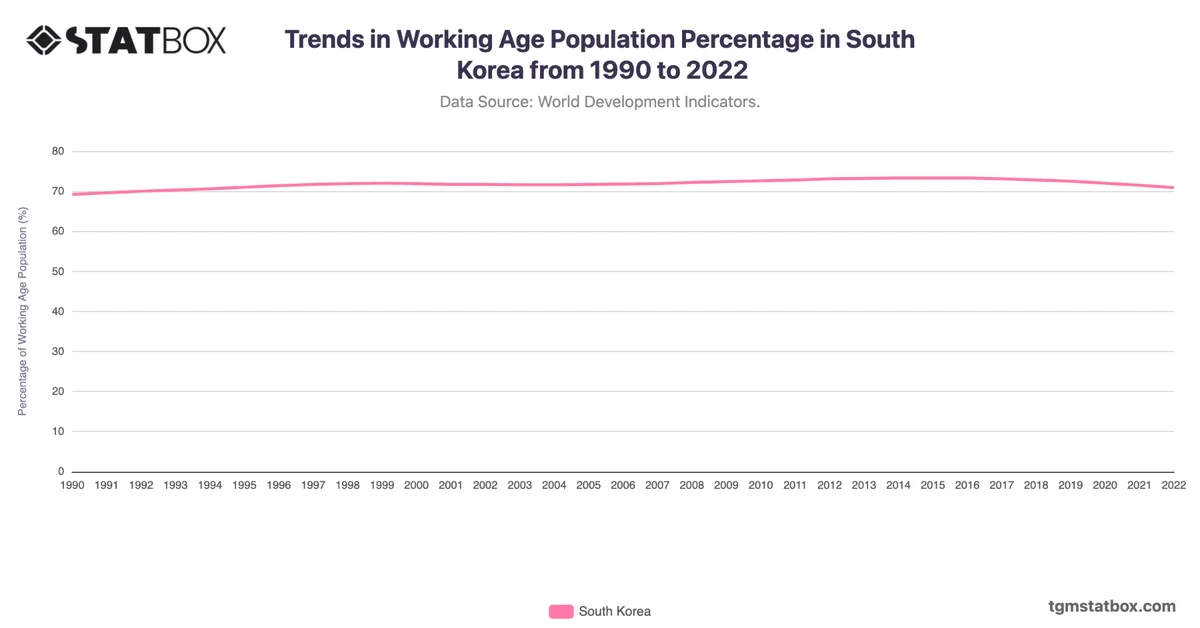
For additional information, visit statistics on South Korea’s population numbers, working-age population share in South Korea, South Korea’s death rate trend.