Chart

Urbanization Growth in Spain from 1990 to 2023

Urbanization Growth in Spain from 1990 to 2023

Share the statistic on social media channels or embed the statistic in your website using "Embed Code", where available.

Share chart

Embed chart
Select Citation

Cite this statistic and select one of the following formats: APA, Chicago, Harvard, MLA & Bluebook


  • APA
  • Chicago
  • Harvard
  • MLA
  • Bluebook
  • IEEE
TGM StatBox. (2024). Urbanization Growth in Spain from 1990 to 2023. TGM StatBox.
Insights

Key Takeaways

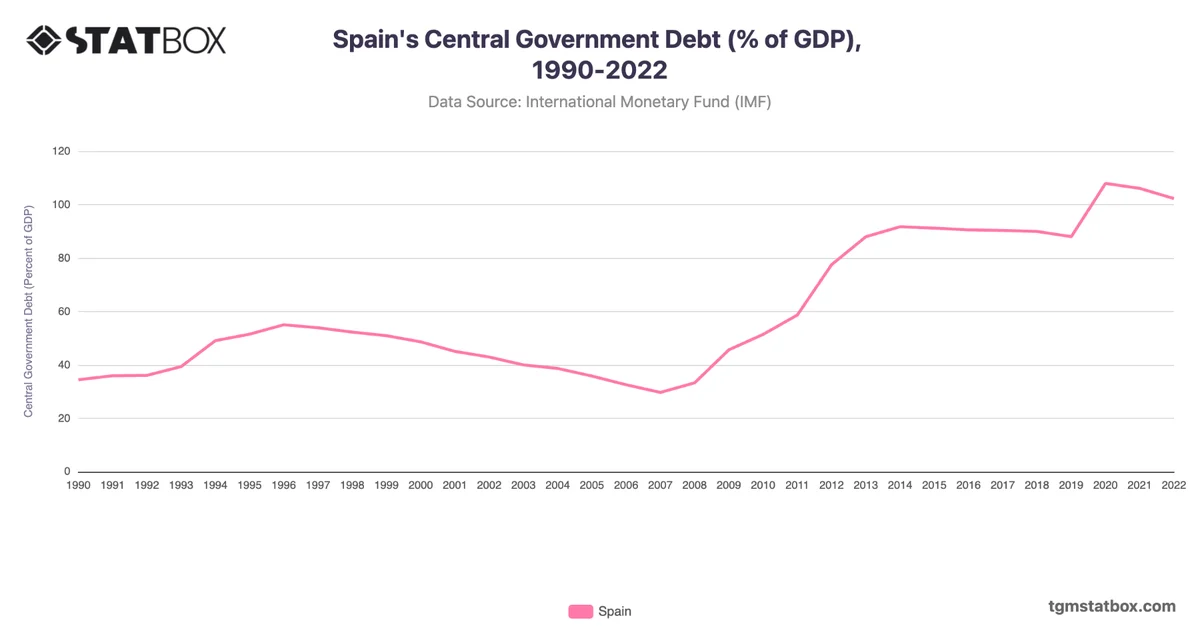
Spain saw steady urbanization growth from 1990 to 2023, rising from 75.4% in 1990 to 81.6% by 2023. The early years of this period show consistent increases, with urbanization gradually moving upward due to Spain's economic expansion and the tourism sector’s influence, especially in coastal cities. By 2008, urbanization reached 78%, with Spain’s housing boom fueling migration to urban areas. Post-2008, despite the global financial crisis, urbanization growth continued, supported by resilient infrastructure and steady economic recovery. The latest data, showing urbanization at 81.6% in 2023, reflects Spain’s sustained urban appeal, with metropolitan areas offering diverse employment and cultural opportunities, underscoring urban migration's role in shaping Spain’s demographic landscape.

For a deeper dive into the topic, explore Spain’s agricultural sector share in GDP, Spain’s yearly GDP growth rate, Spain’s military personnel share.

AI-powered chart insight: This summary is automatically generated to help you understand the chart at a glance. It is intended as an overview; view the full chart and underlying data for complete context.

Charts library

Further Recommended Spain Statistics

Statbox vector
The briefing
New data, in your inbox

Consumer insights, data stories and product updates as we publish them. No other mail, and one click to leave.

Roughly two emails a month.

Research services
Have a question our newsroom hasn't answered? Ask it directly.

Our team can run the study behind the story — in 60+ countries, on your question, with the data belonging to you.