Algeria’s fertility rate experienced significant fluctuations from 1990 to 2022, starting at a high of 4.6 in 1990 before declining to 2.8 by 2022. The sharp decline during the 1990s, reaching 2.6 by 1999, reflects the impact of political instability and economic constraints on family planning. However, the rate rebounded slightly in the 2000s, peaking at 3.1 in 2016, as the country stabilized and healthcare access improved.
The subsequent gradual decline to 2.8 by 2022 indicates continued urbanization and changing societal norms. Despite these trends, Algeria’s fertility rate remains relatively high compared to other North African nations, highlighting the lingering influence of traditional values and uneven rural-urban demographic transitions.
The subsequent gradual decline to 2.8 by 2022 indicates continued urbanization and changing societal norms. Despite these trends, Algeria’s fertility rate remains relatively high compared to other North African nations, highlighting the lingering influence of traditional values and uneven rural-urban demographic transitions.
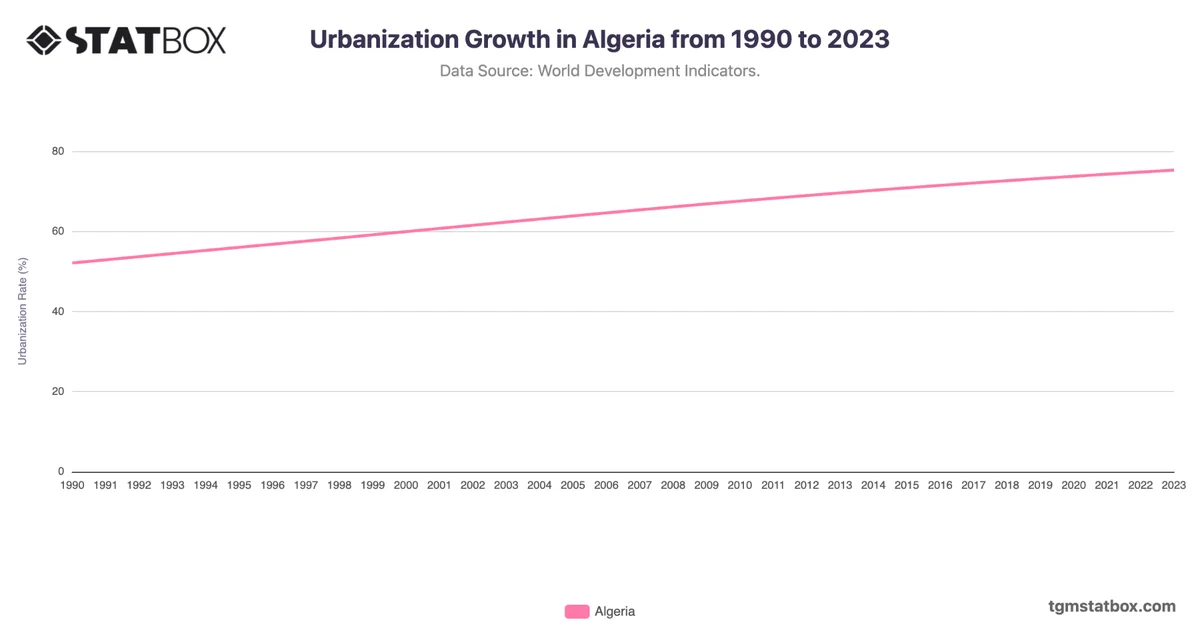
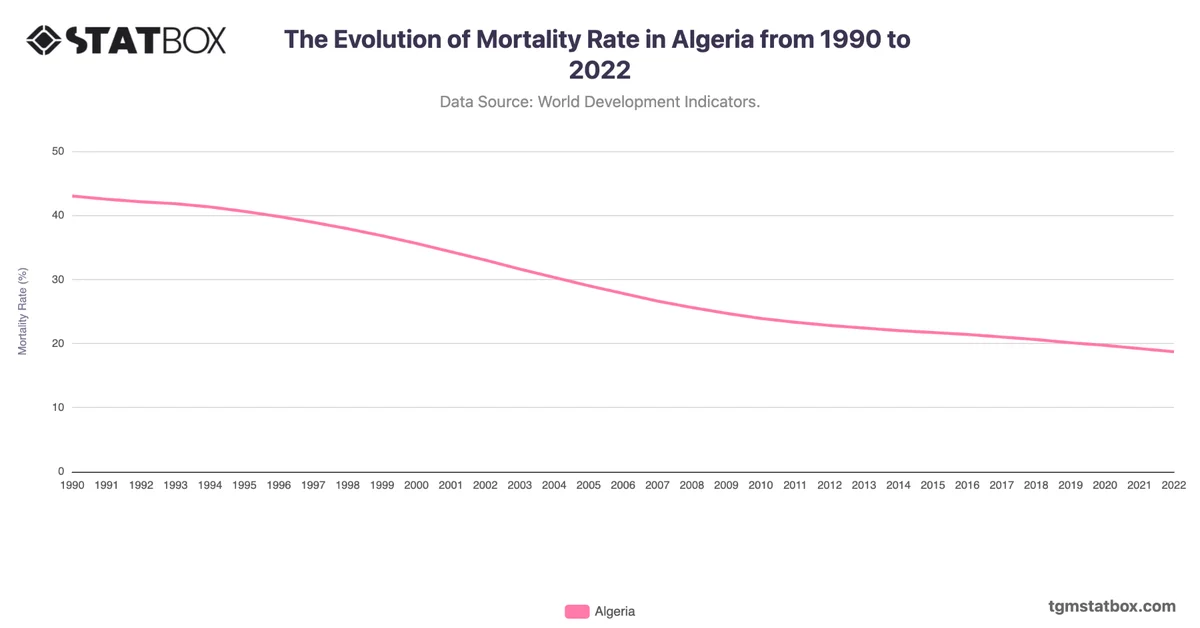
For a broader context, visit other statistics on Algeria’s urbanization rate, Algeria’s unemployment rate fluctuations, Algeria’s mortality rate trends.