Argentina experienced a sharp decline in military personnel from 85,000 in 1990 to 65,000 by 1992, reflecting post-dictatorship reforms aimed at reducing military influence in governance. The numbers remained steady throughout the 1990s, with minor fluctuations tied to defense budget adjustments. A brief increase to 73,000 in 1998 coincided with enhanced regional peacekeeping efforts.
In the 2000s, personnel levels stabilized around 71,000, with incremental increases after 2008 as part of Argentina's renewed focus on modernizing its armed forces and maintaining active participation in UN peacekeeping missions. By 2016, personnel reached 74,000, signaling a balanced approach to military readiness and modernization.
In the 2000s, personnel levels stabilized around 71,000, with incremental increases after 2008 as part of Argentina's renewed focus on modernizing its armed forces and maintaining active participation in UN peacekeeping missions. By 2016, personnel reached 74,000, signaling a balanced approach to military readiness and modernization.
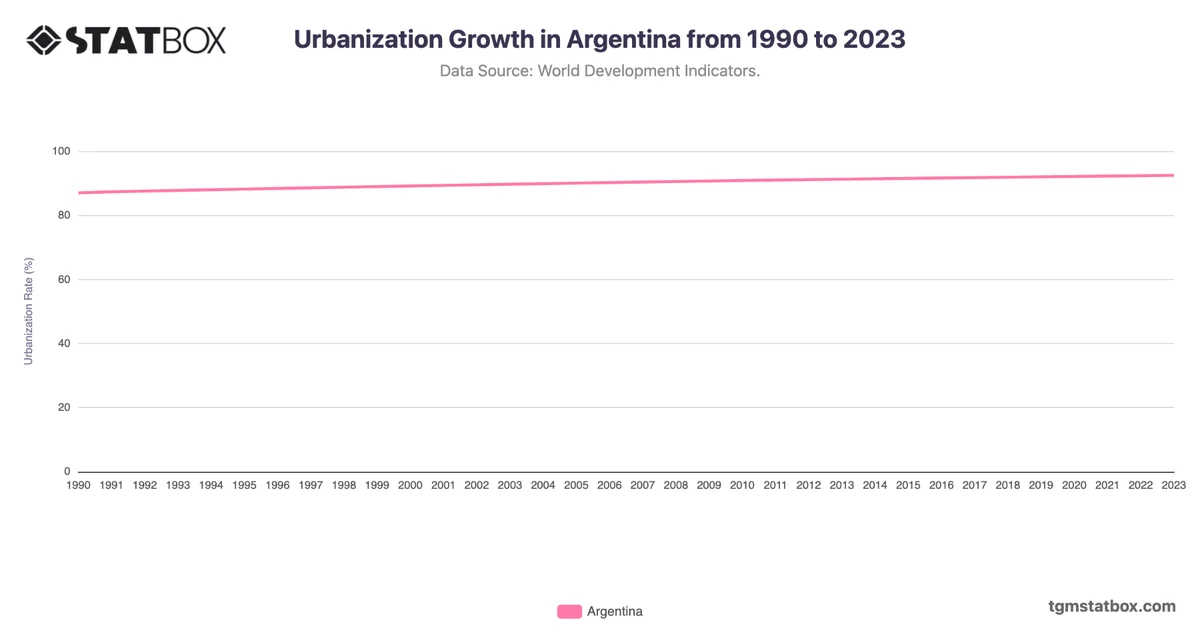
Discover additional trends and data on Argentina’s population figures, Argentina’s urbanization rate, Military personnel ratio in Argentina.