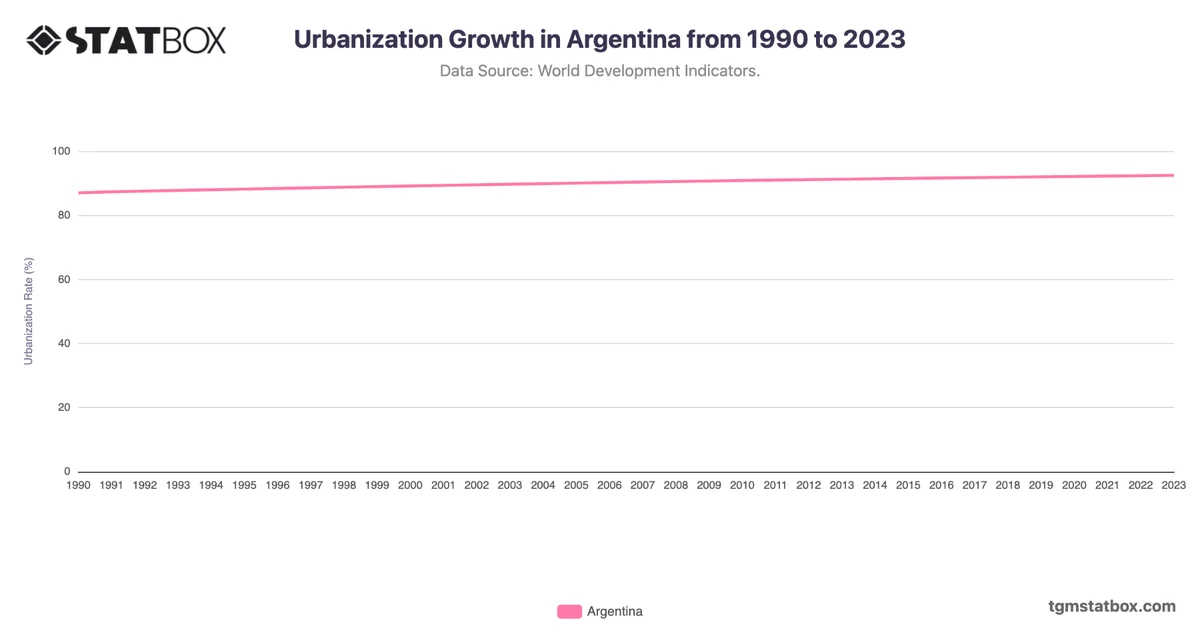
Argentina's population density rose gradually from 12 people per square kilometer in 1990 to 17 by 2021. This steady increase reflects a combination of natural population growth and urban migration, especially toward Buenos Aires and other urban centers. The density saw only modest increments over the years, reaching 15 by 2010, which corresponds with stable demographic growth rates and relatively low inward migration trends.
The trend continued with minor growth, culminating in 17 people per square kilometer by 2021. This low-density figure, despite a vast land area, highlights Argentina’s uneven population distribution, with vast rural areas and concentrated urban centers shaping its demographic profile.
The trend continued with minor growth, culminating in 17 people per square kilometer by 2021. This low-density figure, despite a vast land area, highlights Argentina’s uneven population distribution, with vast rural areas and concentrated urban centers shaping its demographic profile.
For additional information, visit statistics on Argentina’s yearly GDP growth rate, Argentina’s shifting demographics, Argentina’s population growth trends.