Chart

Population Density in Australia from 1990 to 2021

Population Density in Australia from 1990 to 2021

Share the statistic on social media channels or embed the statistic in your website using "Embed Code", where available.

Share chart

Embed chart
Select Citation

Cite this statistic and select one of the following formats: APA, Chicago, Harvard, MLA & Bluebook


  • APA
  • Chicago
  • Harvard
  • MLA
  • Bluebook
  • IEEE
TGM StatBox. (2024). Population Density in Australia from 1990 to 2021. TGM StatBox.
Insights

Key Takeaways

The chart shows the minimal change in Australia’s population density from 1990 to 2021, consistently remaining at 2 people per square kilometer until 2001, when it increased to 3 people per square kilometer, where it has remained since. Despite Australia's economic growth and significant population increase during this period, its vast land area results in one of the lowest population densities in the world. Most of the population is concentrated in urban areas along the coasts, with vast portions of the interior remaining sparsely populated. This low density reflects the country’s geography, with large areas of desert and arid land limiting habitation and development, even as urban centers experience population growth.

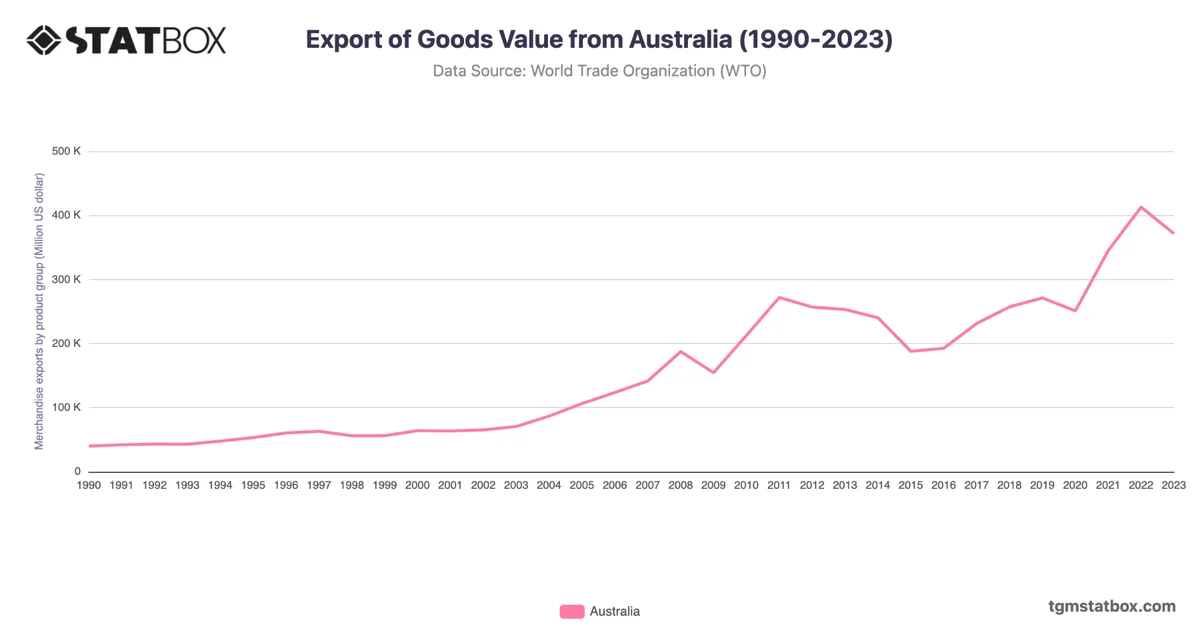
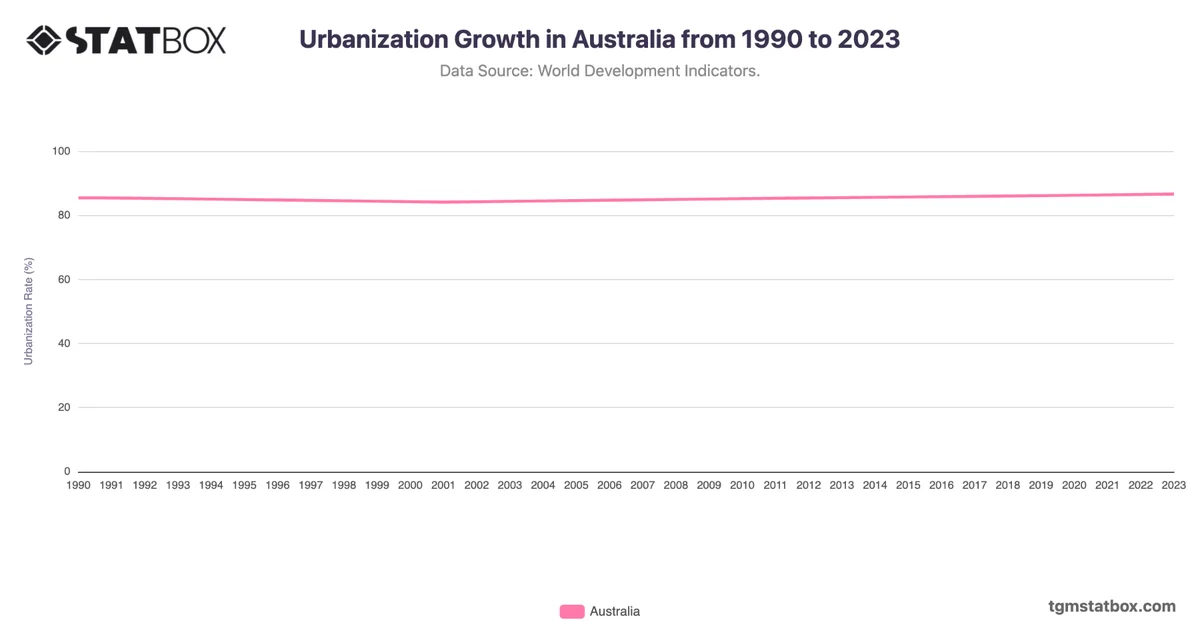
Explore related charts to gain a better understanding of Australia’s annual GDP, Australia’s shifting median age, Australia’s urban population growth.

AI-powered chart insight: This summary is automatically generated to help you understand the chart at a glance. It is intended as an overview; view the full chart and underlying data for complete context.

Related report

Would You Like to Know More?
Explore Our Australia Report

Charts library

Further Recommended Australia Statistics

Statbox vector
The briefing
New data, in your inbox

Consumer insights, data stories and product updates as we publish them. No other mail, and one click to leave.

Roughly two emails a month.

Research services
Have a question our newsroom hasn't answered? Ask it directly.

Our team can run the study behind the story — in 60+ countries, on your question, with the data belonging to you.