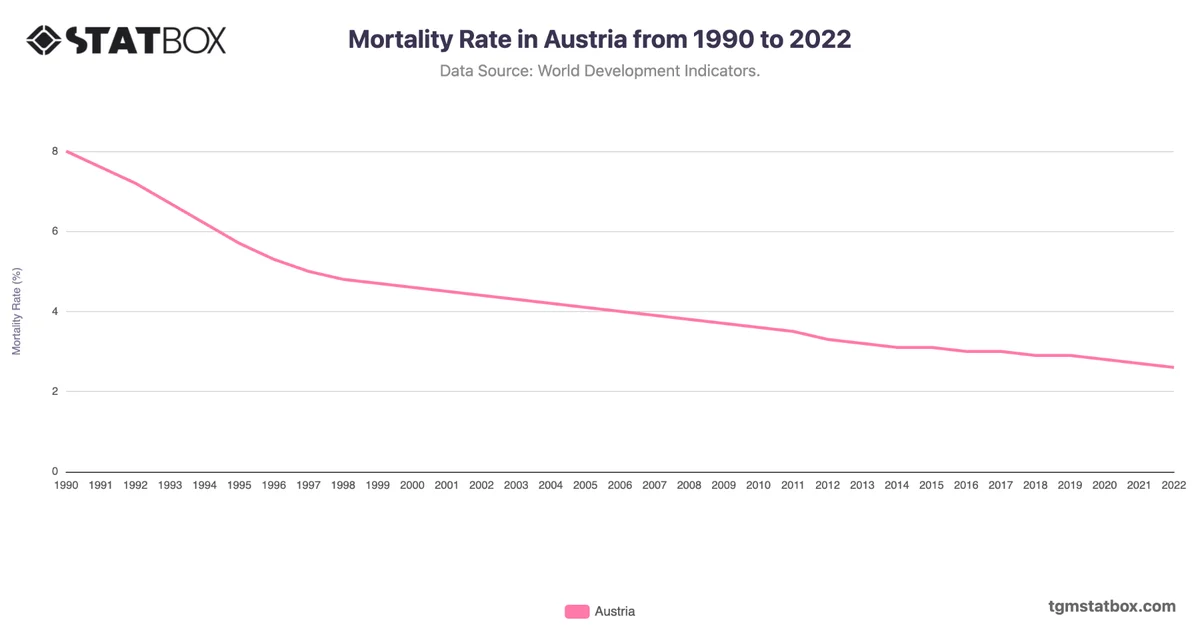
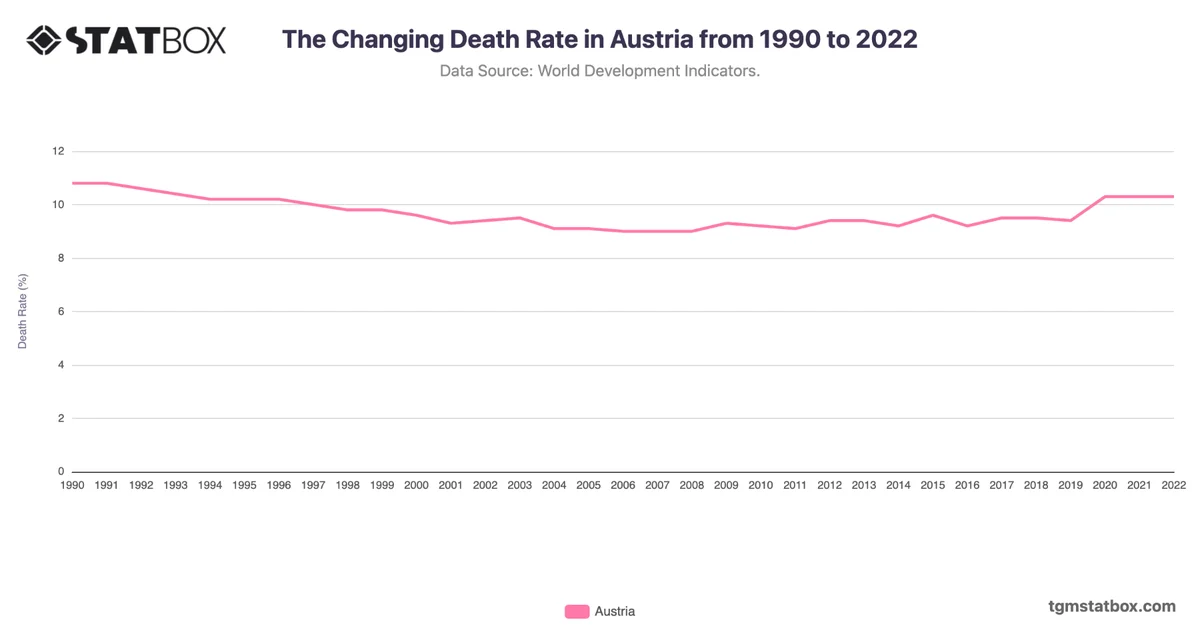
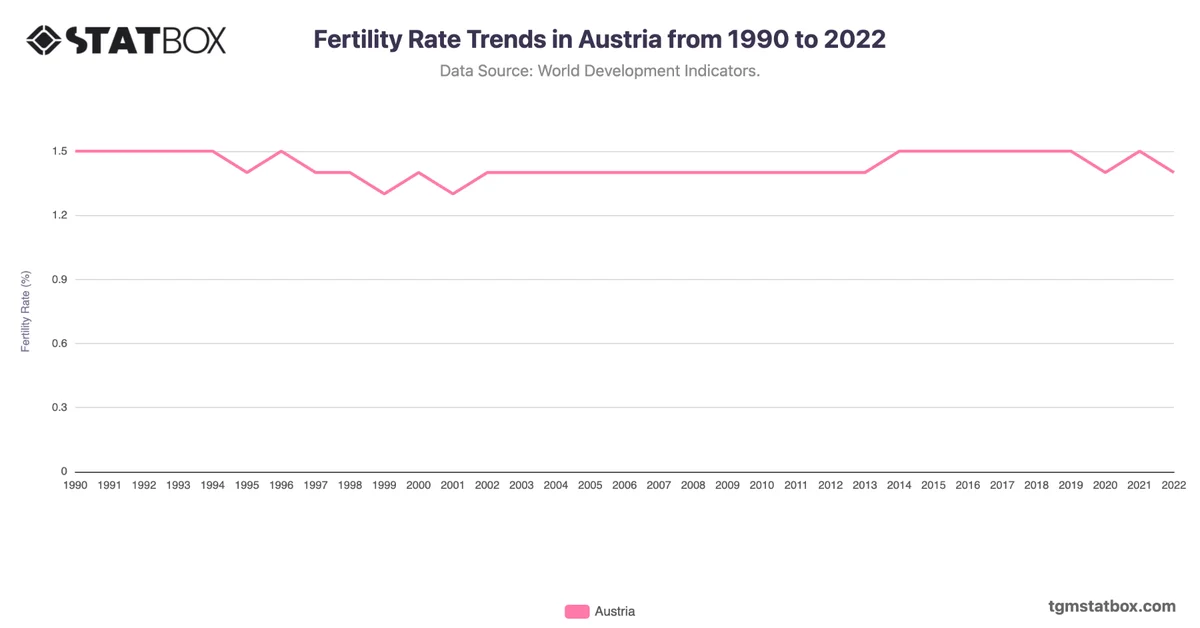
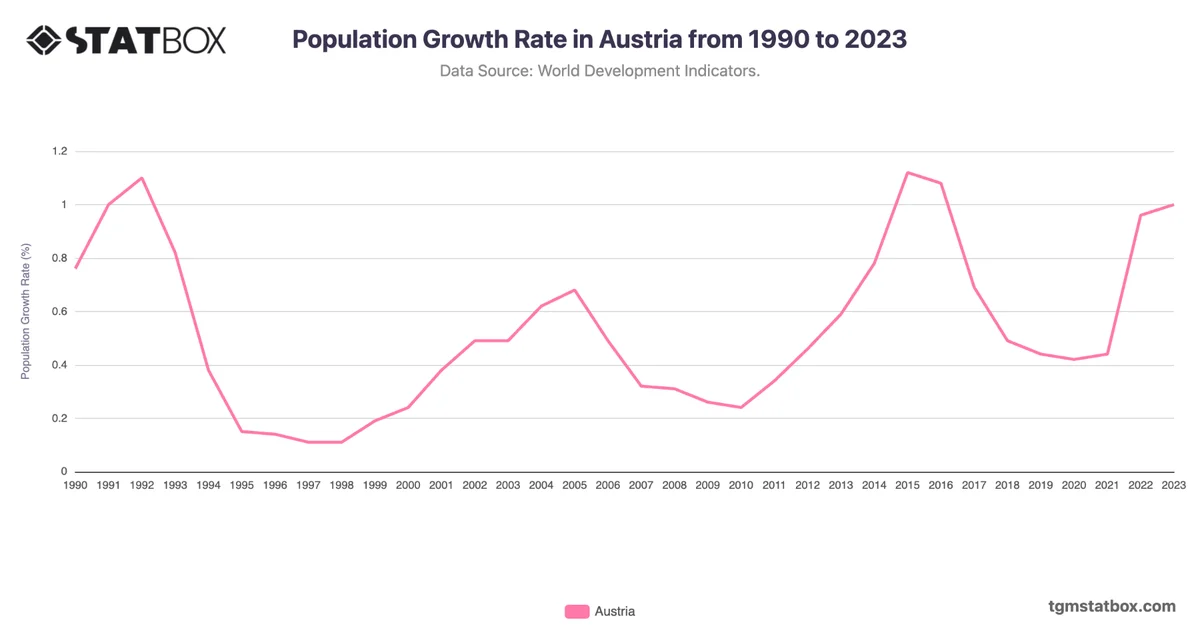
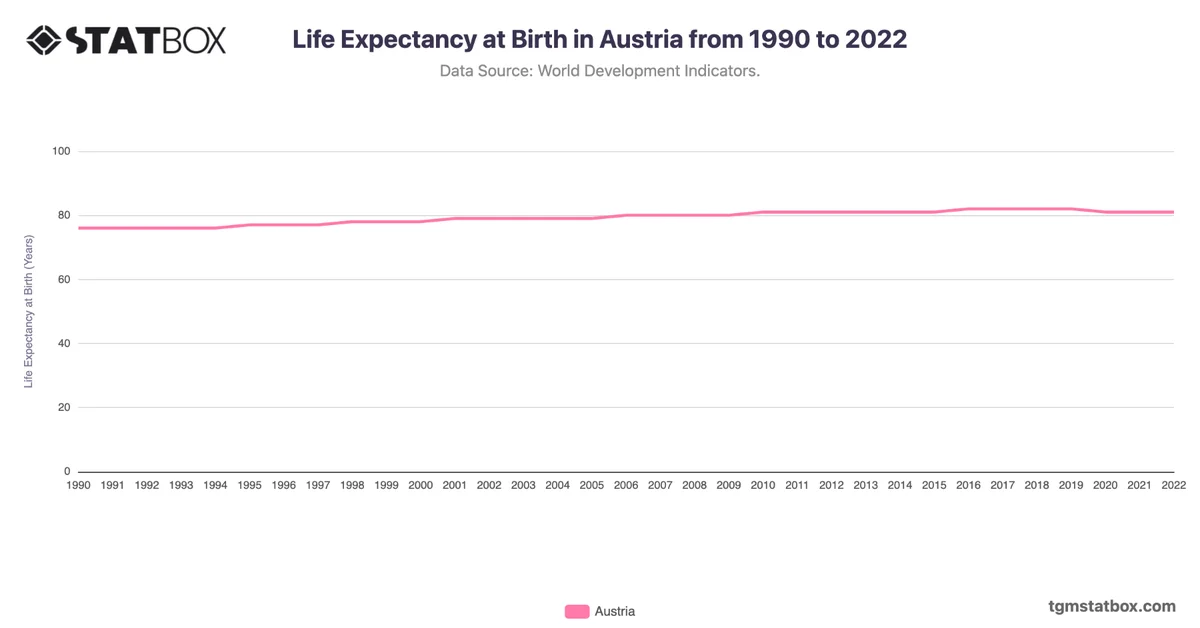
Austria’s median age increased from 37.1 in 2000 to 42.6 by 2020, indicative of Western Europe’s aging demographic influenced by low fertility rates and increasing life expectancy. Austria’s stable healthcare and welfare systems have contributed to extended life spans, while birth rates have remained relatively low, intensifying the aging trend. Notably, the median age climbed more rapidly after 2005, when Austria’s economic conditions improved, encouraging people to live longer, healthier lives.
Projections show Austria’s median age reaching 45.1 by 2030, with significant shifts as the working-age population shrinks while the elderly population expands. This demographic shift underscores the need for adjustments in pension systems and healthcare resources to accommodate an aging society.
Projections show Austria’s median age reaching 45.1 by 2030, with significant shifts as the working-age population shrinks while the elderly population expands. This demographic shift underscores the need for adjustments in pension systems and healthcare resources to accommodate an aging society.
Find out more through related statistics on Austria’s services sector GDP share, Austria’s birth longevity measure, Austria’s population density.