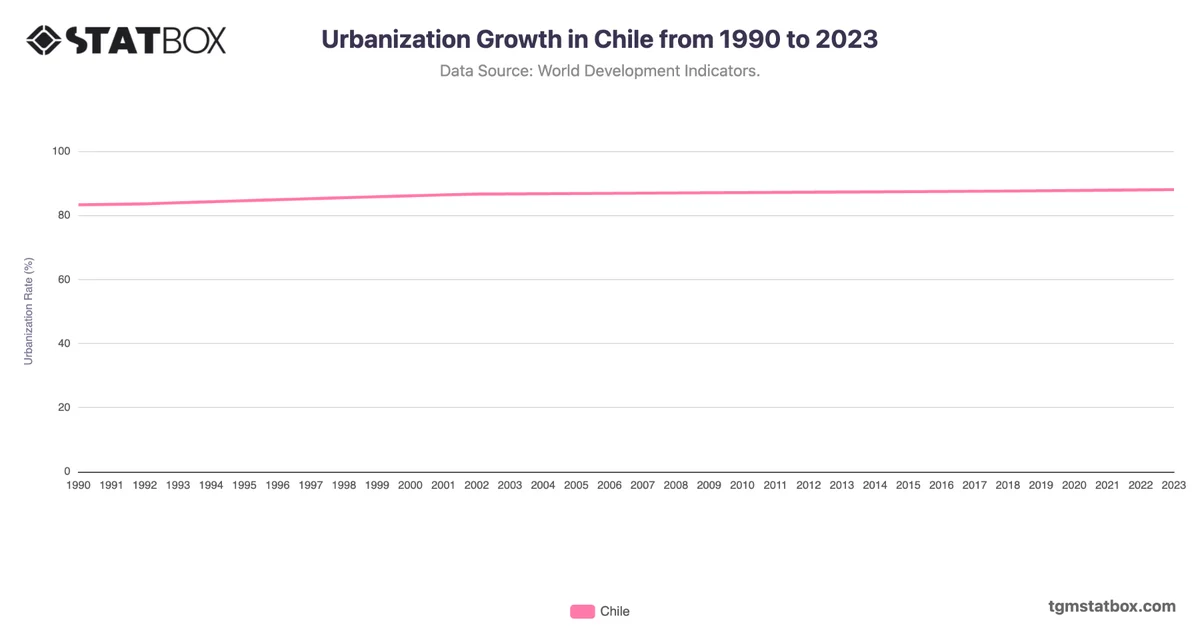
Chile's population growth remained stable at 1.6% throughout the early 1990s before entering a gradual decline, dropping to 1.0% by the early 2000s. This period coincided with improvements in healthcare and education, which contributed to reduced fertility rates. The downward trend continued for over a decade as Chile transitioned into a more developed economy with urbanization driving demographic changes.
From 2016 to 2019, growth rates rebounded, peaking at 1.8% due to increased immigration, particularly from neighboring countries. However, this trend reversed sharply in the 2020s, with growth plummeting to 0.1% by 2023. The decline reflects stricter immigration controls and the long-term effects of falling fertility rates, signaling a demographic shift towards slower population growth.
From 2016 to 2019, growth rates rebounded, peaking at 1.8% due to increased immigration, particularly from neighboring countries. However, this trend reversed sharply in the 2020s, with growth plummeting to 0.1% by 2023. The decline reflects stricter immigration controls and the long-term effects of falling fertility rates, signaling a demographic shift towards slower population growth.
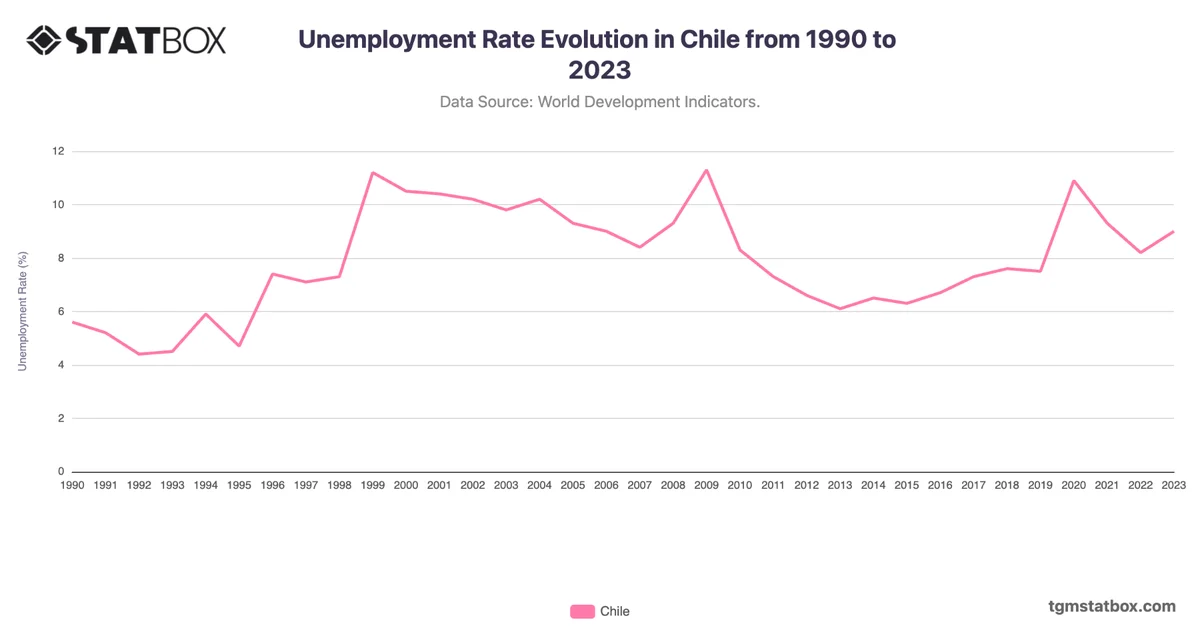
Discover additional trends and data on Chile’s unemployment rate trends, Chile’s evolving median age, Chile’s population density.