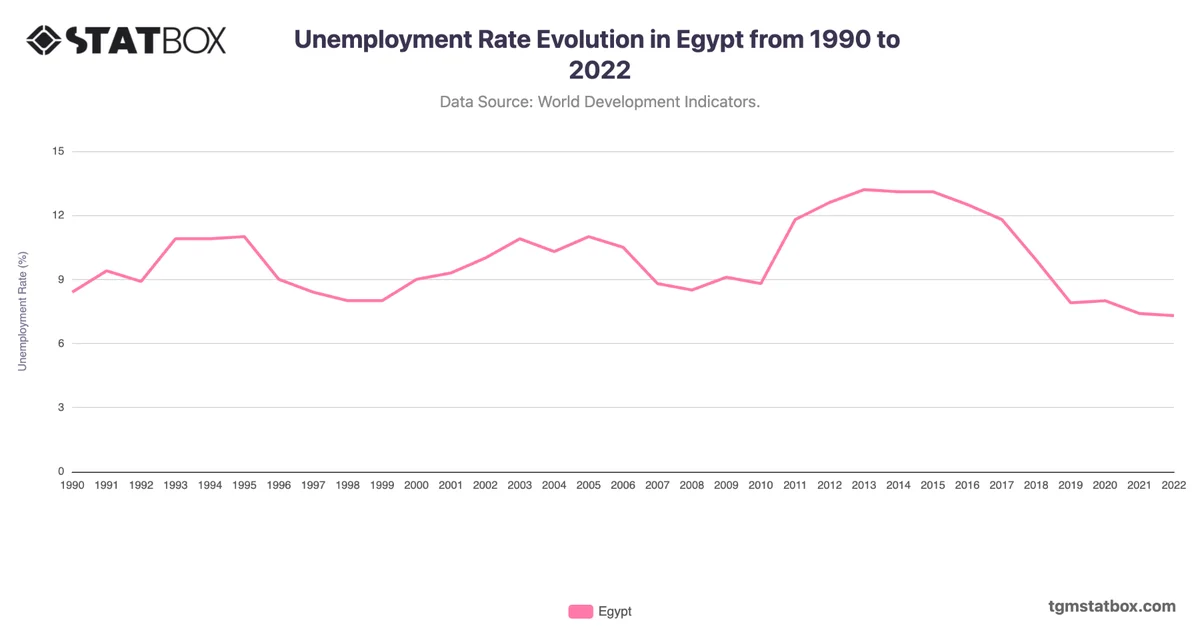
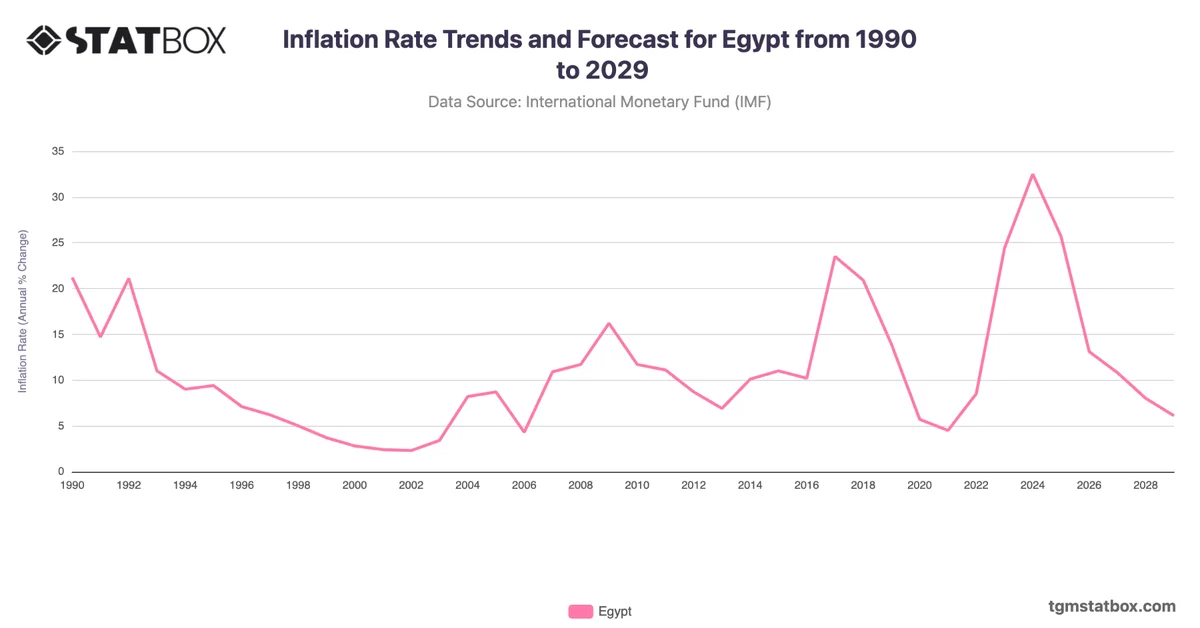
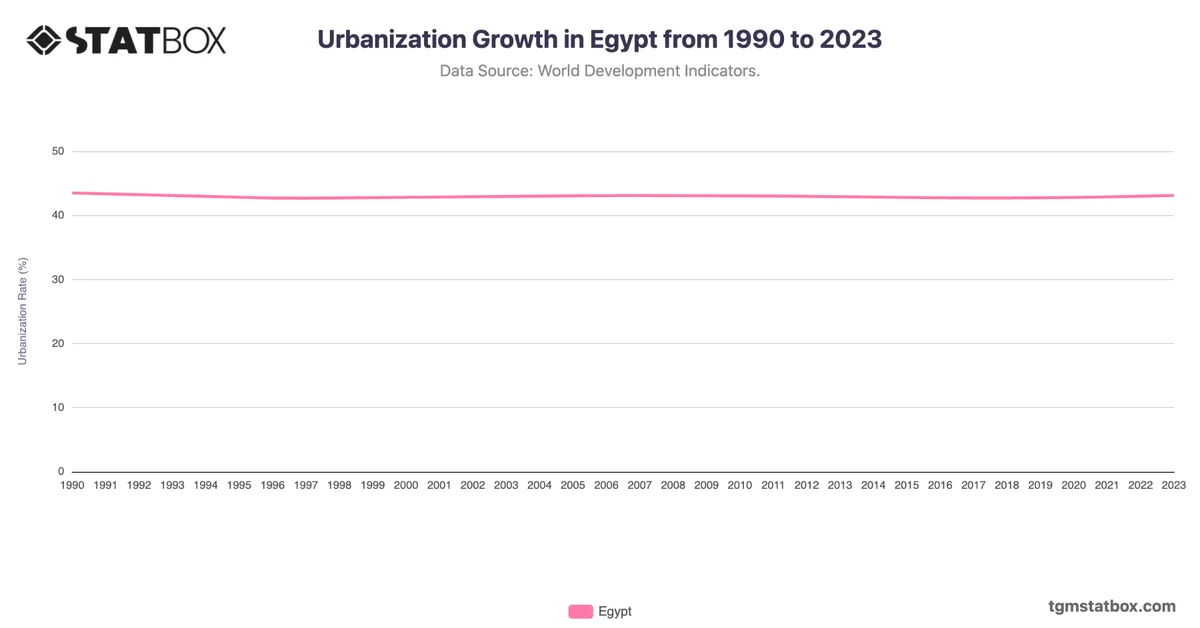
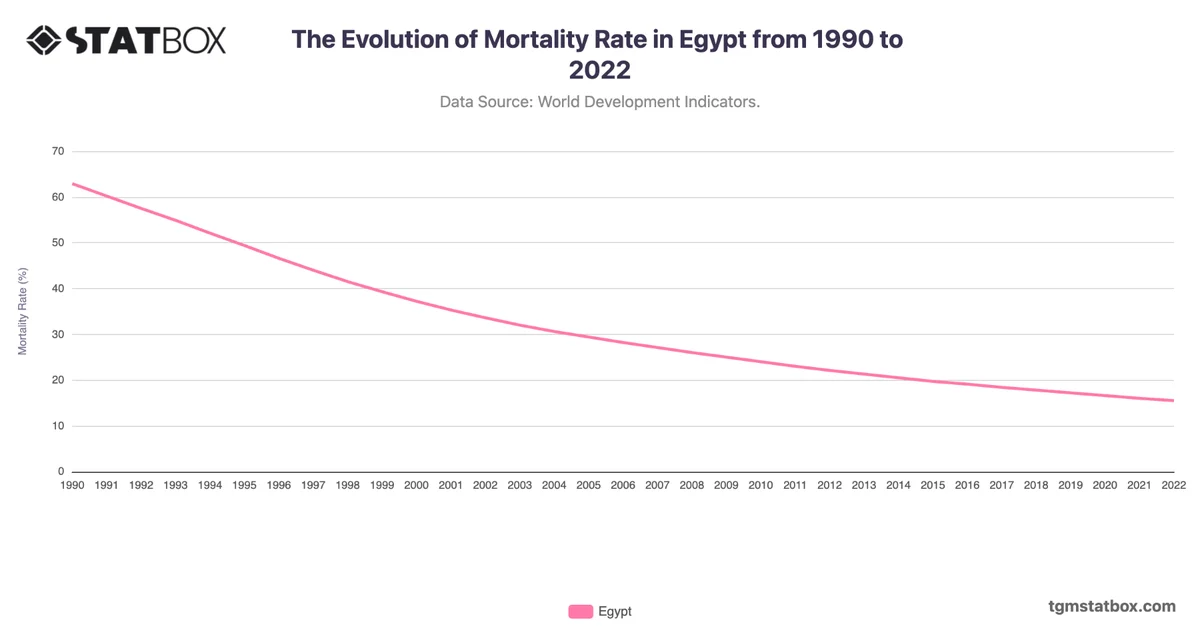
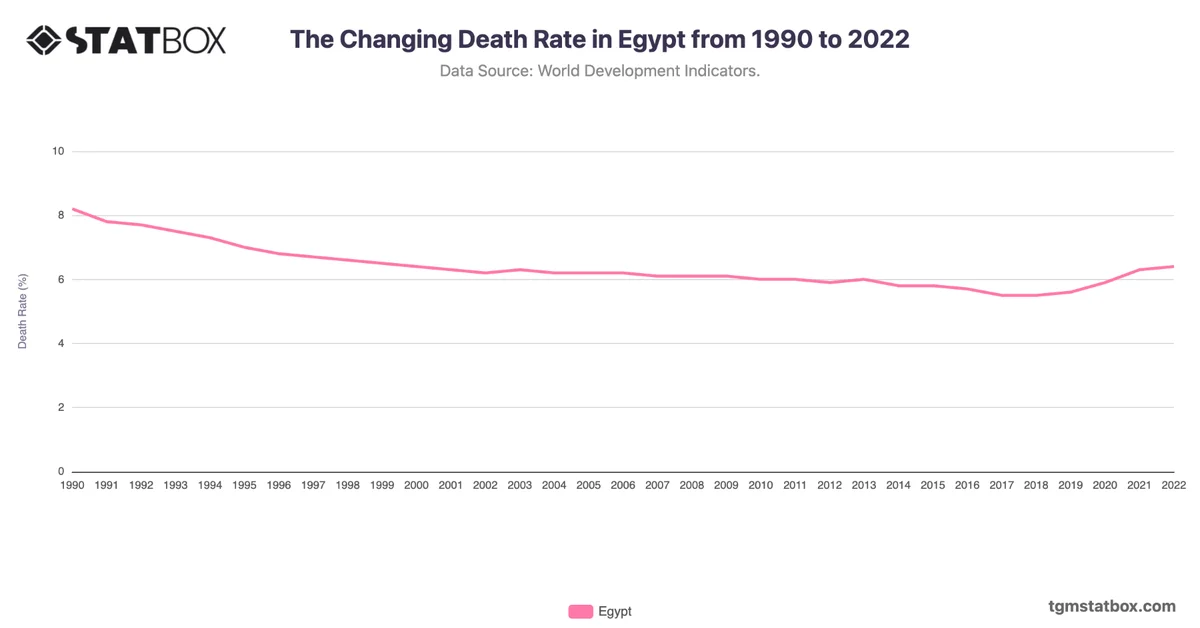
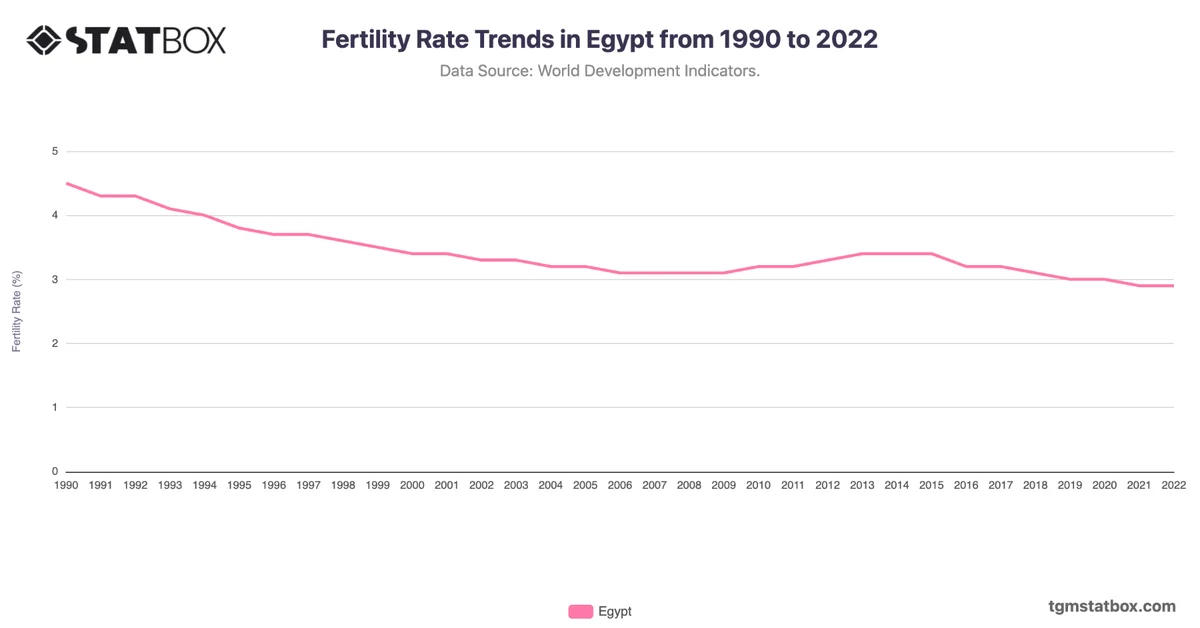
Egypt's median age has experienced a moderate rise from 20.1 years in 2000 to an anticipated 25.6 years by 2030, marking a younger demographic compared to other nations. Urbanization, though growing, has not yet transformed the population structure as significantly as in some other countries. The median age increased to 22.2 by 2010, with urban areas such as Cairo attracting rural residents seeking employment and access to services. However, high birth rates in rural regions continue to sustain a younger population overall.
By 2023, the median age reached 24.0, with projections indicating a gradual climb as Egypt continues to urbanize and invest in healthcare. The expected increase to 25.6 by 2030 underscores Egypt’s demographic shift towards maturity, albeit at a slower pace than more urbanized nations. Urban migration is likely to continue impacting the median age as access to services and economic opportunities in cities shape population growth patterns and family size preferences.
By 2023, the median age reached 24.0, with projections indicating a gradual climb as Egypt continues to urbanize and invest in healthcare. The expected increase to 25.6 by 2030 underscores Egypt’s demographic shift towards maturity, albeit at a slower pace than more urbanized nations. Urban migration is likely to continue impacting the median age as access to services and economic opportunities in cities shape population growth patterns and family size preferences.
For a deeper dive into the topic, explore Egypt’s unemployment rate, Egypt’s population figures, Egypt’s birth life span.