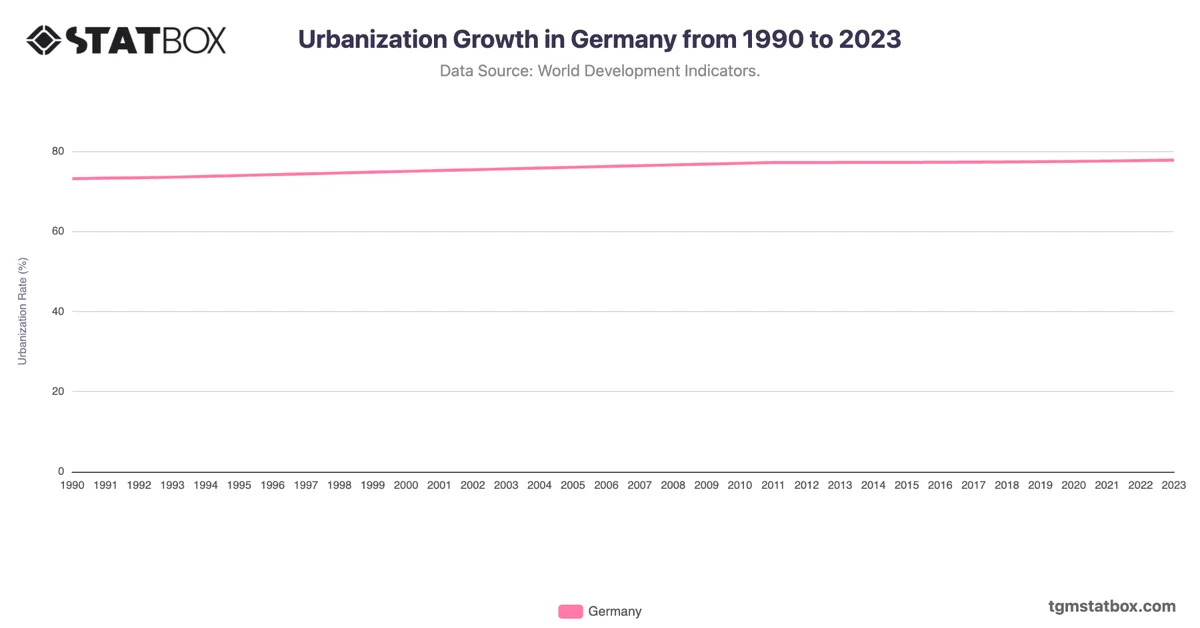
Germany's median age has increased notably from 39 years in 2000 to an estimated 46.3 by 2030, reflecting one of the highest aging trends among European nations. The aging trend was clear by 2010 when the median age reached 43.3, driven by a low birth rate and extended life expectancy in urban areas. Germany's extensive urban infrastructure has supported high living standards, leading to smaller family sizes and longer life spans in metropolitan areas.
By 2023, Germany’s median age rose to 45.1, with projections pointing to continued growth. The expected rise to 46.3 by 2030 underscores Germany's demographic challenges related to an aging population. Urbanization, high standards of living, and access to healthcare have amplified this trend, indicating a demographic shift that may impact labor markets and healthcare systems as Germany’s population continues to age.
By 2023, Germany’s median age rose to 45.1, with projections pointing to continued growth. The expected rise to 46.3 by 2030 underscores Germany's demographic challenges related to an aging population. Urbanization, high standards of living, and access to healthcare have amplified this trend, indicating a demographic shift that may impact labor markets and healthcare systems as Germany’s population continues to age.
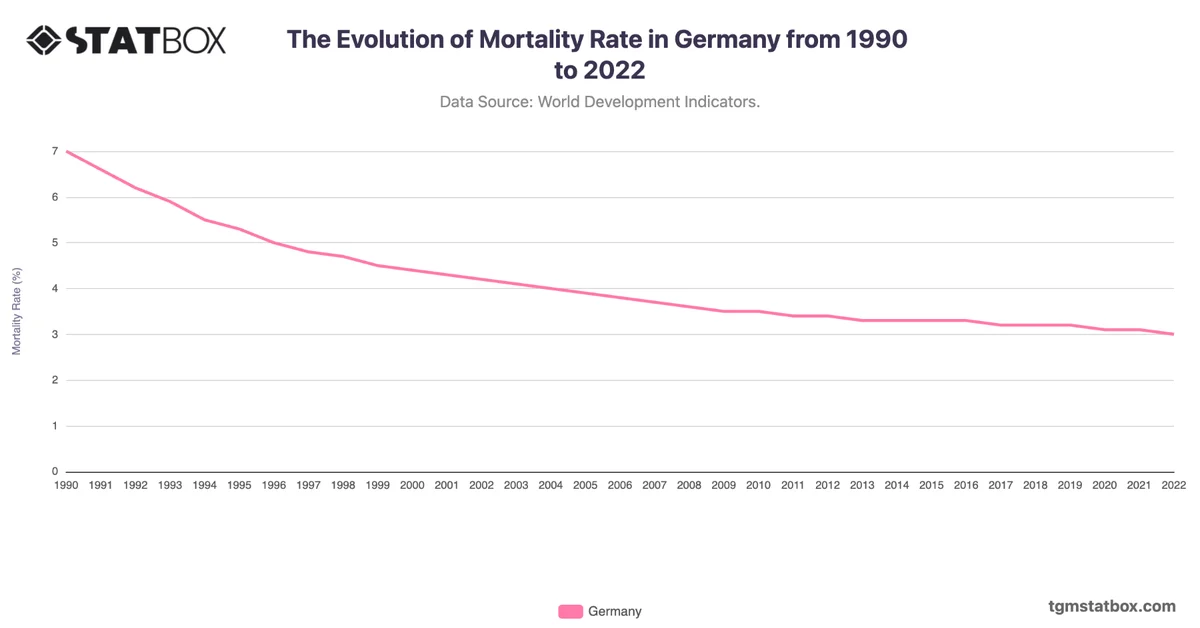
Explore related charts to gain a better understanding of Germany’s fertility rate, Germany’s mortality rate trends, Germany’s population numbers.