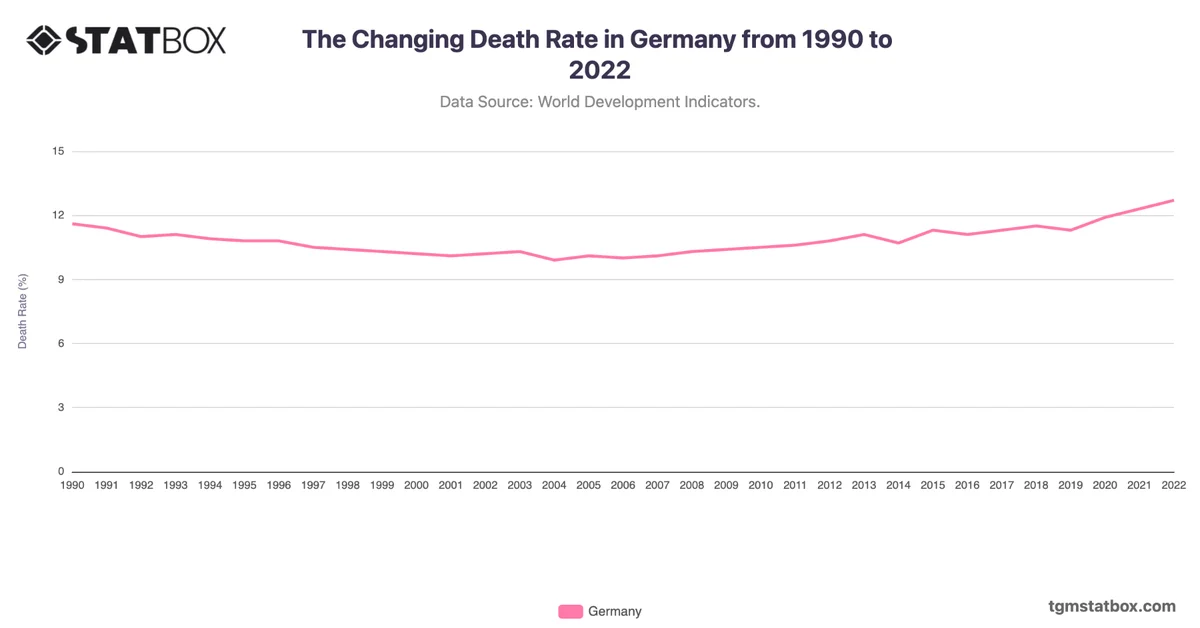
Germany’s unemployment rate reflects the nation’s transformation, particularly after reunification in 1990. The early 1990s saw rising unemployment, with a peak of 11.2% in 2005 due to structural adjustments, including reunification and economic reforms. Germany’s Hartz reforms, implemented in the mid-2000s, fundamentally reshaped its labor market, contributing to a gradual decline in unemployment from 2007 onwards.
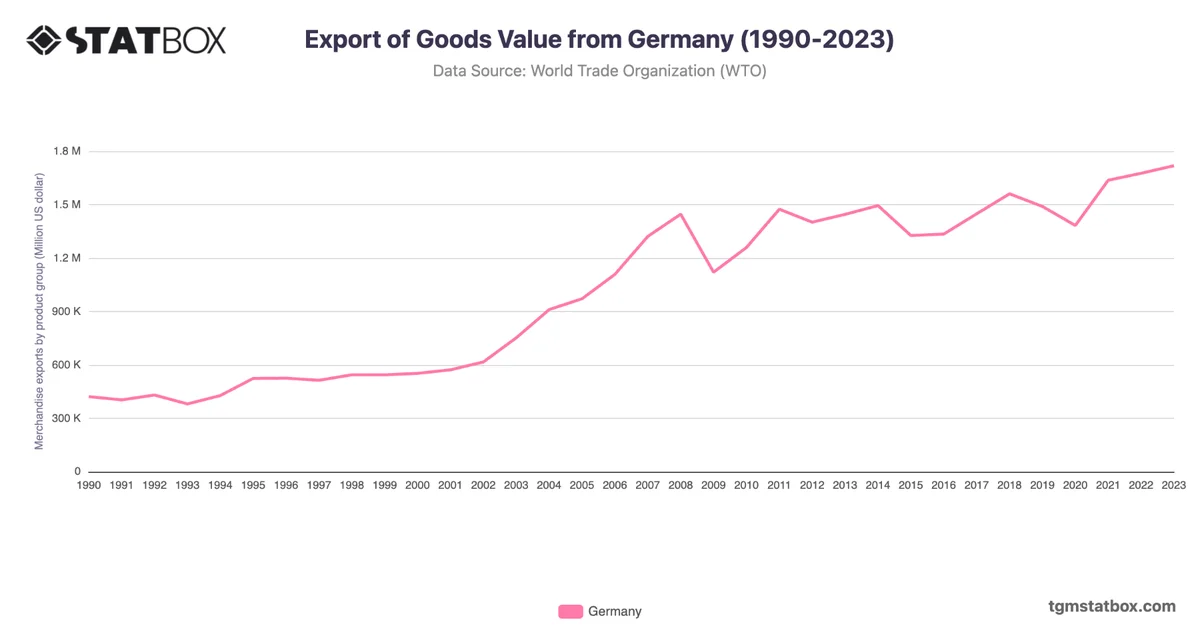
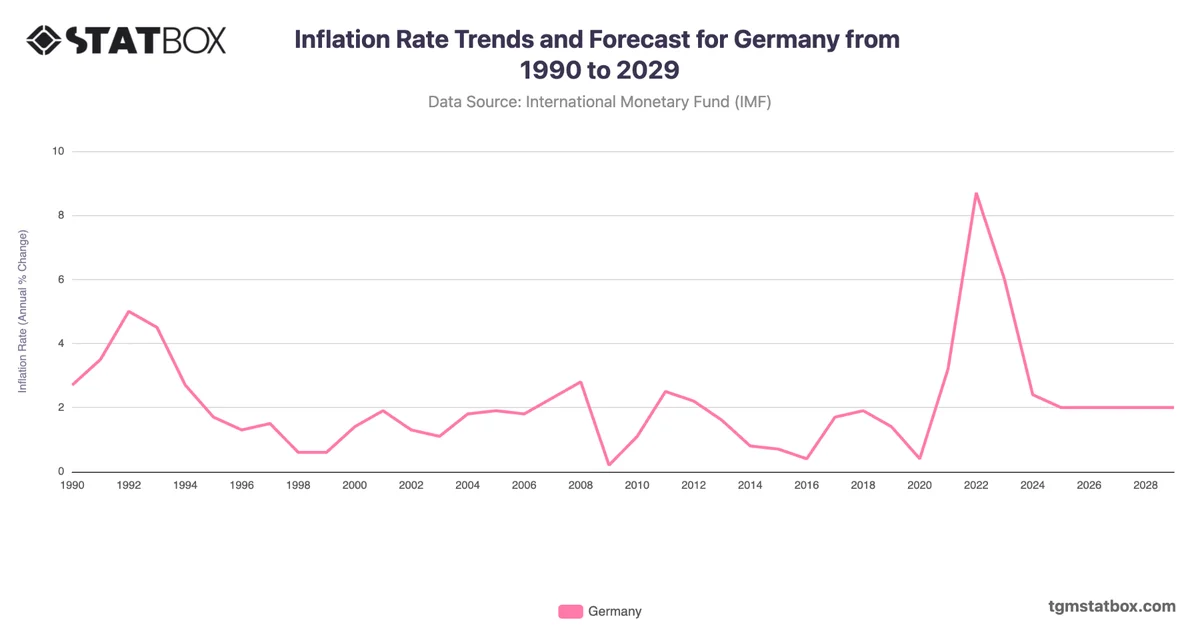
The 2008 financial crisis briefly interrupted this progress, but Germany’s robust export-oriented economy helped reduce unemployment steadily afterward, reaching a historic low of 3.1% in 2019. Despite a slight rise to 3.9% in 2020 due to the pandemic, Germany's economy quickly adapted, bringing unemployment down again by 2021, underscoring its resilient economic structure.
The 2008 financial crisis briefly interrupted this progress, but Germany’s robust export-oriented economy helped reduce unemployment steadily afterward, reaching a historic low of 3.1% in 2019. Despite a slight rise to 3.9% in 2020 due to the pandemic, Germany's economy quickly adapted, bringing unemployment down again by 2021, underscoring its resilient economic structure.
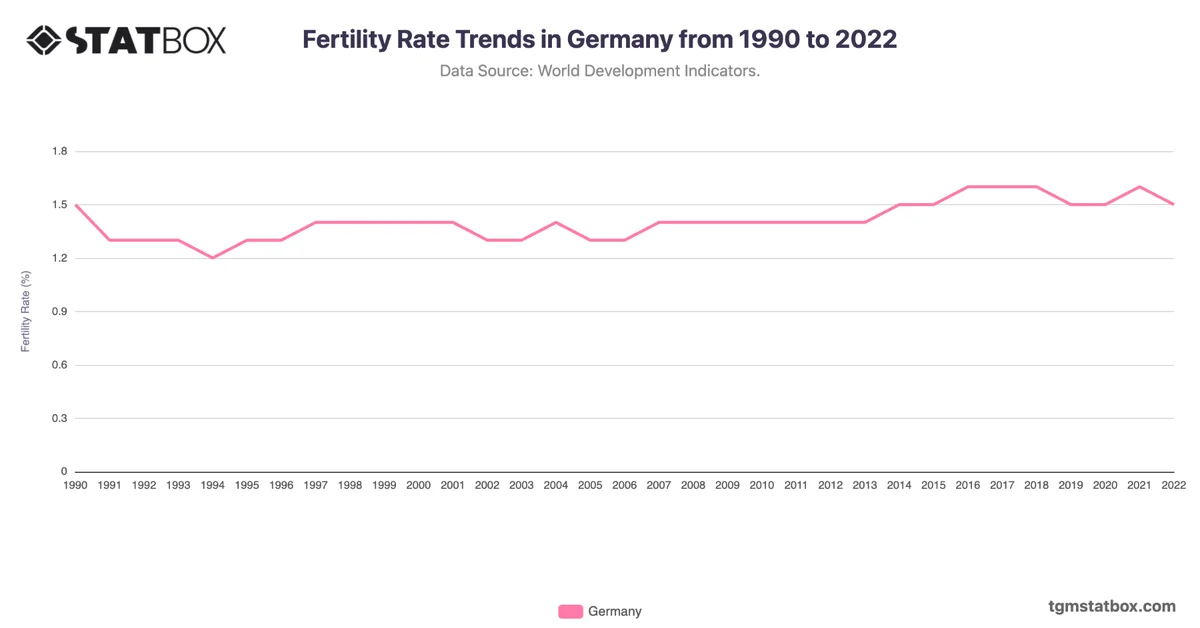
For a deeper dive into the topic, explore Germany’s fertility rate, Germany’s military personnel share, Germany’s net lending/borrowing share in GDP.