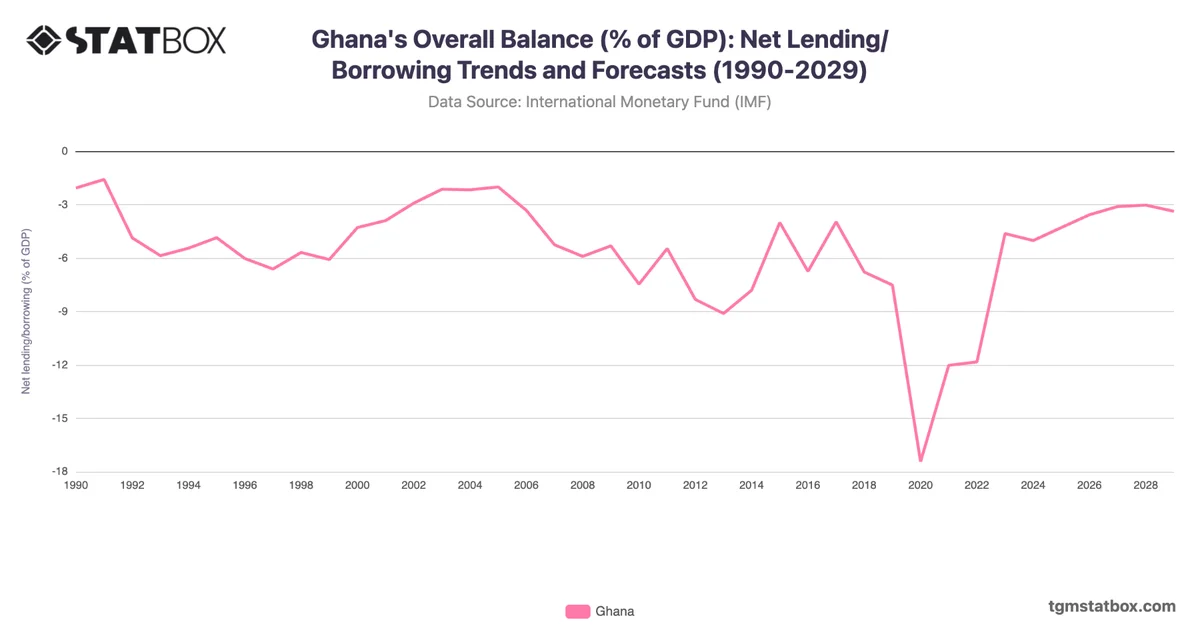
Ghana’s inflation has been marked by significant volatility, with rates peaking at 59.3% in 1995 due to fiscal mismanagement and currency depreciation. Recent years have seen a resurgence, with inflation reaching 37.5% in 2023, driven by currency instability and global price pressures.
Projections suggest a decline to 8.0% by 2026, reflecting Ghana’s ongoing efforts to stabilize its economy through structural reforms and monetary policy adjustments. This trajectory highlights the challenges and progress in managing inflation in a developing economy.
Projections suggest a decline to 8.0% by 2026, reflecting Ghana’s ongoing efforts to stabilize its economy through structural reforms and monetary policy adjustments. This trajectory highlights the challenges and progress in managing inflation in a developing economy.
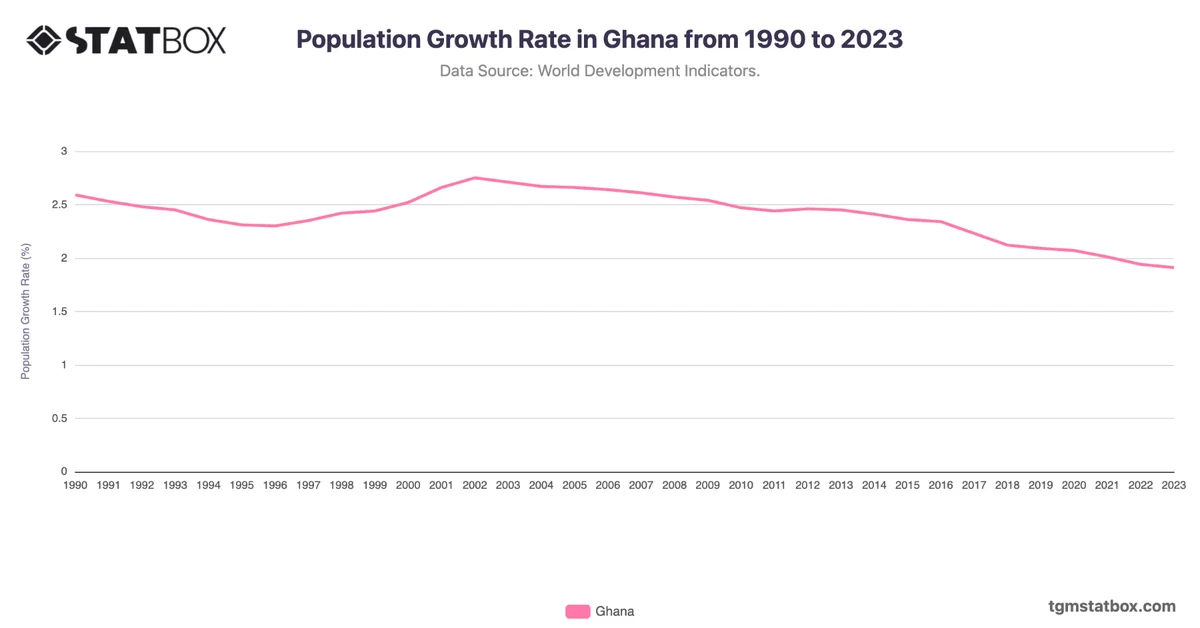
Find out more through related statistics on agriculture sector’s GDP share in Ghana, Ghana’s population growth rate, Ghana’s industry sector GDP share.