India experienced consistent population growth from 1990 to 2000, averaging around 2%. This reflects a relatively high fertility rate, which remained a key driver despite early efforts to promote family planning. Economic liberalization in the 1990s also contributed to population increases through improved healthcare access, reducing infant mortality.
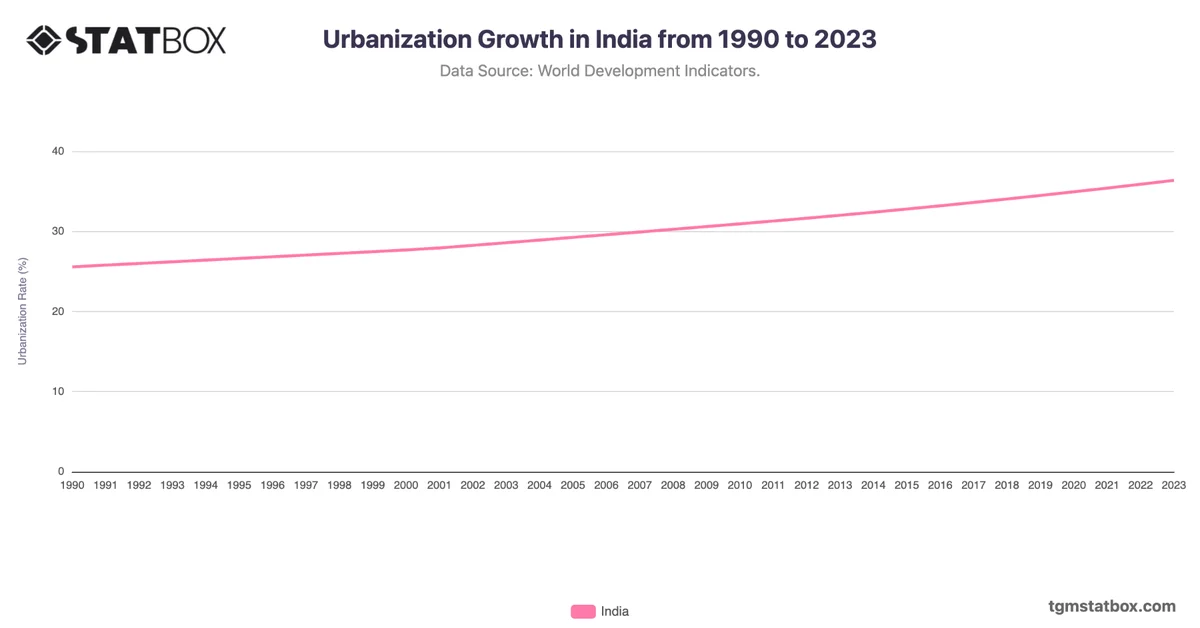
The growth rate gradually declined after 2000, falling to 0.8% in 2021. This decline mirrors broader socio-economic changes, including urbanization, increased female education, and greater access to contraception. The slight rebound to 0.8% in 2023 indicates sustained growth driven by a still-large youth population, though the overall trend points to slower growth in the coming decades.
The growth rate gradually declined after 2000, falling to 0.8% in 2021. This decline mirrors broader socio-economic changes, including urbanization, increased female education, and greater access to contraception. The slight rebound to 0.8% in 2023 indicates sustained growth driven by a still-large youth population, though the overall trend points to slower growth in the coming decades.
For a broader context, visit other statistics on India’s mortality rate trends, India’s unemployment rate trend, India’s military personnel per capita.