Australia maintained steady military spending at approximately 2%–2.5% of GDP during the Cold War, reflecting its strategic alliances and participation in global conflicts such as the Vietnam War (1965–1973). A noticeable peak at 3.8% in the late 1960s aligns with Australia’s military involvement in Southeast Asia.
Post-Cold War, military expenditure gradually declined, reaching a low of 1.6% in 2013. However, increasing regional tensions in the Indo-Pacific and commitments to modernization initiatives have driven recent increases. By 2022, expenditure stabilized at 1.9%–2%, highlighting Australia’s strategic focus on regional security.
Post-Cold War, military expenditure gradually declined, reaching a low of 1.6% in 2013. However, increasing regional tensions in the Indo-Pacific and commitments to modernization initiatives have driven recent increases. By 2022, expenditure stabilized at 1.9%–2%, highlighting Australia’s strategic focus on regional security.
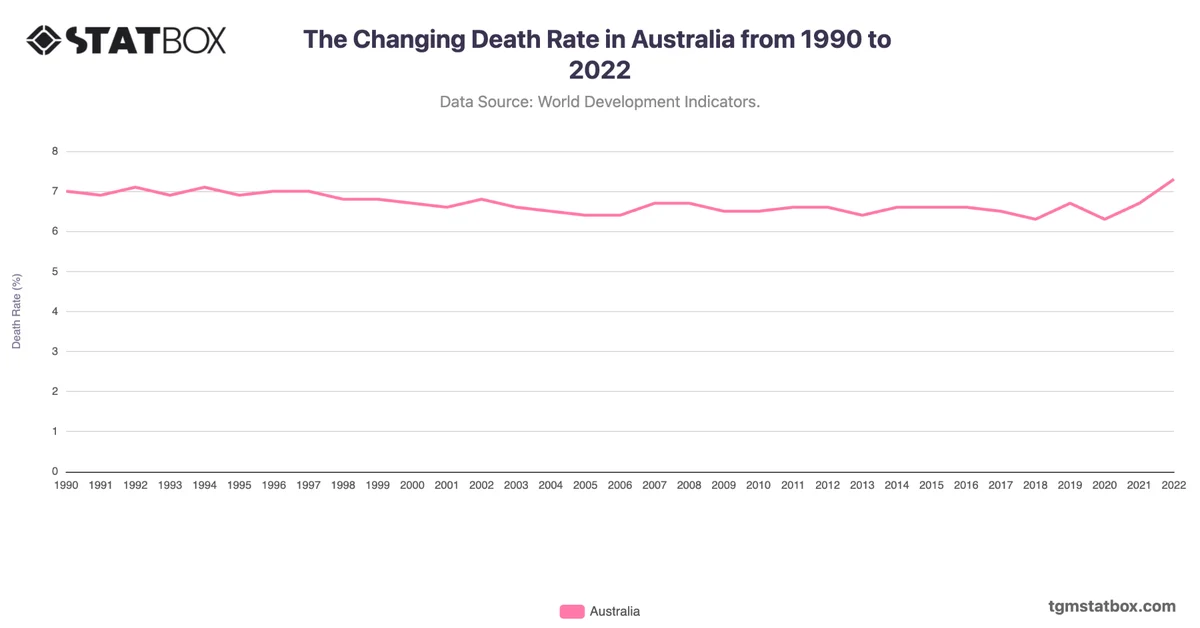
Explore related charts to gain a better understanding of Australia’s average lifespan, Australia’s death rate changes, Australia’s annual GDP.