New Zealand’s military expenditure steadily decreased over six decades, reflecting its strategic shift toward economic development and peace-focused diplomacy. Spending peaked at 2.7% of GDP in 1960 but dropped consistently through the 1980s, reaching 1.2% by 2000. The reduction coincided with New Zealand's anti-nuclear stance and reduced reliance on military alliances.
Since the 2000s, defense spending stabilized at around 1%, reflecting a focus on regional peacekeeping operations and disaster response rather than large-scale defense investments. By 2022, expenditure remained at 1.2%, signaling continuity in prioritizing economic and social sectors over military expansion.
Since the 2000s, defense spending stabilized at around 1%, reflecting a focus on regional peacekeeping operations and disaster response rather than large-scale defense investments. By 2022, expenditure remained at 1.2%, signaling continuity in prioritizing economic and social sectors over military expansion.
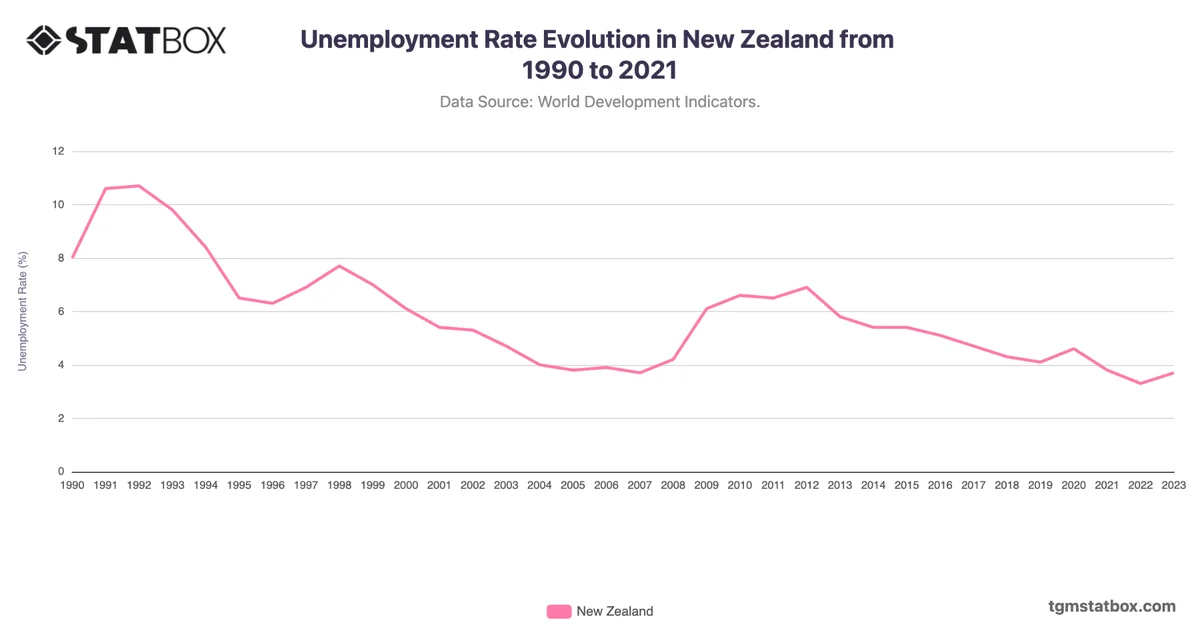
Gain a broader perspective by reviewing New Zealand’s population density, New Zealand’s fertility rate, New Zealand’s unemployment rate trend.