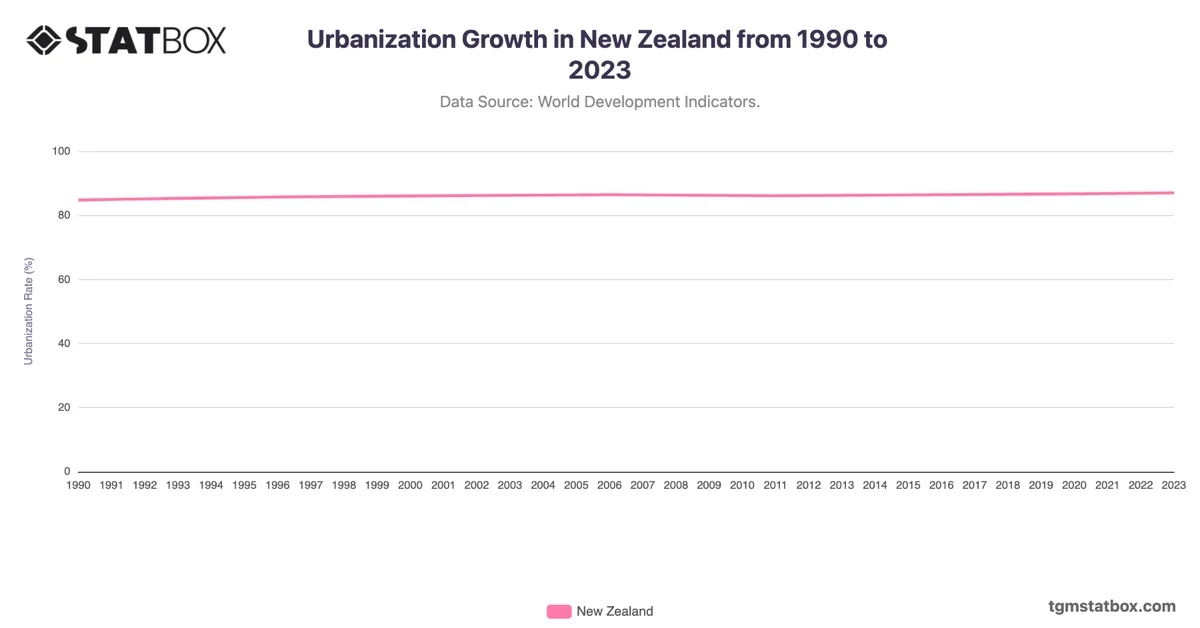
New Zealand's population density has remained relatively low, increasing from 13 people per square kilometer in 1990 to 19 in 2021. This density is primarily concentrated in cities like Auckland and Wellington, where the majority of New Zealand’s population resides. Rural areas, due to vast agricultural land and geographical spread, maintain very low densities, keeping the national average low.
New Zealand's high quality of life, combined with steady immigration, has slightly boosted population density in urban regions. However, overall density remains modest due to extensive rural areas, reflecting New Zealand's balance between urban growth and natural landscape preservation.
New Zealand's high quality of life, combined with steady immigration, has slightly boosted population density in urban regions. However, overall density remains modest due to extensive rural areas, reflecting New Zealand's balance between urban growth and natural landscape preservation.
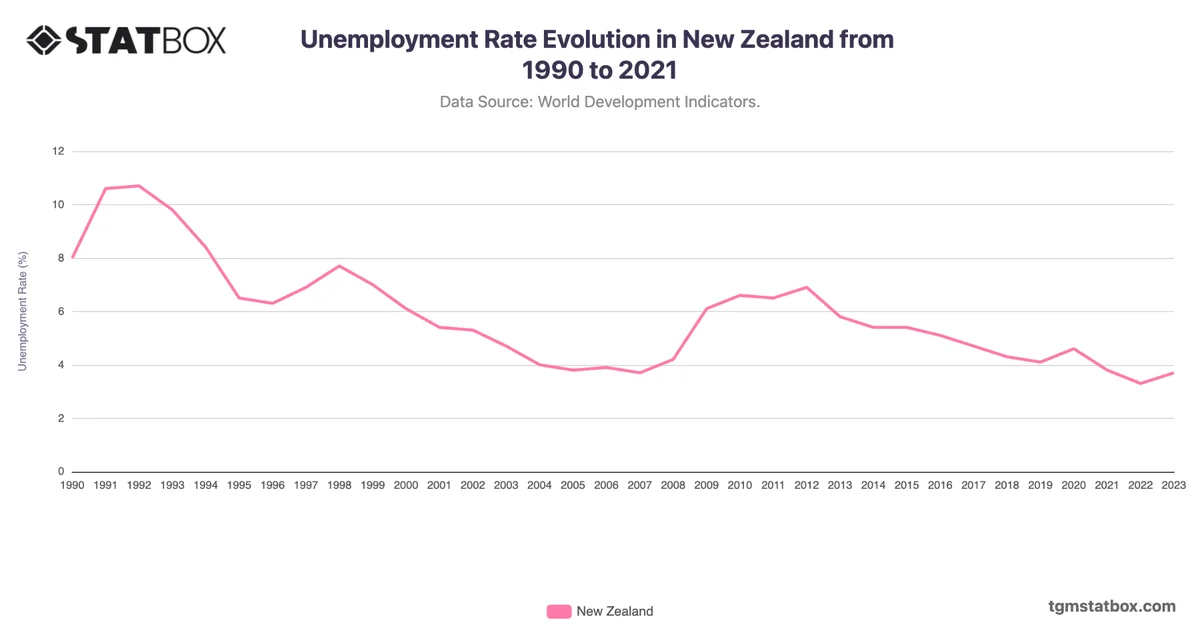
For a deeper dive into the topic, explore New Zealand’s yearly GDP growth rate, New Zealand’s median age evolution, New Zealand’s unemployment rate trend.