Nigeria's fertility rate declined modestly from 6.5 in 1990 to 5.1 in 2022. The rate remained above 6.0 through much of the 1990s and 2000s, reflecting entrenched cultural values favoring large families and limited access to family planning resources. Efforts to address these issues gained momentum in the 2010s, with programs emphasizing women's education and increased availability of contraceptives.
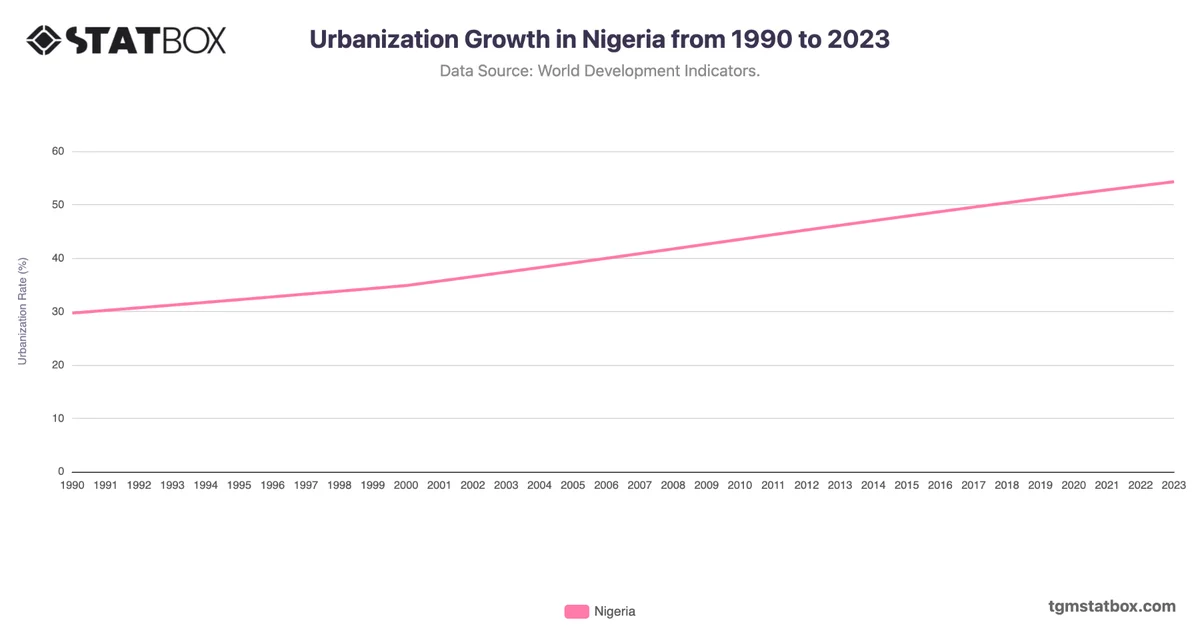
The decline accelerated after 2010, dropping from 6.0 to 5.1 by 2022. This progress can be linked to urbanization, economic development, and government-backed reproductive health campaigns. However, Nigeria still faces challenges in rural areas, where fertility rates remain significantly higher due to socioeconomic disparities and traditional norms.
The decline accelerated after 2010, dropping from 6.0 to 5.1 by 2022. This progress can be linked to urbanization, economic development, and government-backed reproductive health campaigns. However, Nigeria still faces challenges in rural areas, where fertility rates remain significantly higher due to socioeconomic disparities and traditional norms.
For additional information, visit statistics on Nigeria’s mortality rate trend, Nigeria’s debt-to-GDP ratio, Nigeria’s population growth rate.