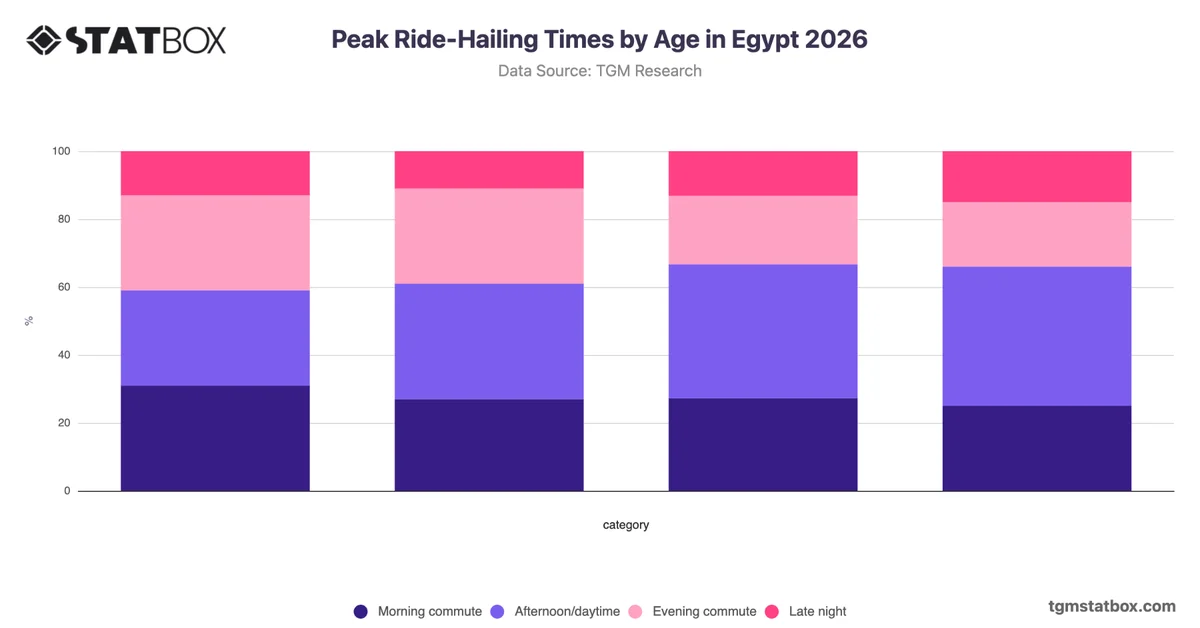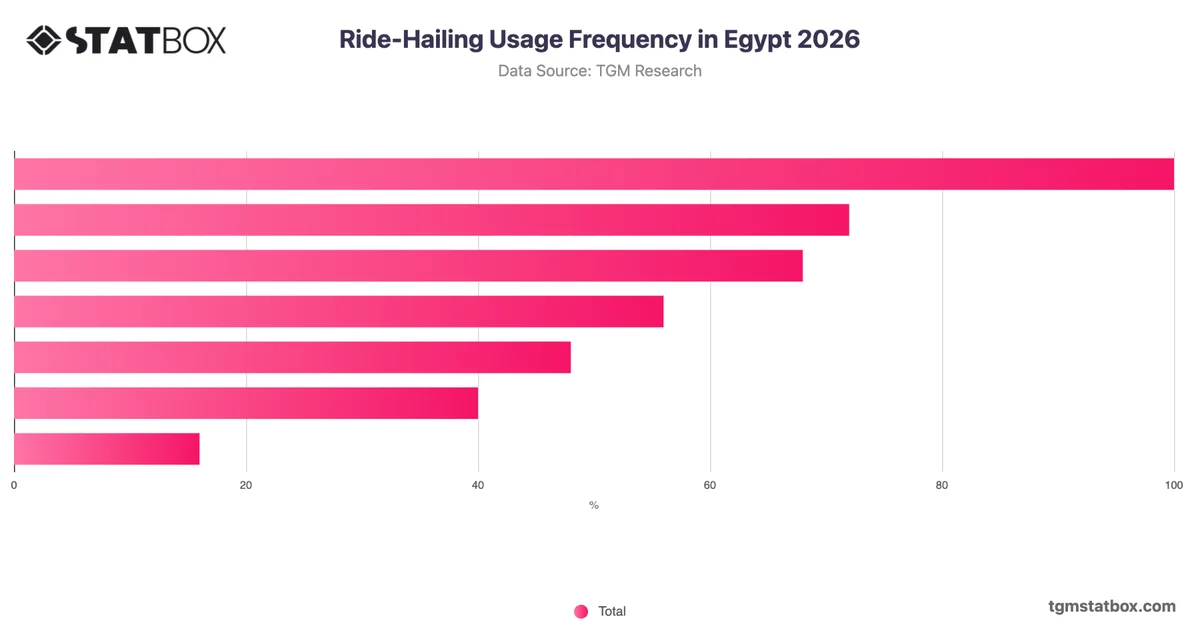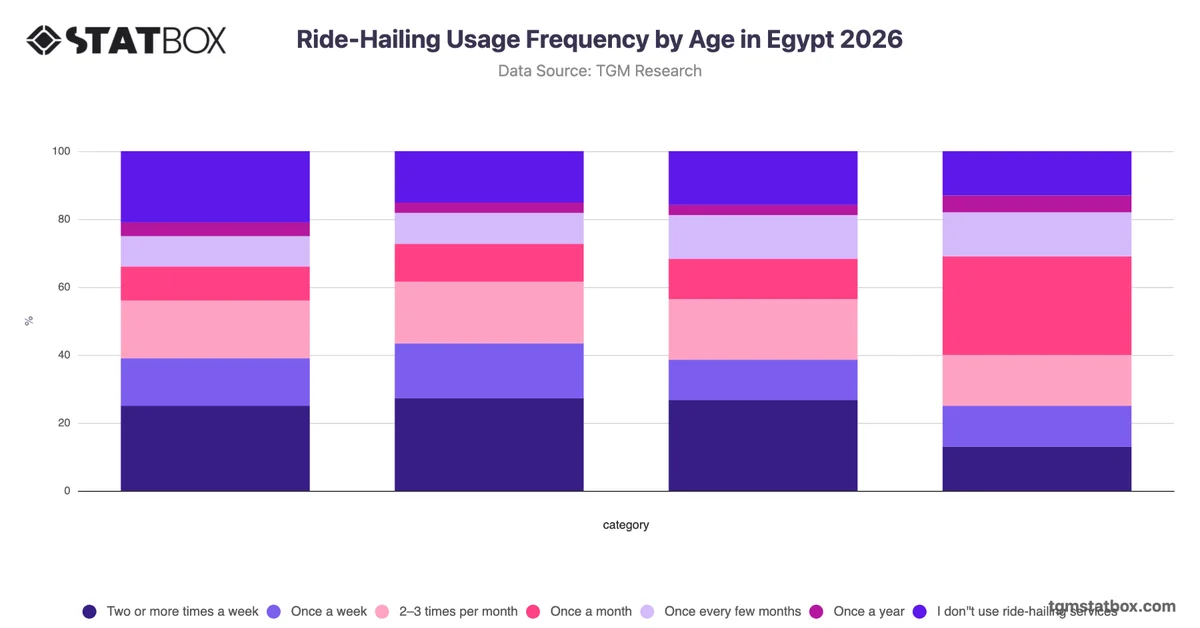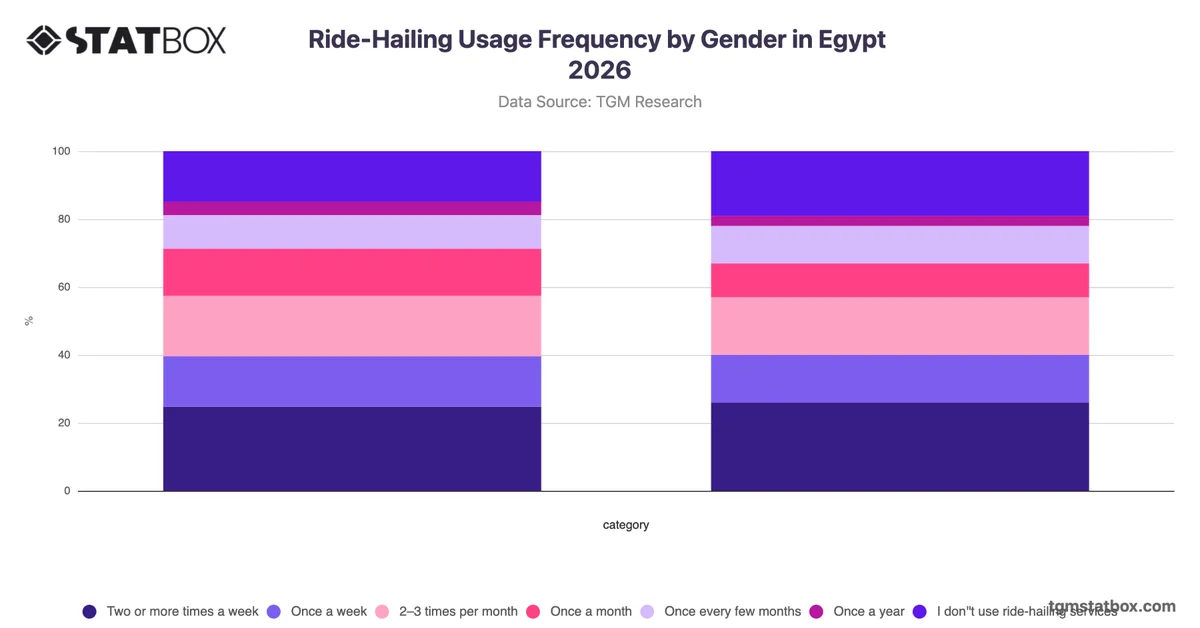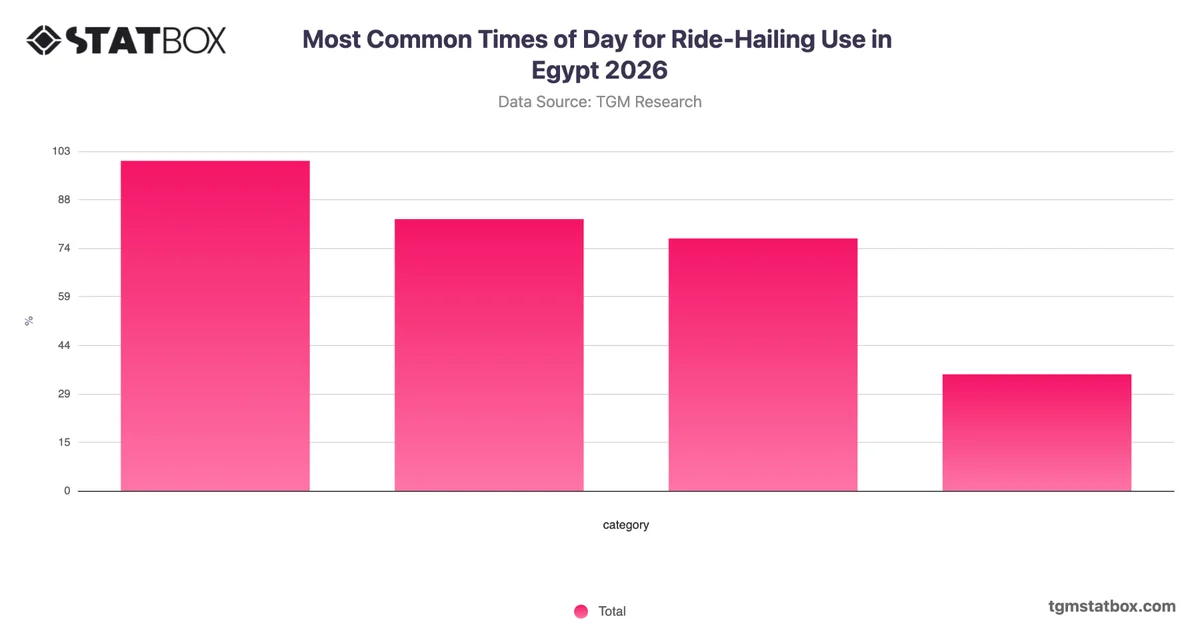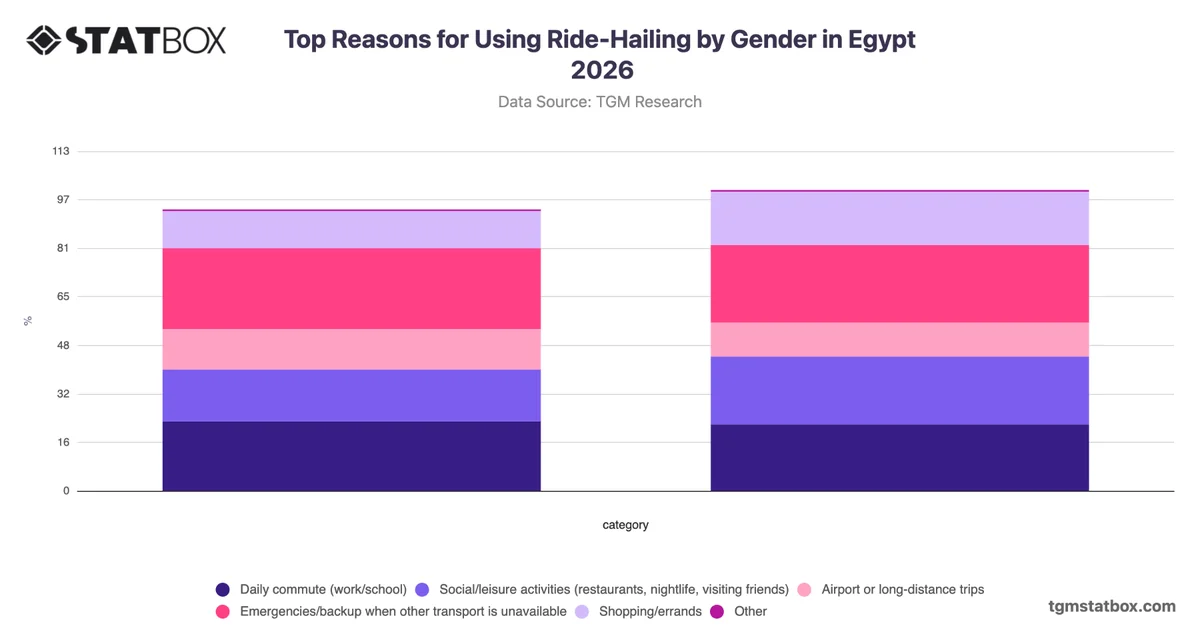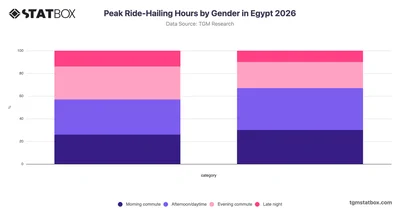
Understanding when riders use ride-hailing services helps transport platforms, drivers, and urban planners allocate resources more effectively across the day. In Egypt, usage patterns vary notably between men and women, with each group concentrating their trips in distinct time windows. These behavioral differences give ride-hailing operators a practical basis for adjusting driver supply, pricing strategies, and promotional targeting by gender. Platforms that align fleet availability with gendered demand cycles can reduce wait times, improve driver earnings, and strengthen customer retention across both segments.