Gender Differentiation in Pet Ownership Attitudes
Pet ownership sits at the intersection of lifestyle, household economics, and personal values. The decision to keep a pet involves considerations around living space, time, expenditure, and emotional commitment, making it a meaningful indicator of consumer priorities and domestic behaviour across different demographic groups.
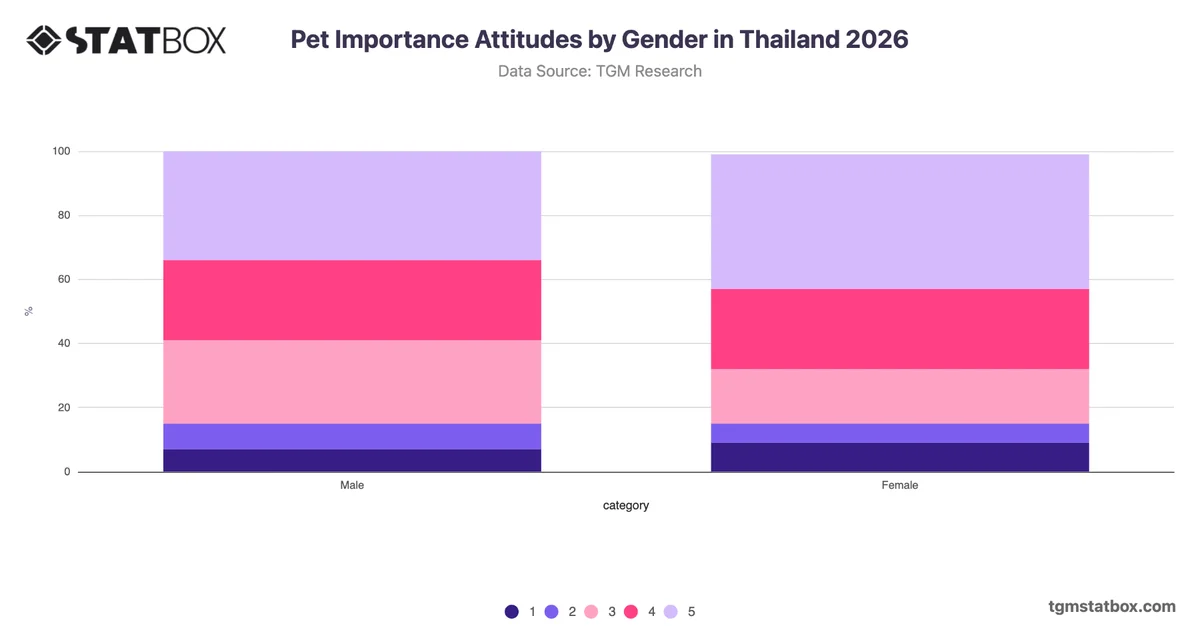
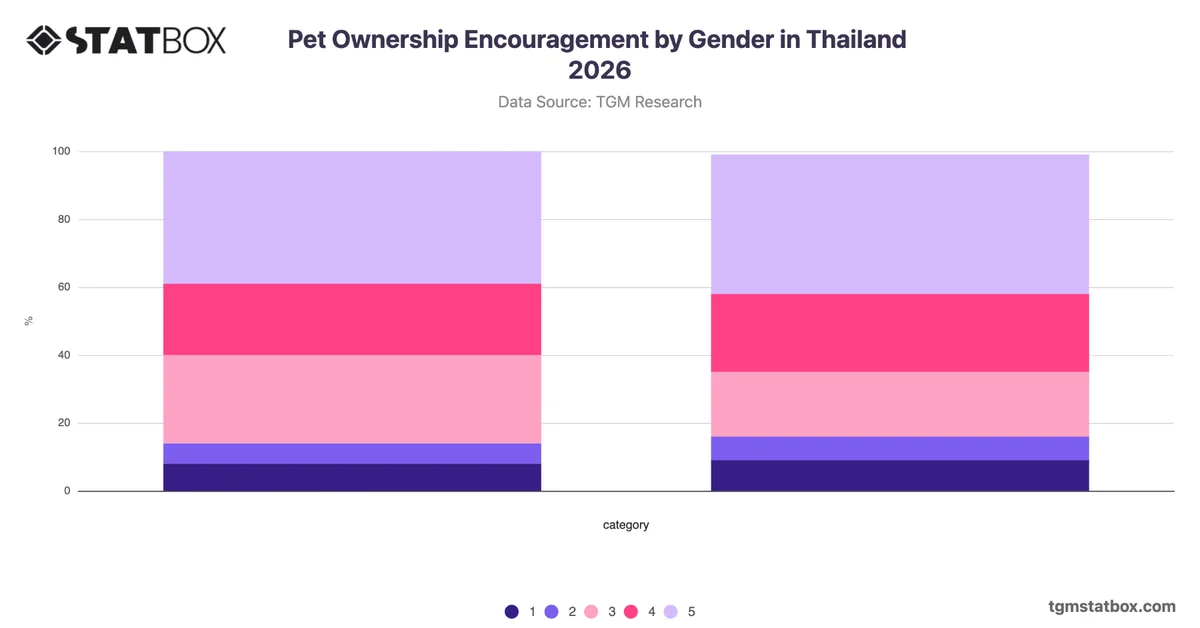
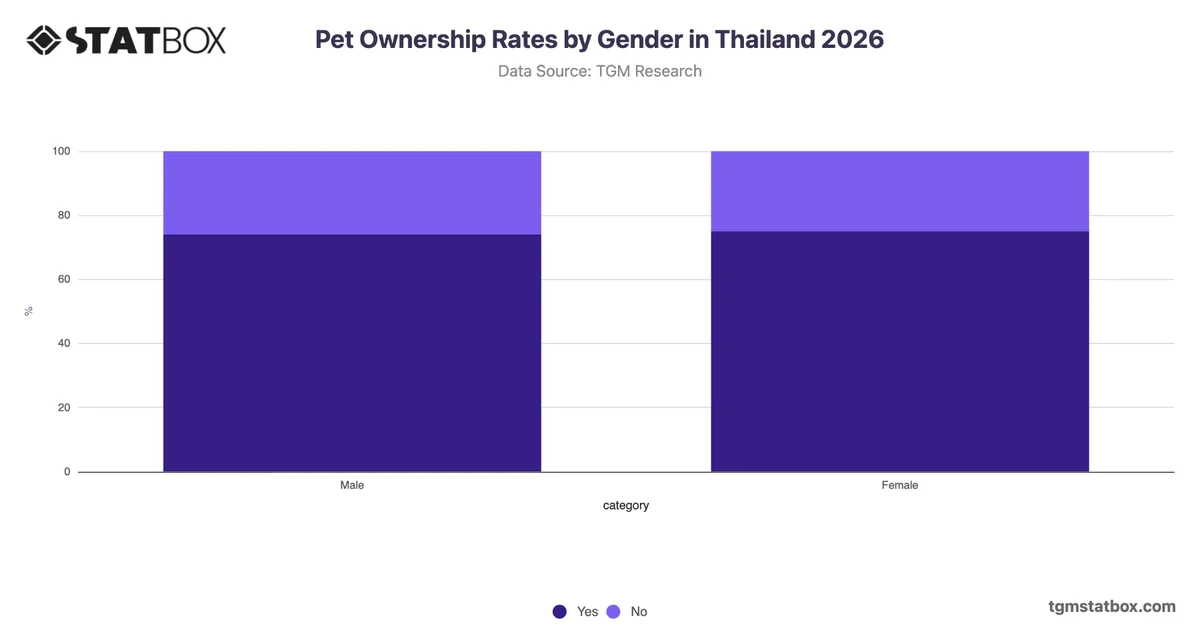
The most analytically significant pattern here is not simply that male respondents report higher pet ownership, but that the gap between genders is meaningful rather than marginal. At 76% among males compared with 67% among females, the nine percentage point difference points to a genuine demographic divergence rather than a broadly uniform consumer behaviour. Non-ownership is notably more concentrated among female respondents, where one in three currently has no pet. This suggests that pet ownership in China cannot be treated as an undifferentiated mass behaviour, and that gender may be a relevant segmentation variable when assessing household penetration. For pet care brands, retailers, or service providers, this pattern indicates that acquisition messaging and product positioning may warrant gender-specific calibration, particularly to better understand the barriers or competing priorities that reduce ownership likelihood among female consumers.