The Philippines experienced a gradual decline in fertility rates, from 4.4 in 1990 to 2.7 in 2022. The early 1990s marked consistent reductions, driven by government initiatives to promote reproductive health and education. Cultural influences, however, tempered the pace of decline, with larger families remaining culturally desirable in many regions.
The rate saw slower decreases after 2010, with a more pronounced shift to 2.7 by 2021. This period reflects ongoing efforts to expand healthcare services and urbanization's role in shaping family size preferences. Despite this progress, the rate remains higher than many regional peers, underscoring persistent challenges in rural healthcare access and traditional norms.
The rate saw slower decreases after 2010, with a more pronounced shift to 2.7 by 2021. This period reflects ongoing efforts to expand healthcare services and urbanization's role in shaping family size preferences. Despite this progress, the rate remains higher than many regional peers, underscoring persistent challenges in rural healthcare access and traditional norms.
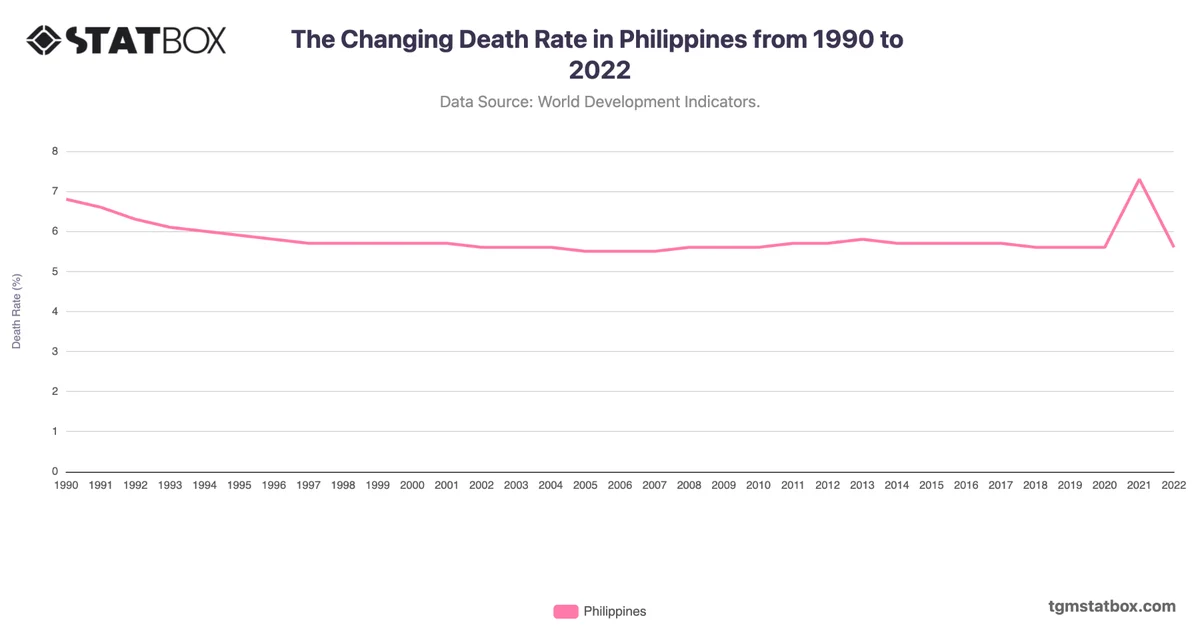
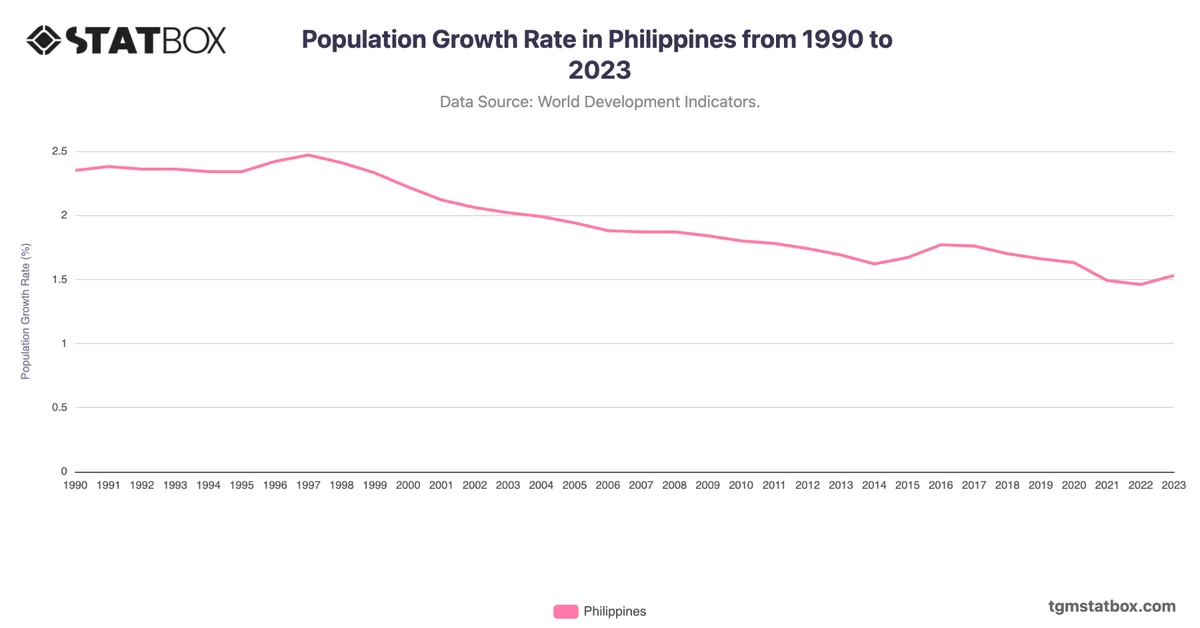
Explore related charts to gain a better understanding of Philippines’ population growth rate, Philippines’ working-age population share, Philippines death rate trend.