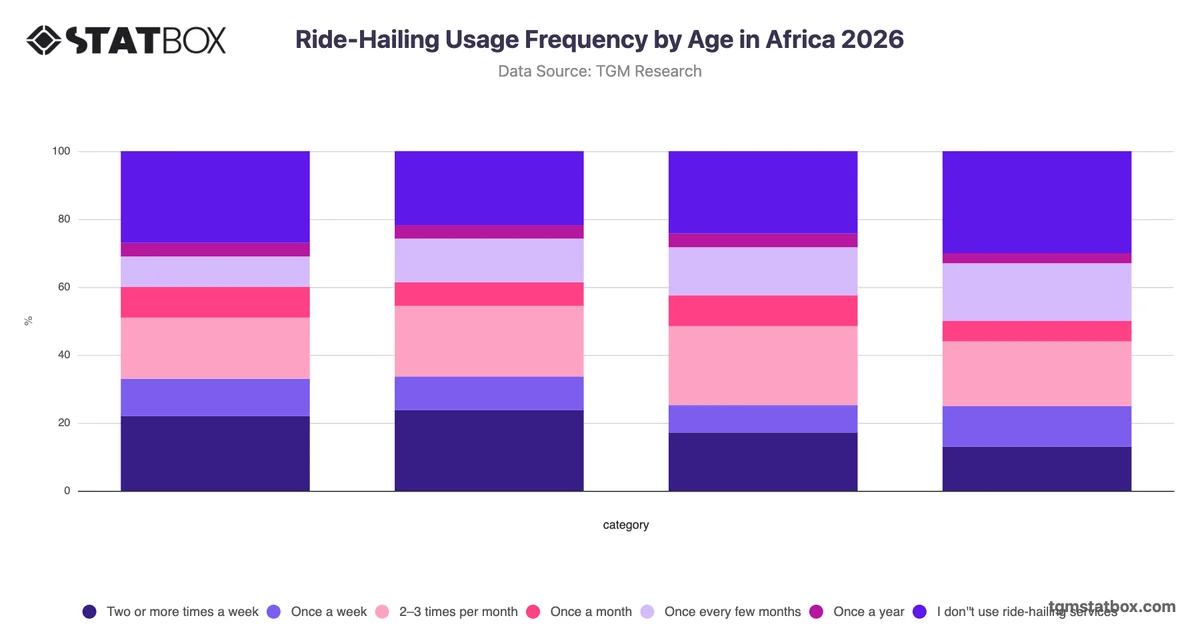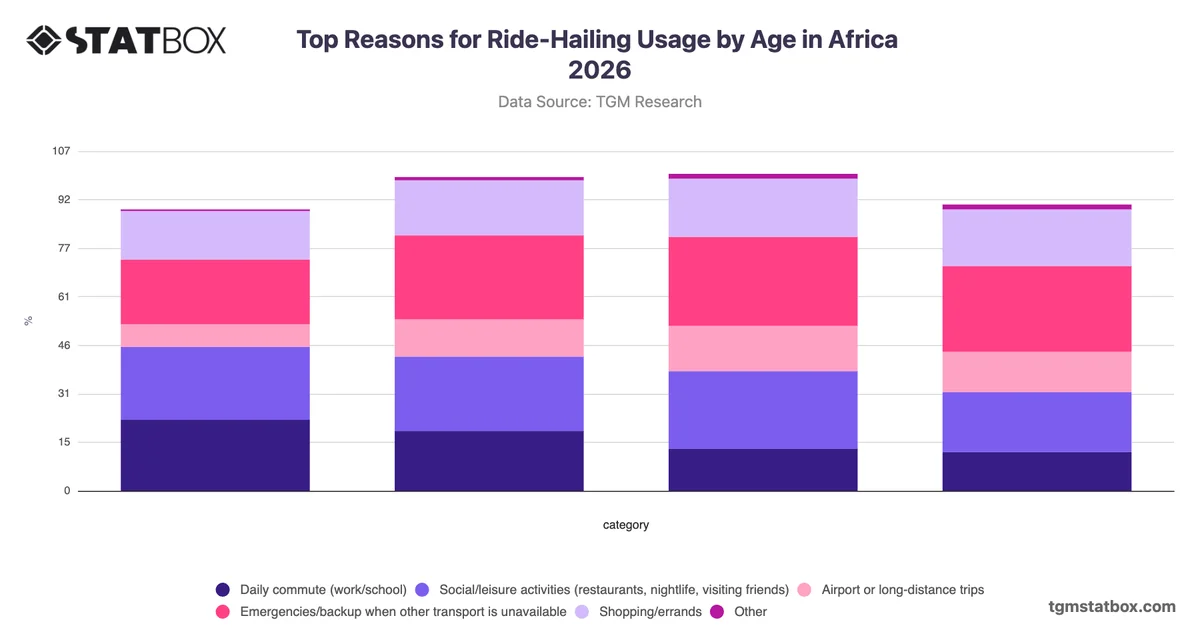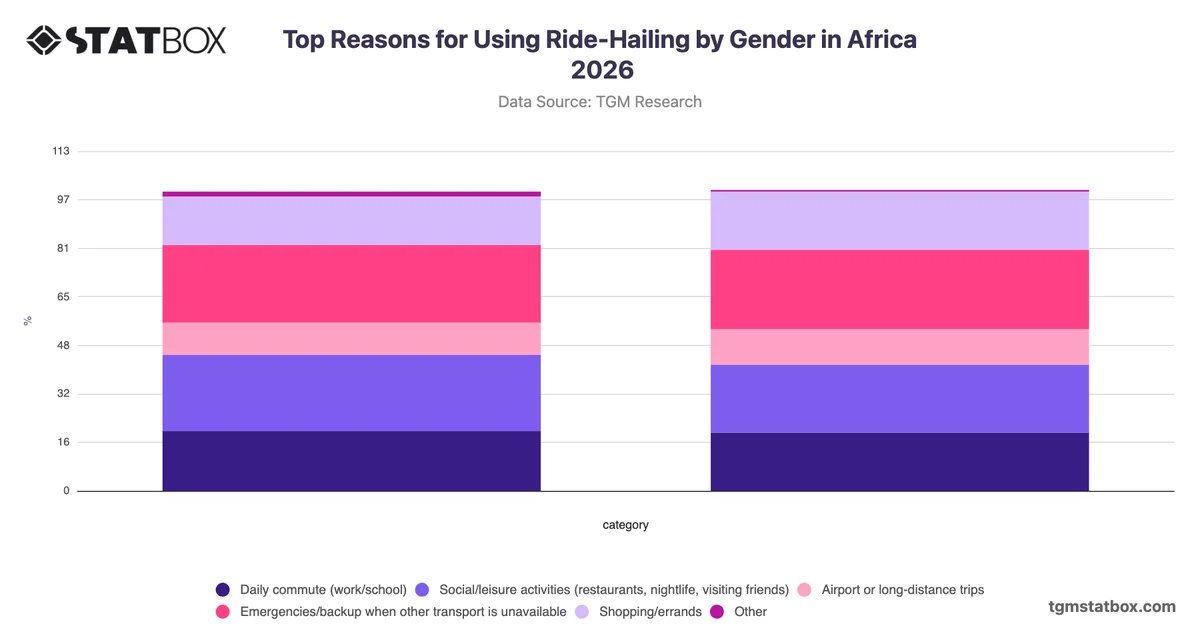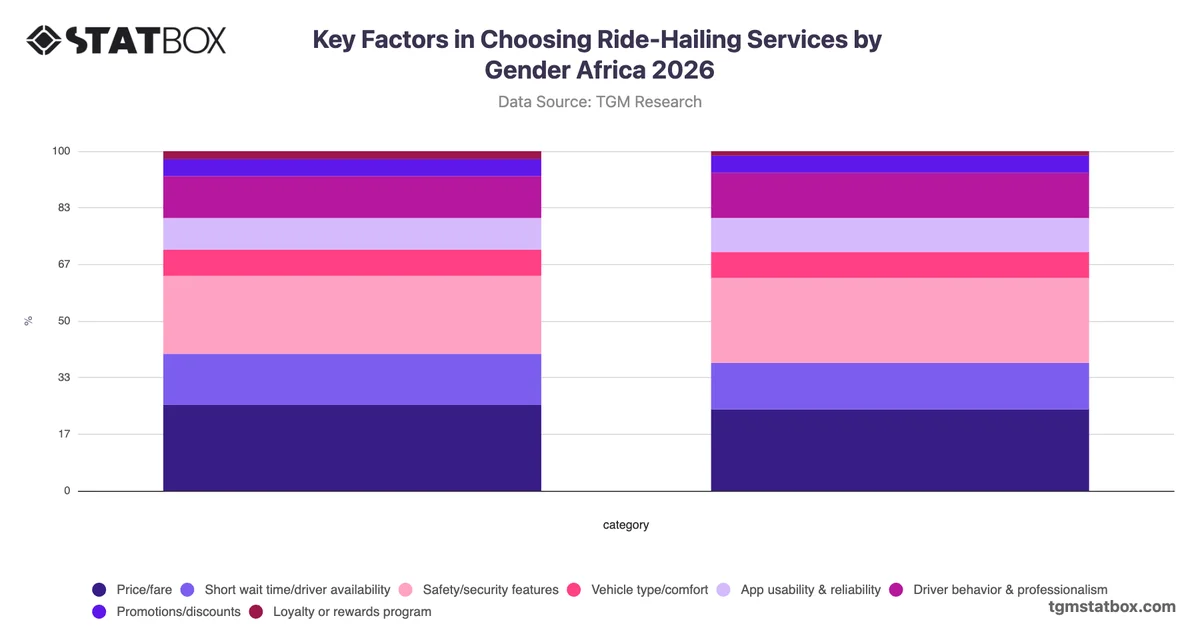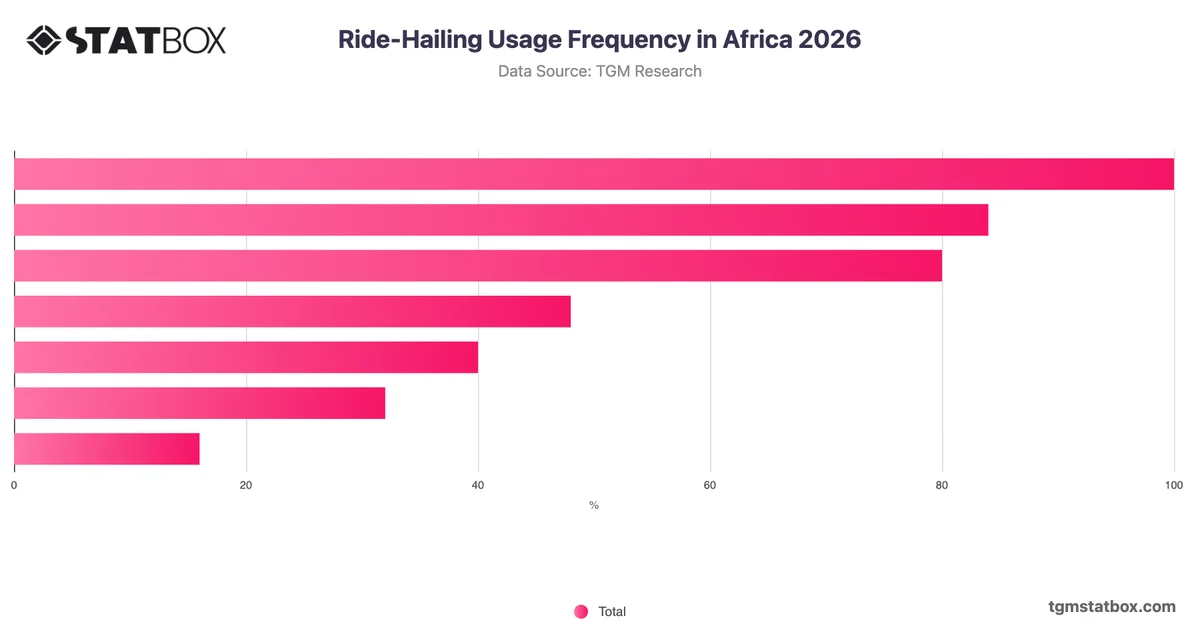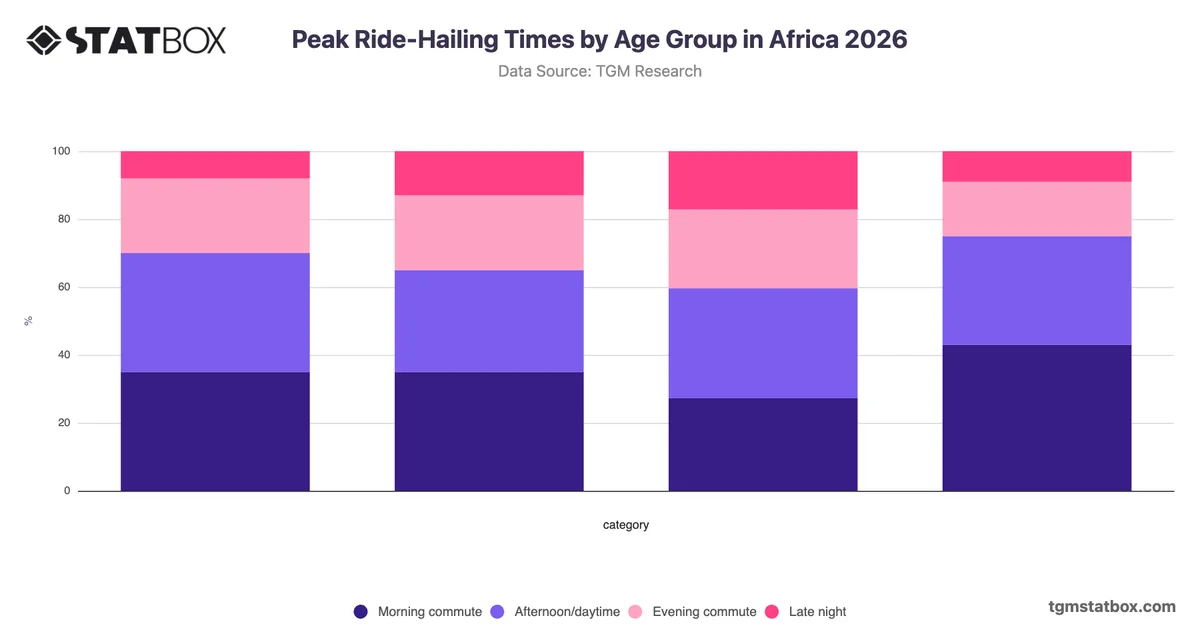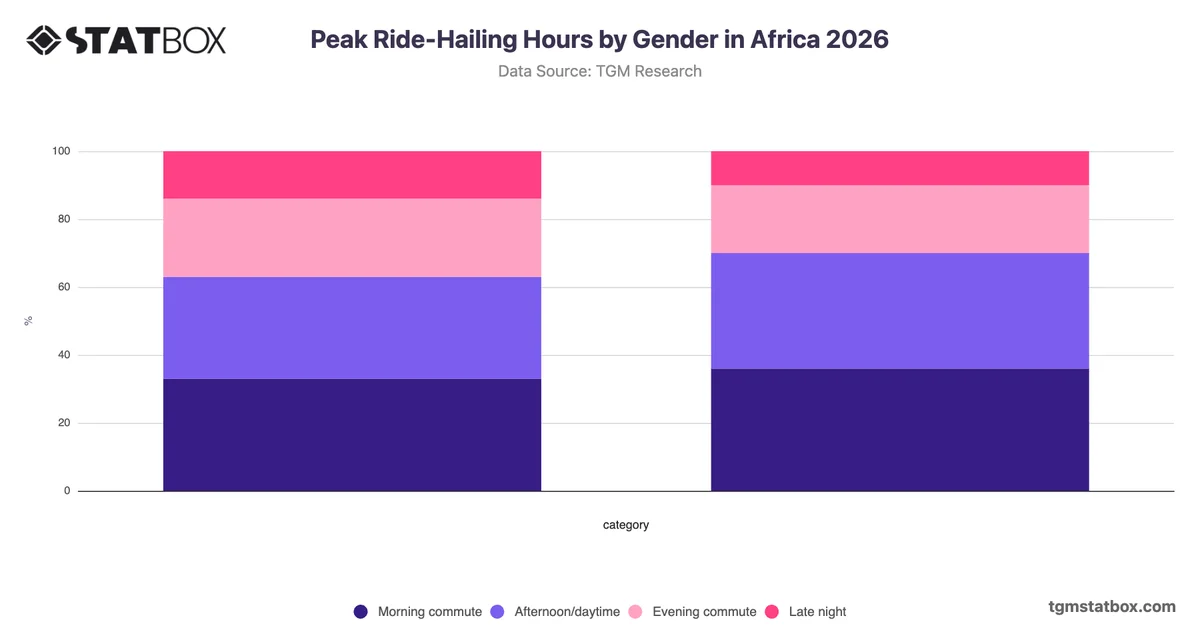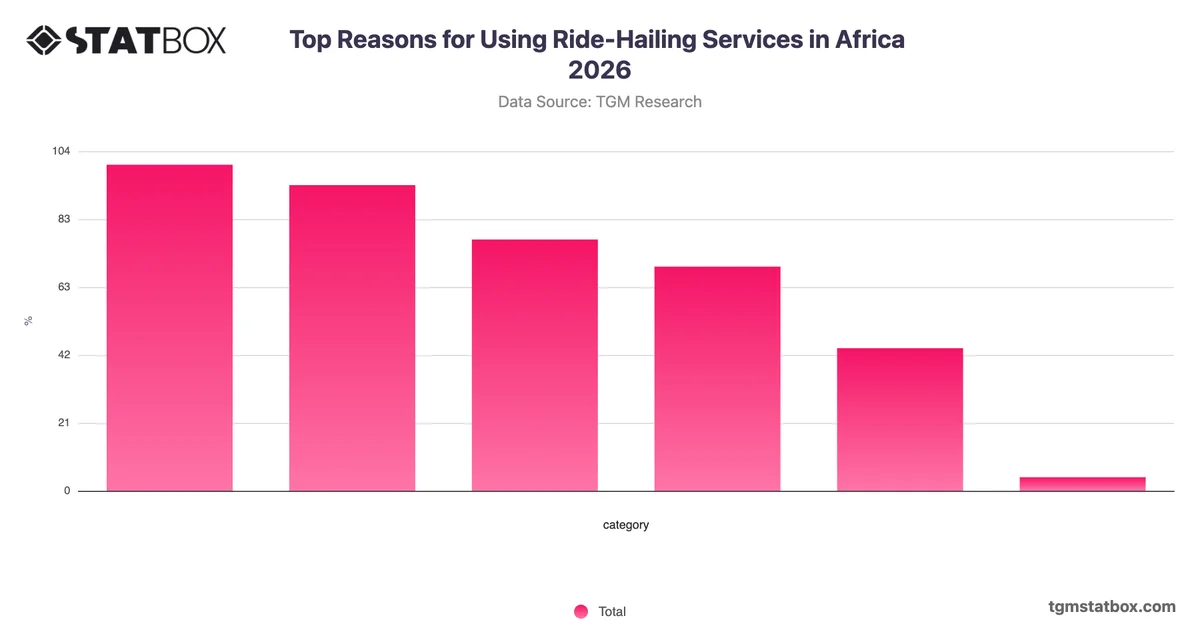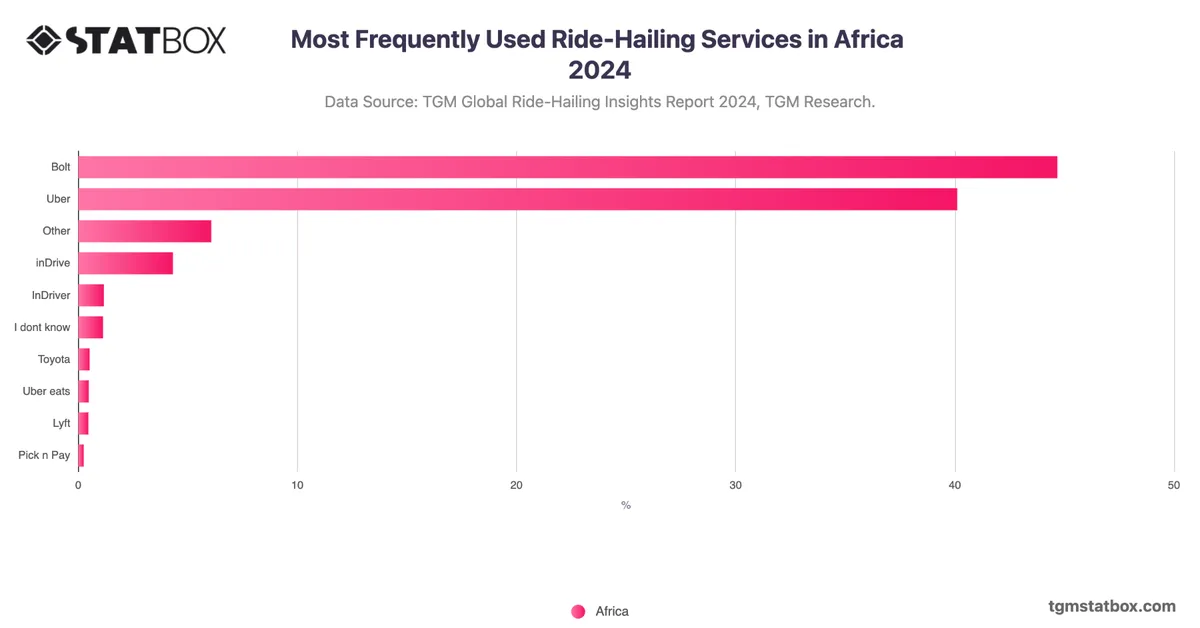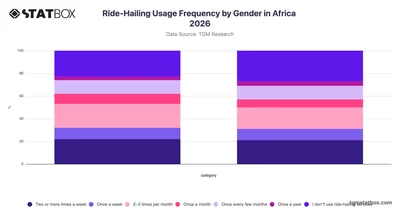
Ride-hailing services have become a practical mobility solution across Africa, offering urban and peri-urban populations a flexible alternative to traditional transport. The convenience of on-demand booking, cashless payments, and GPS-tracked trips makes these platforms particularly valuable in cities where public transport can be unreliable or limited. Understanding how frequently men and women use these services helps operators and investors identify where demand is strongest and where growth opportunities remain untapped. Across both genders, usage patterns in Africa tell a nuanced story about adoption, loyalty, and the barriers that still keep a notable share of the population on the sidelines.