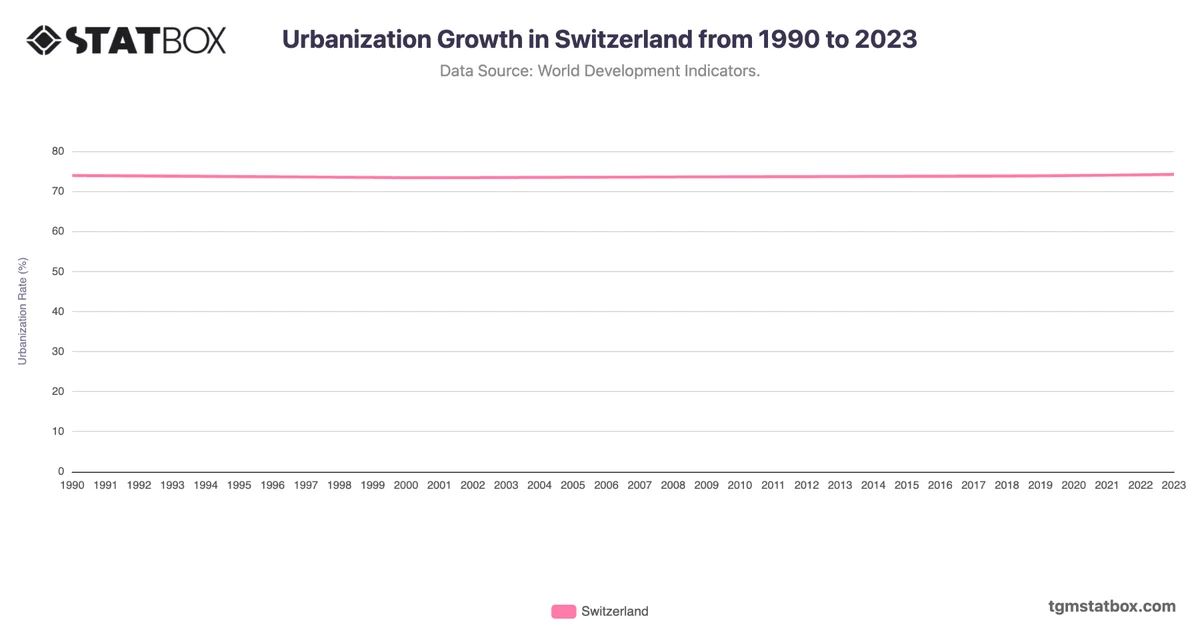
From 1990 to 2021, Switzerland's population density steadily rose, growing from 170 to 220 people per square kilometer. This increase reflects ongoing urbanization, particularly around major cities such as Zurich, Geneva, and Basel, where economic opportunities and quality of life have attracted both domestic and international migrants. Switzerland's favorable economic conditions and its role as a financial and diplomatic hub have supported continuous growth, contributing to urban expansion and infrastructure development.
In the 2000s, population density growth became more pronounced as Switzerland maintained open migration policies with EU countries, encouraging a wave of immigration. By 2021, the density reached 220 people per square kilometer, demonstrating the impact of sustained urbanization and population inflow. The densification is managed through careful urban planning, maintaining a balance between development and Switzerland's commitment to environmental sustainability.
In the 2000s, population density growth became more pronounced as Switzerland maintained open migration policies with EU countries, encouraging a wave of immigration. By 2021, the density reached 220 people per square kilometer, demonstrating the impact of sustained urbanization and population inflow. The densification is managed through careful urban planning, maintaining a balance between development and Switzerland's commitment to environmental sustainability.
For a deeper dive into the topic, explore Switzerland’s government debt ratio, military personnel share in Switzerland’s population, Switzerland’s urbanization expansion.