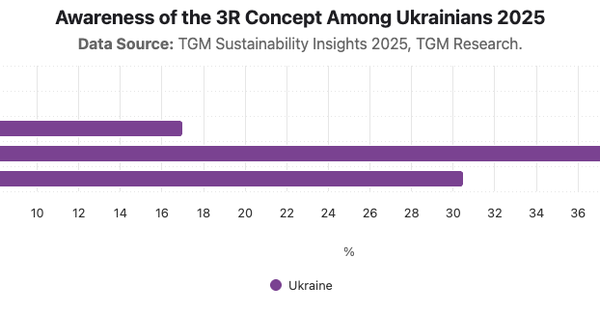
59.82% of Dutch are not familiar with the 3R concept.
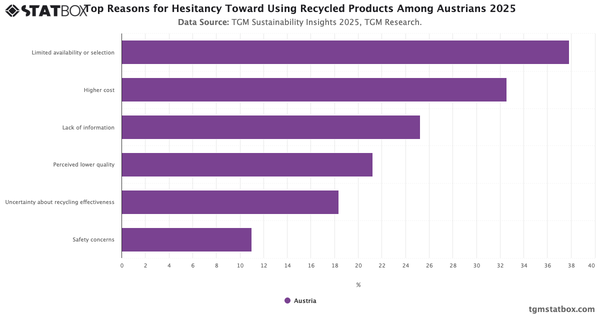
43.81% of Dutch cite high costs as a barrier to sustainability.
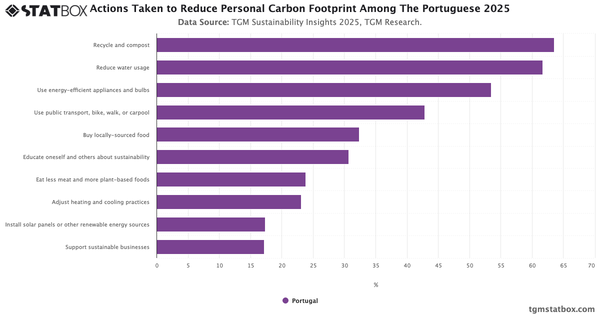
Reducing water usage is the top sustainable practice.
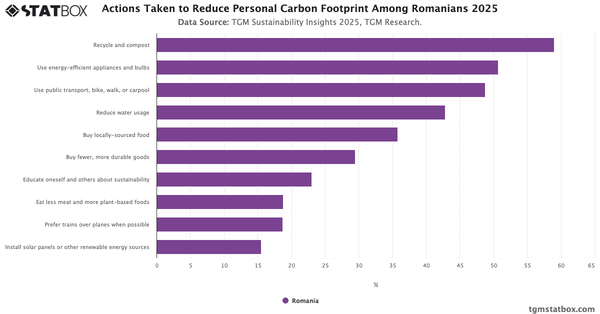
Public transportation and solar energy are common actions for reducing carbon footprints.
Awareness and interest in sustainability are growing in the Netherlands.


Netherlands Sustainability Insights Report 2024
Learn more about sustainability insights in Netherlands with TGM StatBox. Explore in-depth insight report, featuring user behavior, trends, and preferences.
Go to report
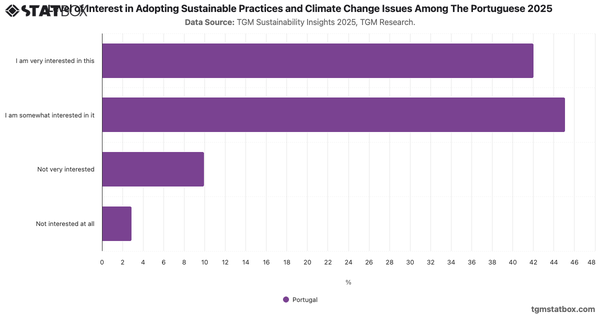
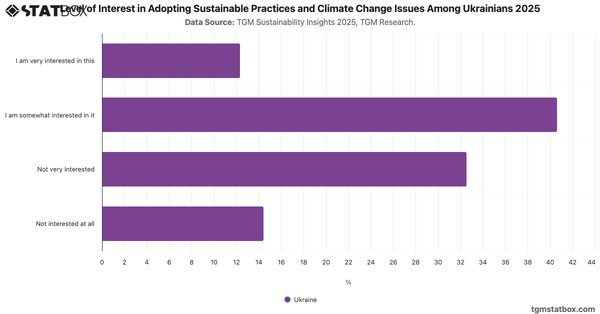
In the Netherlands, awareness of the “Reduce, Reuse, Recycle” (3R) concept is among the lowest in Europe: nearly 60% say they have never heard of it, and only 4% claim to know it well. Interest in sustainability also looks modest, with fewer than one in five describing themselves as very interested. Climate concern is mostly moderate, with the largest groups saying they feel only slightly (29%) or moderately concerned (26%).
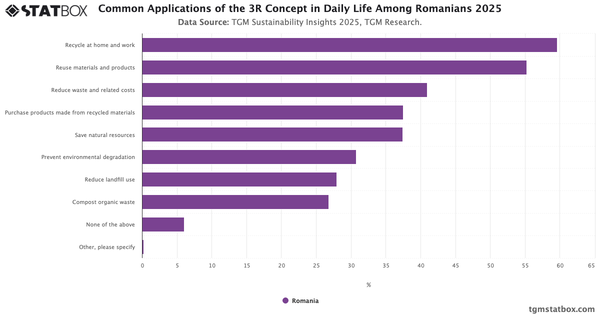
Still, Dutch households regularly adopt practical sustainable habits. Water conservation, energy efficiency at home, and recycling or composting are common priorities. Sustainable transport is especially notable: 37% say they bike, walk, or use public transport to reduce their footprint.
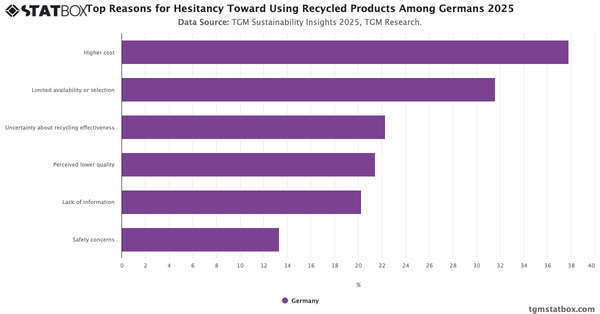
Even with these behaviors, barriers remain. The most common is cost: 43% say sustainable products are too expensive. Time and convenience are also significant, with one in four saying sustainability is hard to fit into their routines. Habits and resistance to diet change appear as secondary obstacles. For local government & waste partners
- Meet the convenience gap: More neighborhood drop-offs, weekend collection events, and consistent bin labeling reduce “time/can’t be bothered” friction.
- Target beyond big cities: Pilot refill/repair “mobile counters” in suburbs where public transport is thinner.
The win is not broad education but tying products and services directly to existing habits:
- Retail & FMCG: expand deposit-return or refill models, since reuse and recycling are already part of daily life.
- Mobility & Energy: support cycling and public transport with perks, or bundle energy-saving products with services to cut upfront costs.
- Food & Lifestyle: link plant-based or local products to savings or loyalty schemes, making them feel like natural swaps, not sacrifices.
Dutch consumers don’t need convincing why, they need solutions that fit their routines and budgets today.
*Disclaimer: The information provided by TGM StatBox is intended for general informational purposes only. TGM StatBox does not assume liability for the completeness or accuracy of the information provided. Due to frequent updates, statistics may be more current than mentioned in the text. Please independently verify the information and consult experts as needed.




Connect with our expert team for immediate assistance or comprehensive market analysis. We are always ready to support your business needs.