Topic
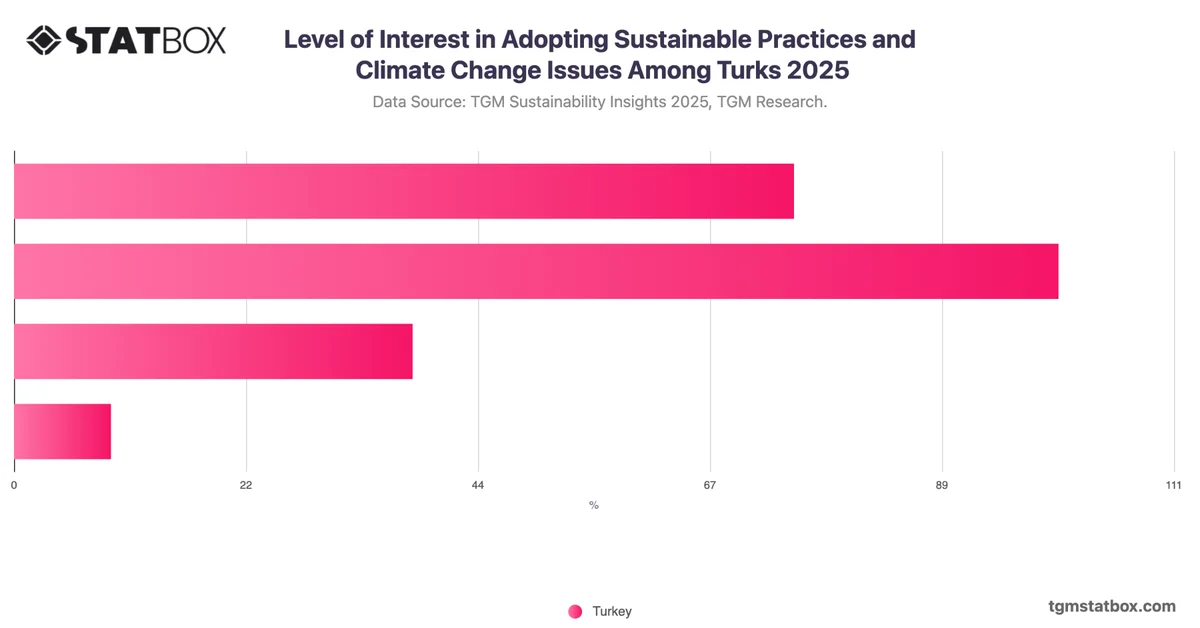
45% of Turks are somewhat interested in sustainability and climate issues.
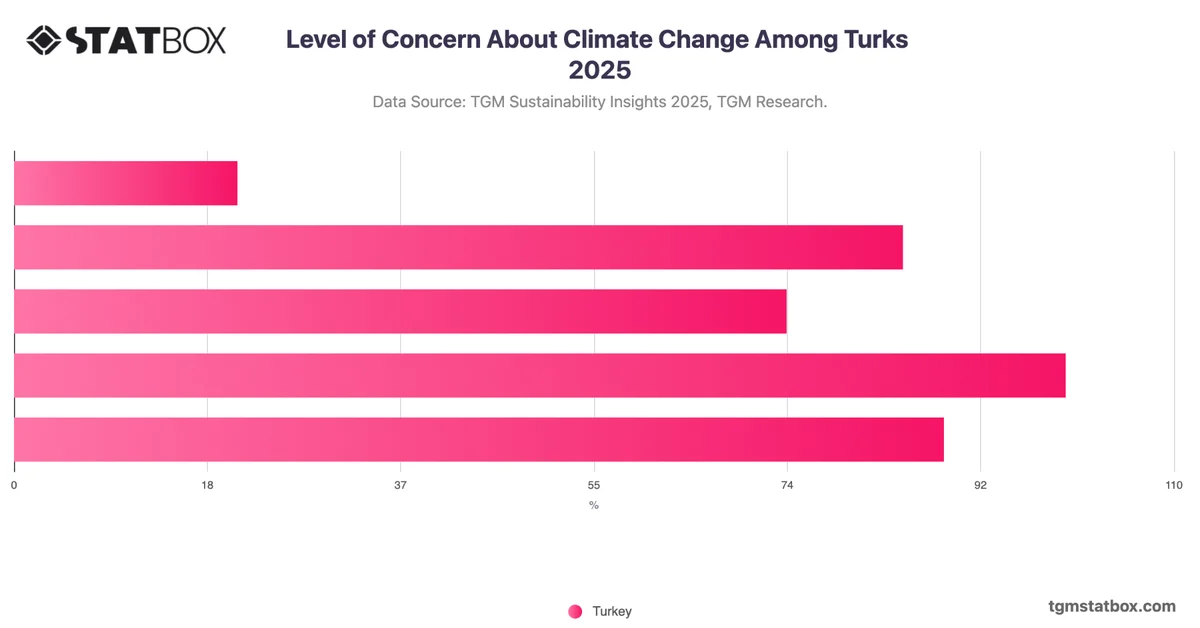
Over 50% of Turks express high concern regarding climate change.
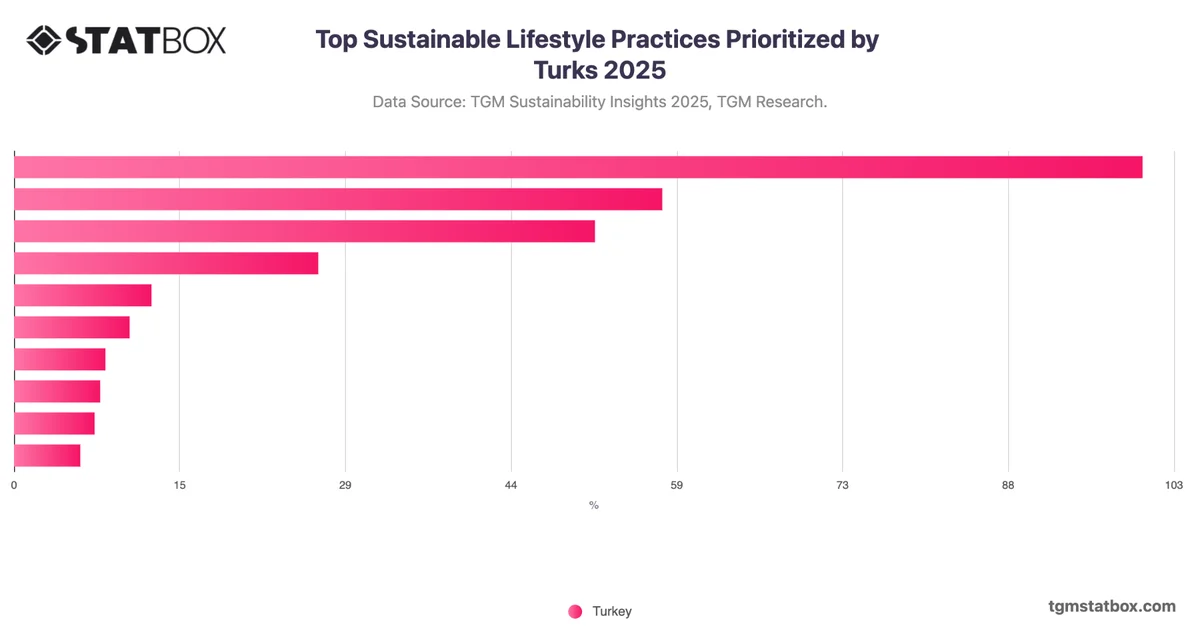
Minimizing water usage is the most prioritized sustainable practice.
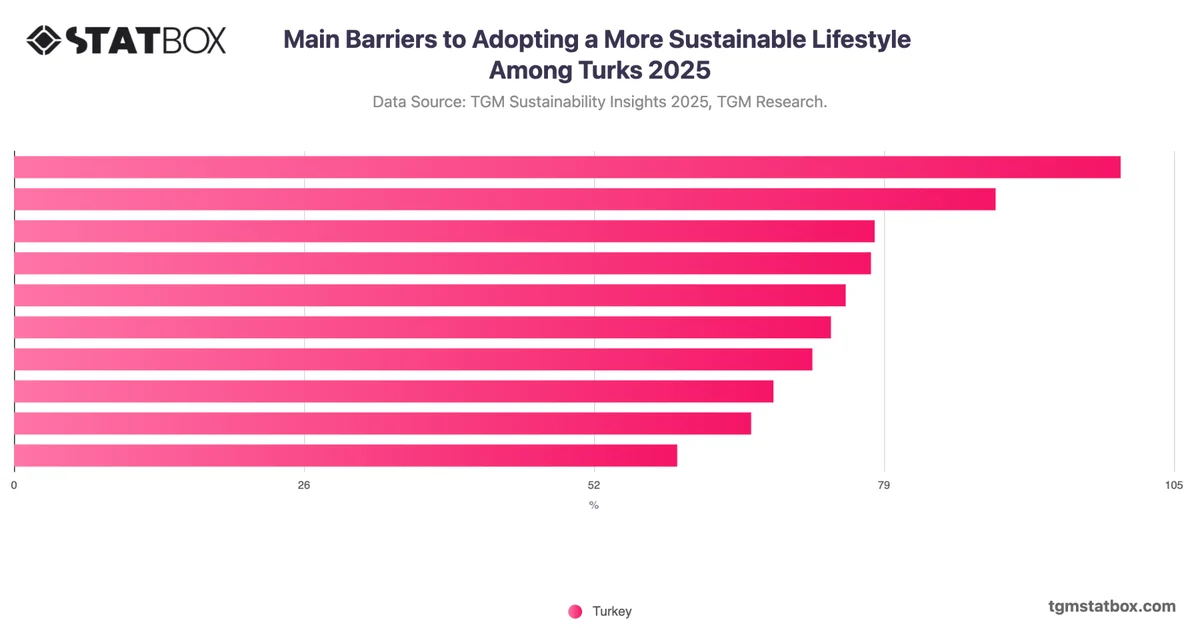
High costs and limited availability are the main barriers to sustainable living.
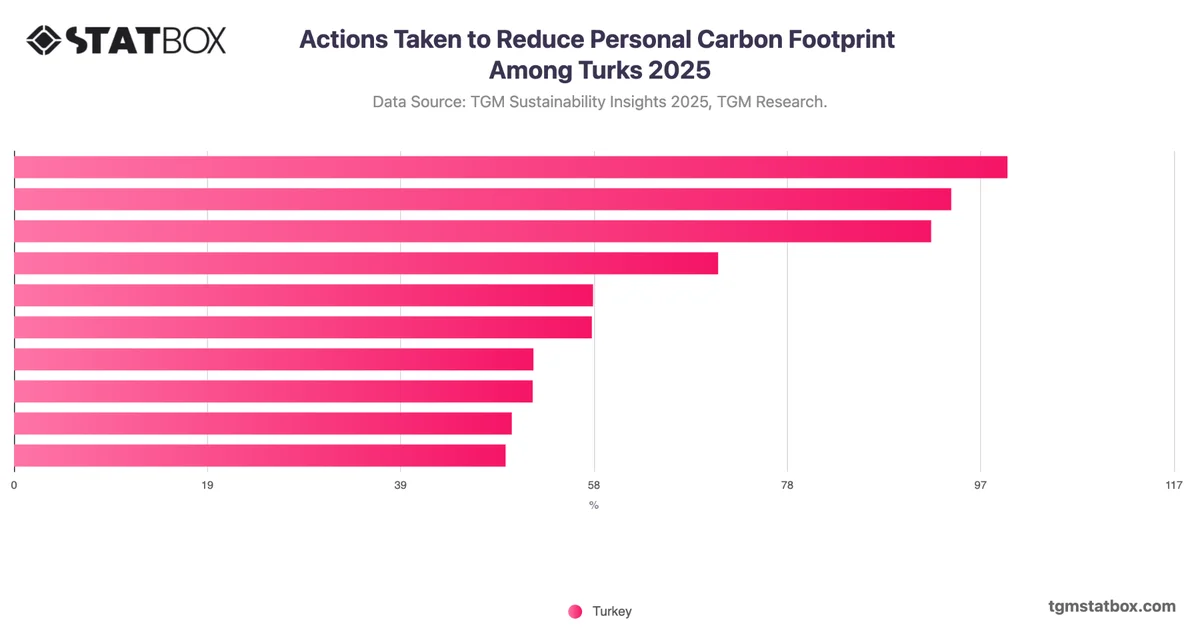
Turks are taking various actions to reduce their carbon footprints.
About this topic

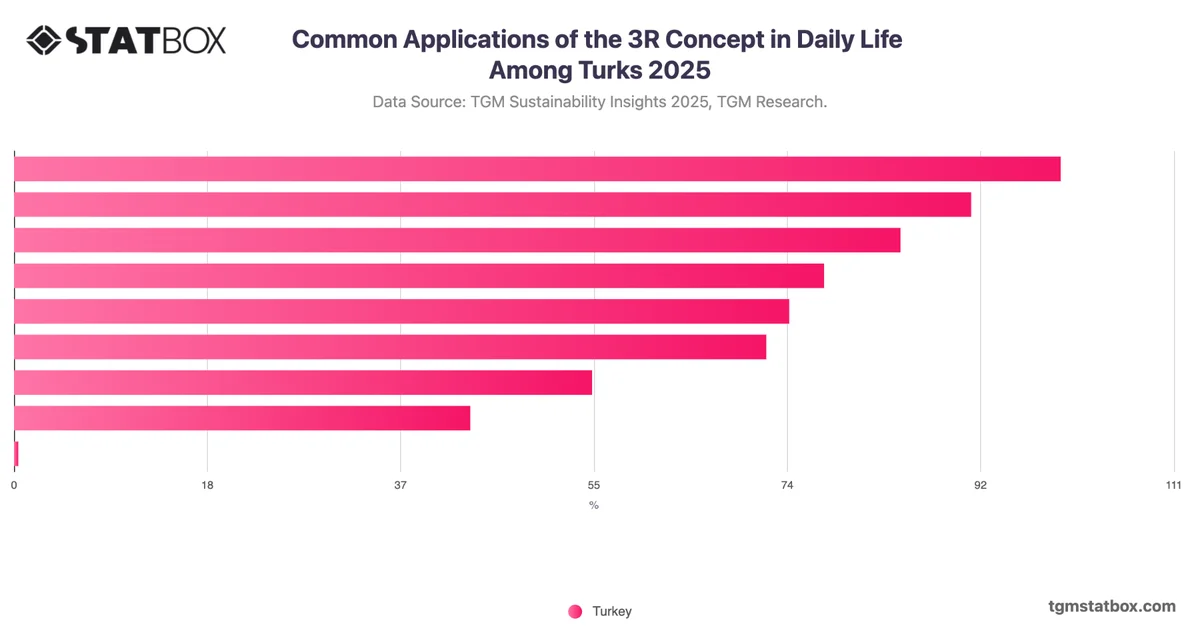
Sustainability in Turkey is not just talk; many people already practice it in their daily life. More than half use energy-efficient appliances, nearly half rely on public transport, biking, or walking, and almost the same share work to save water. Recycling and composting are less common but still practiced by more than a third. Local food and durable goods also play a role. These actions show that Turks engage in practical, visible steps, especially where saving money and convenience overlap with green living.
Attitudes toward climate change in Turkey are more urgent than in many other countries. Over half of people say they are “very” or “extremely concerned.” Only 6% are not concerned at all. Interest follows the same trend: 78% are either “somewhat” or “very interested” in sustainability. This creates a strong base of awareness and willingness to act, one that could support bigger lifestyle shifts if obstacles were reduced.
Yet daily reality makes deeper change difficult. The top barrier is cost: 38% say sustainable products are too expensive. Many also mention a lack of available options, limited recycling facilities, and weak public transport. Information gaps are also significant: nearly a third say they do not know enough about how to live sustainably. On top of that, cultural and behavioral factors, like hard-to-break habits, low family or community support, and resistance to changing diets, add weight.
To unlock faster change, the path forward is clear:
- Make green options affordable by reducing price gaps.
- Expand infrastructure, especially recycling and transport.
- Invest in education and campaigns that connect personal action with national climate goals.
- Work with communities and families to normalize new habits, especially around food and consumption.
If these changes happen, Turkey’s high concern and willingness could quickly translate into deeper, long-term sustainability practices.
*Disclaimer: The information provided by TGM StatBox is intended for general informational purposes only. TGM StatBox does not assume liability for the completeness or accuracy of the information provided. Due to frequent updates, statistics may be more current than mentioned in the text. Please independently verify the information and consult experts as needed.

Reports hub

Charts library

Topics library

Consumer insights, data stories and product updates as we publish them. No other mail, and one click to leave.
Roughly two emails a month.
Our team can run the study behind the story — in 60+ countries, on your question, with the data belonging to you.
Type at least two characters to search.