Topic
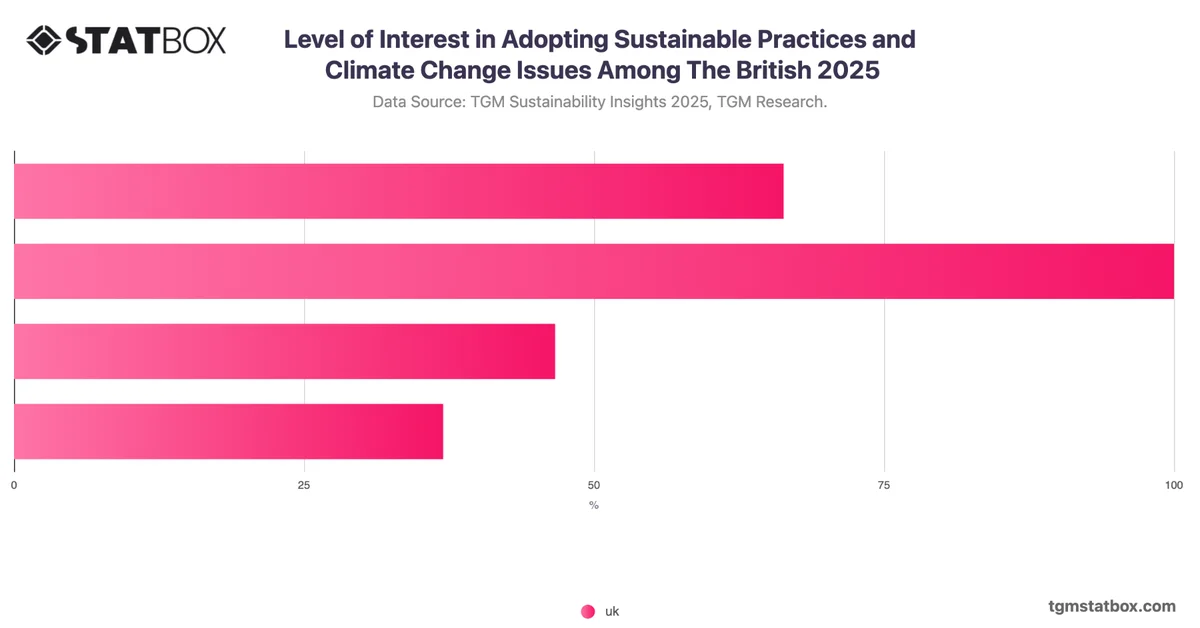
26.54% of Brits are very interested in adopting sustainable practices.
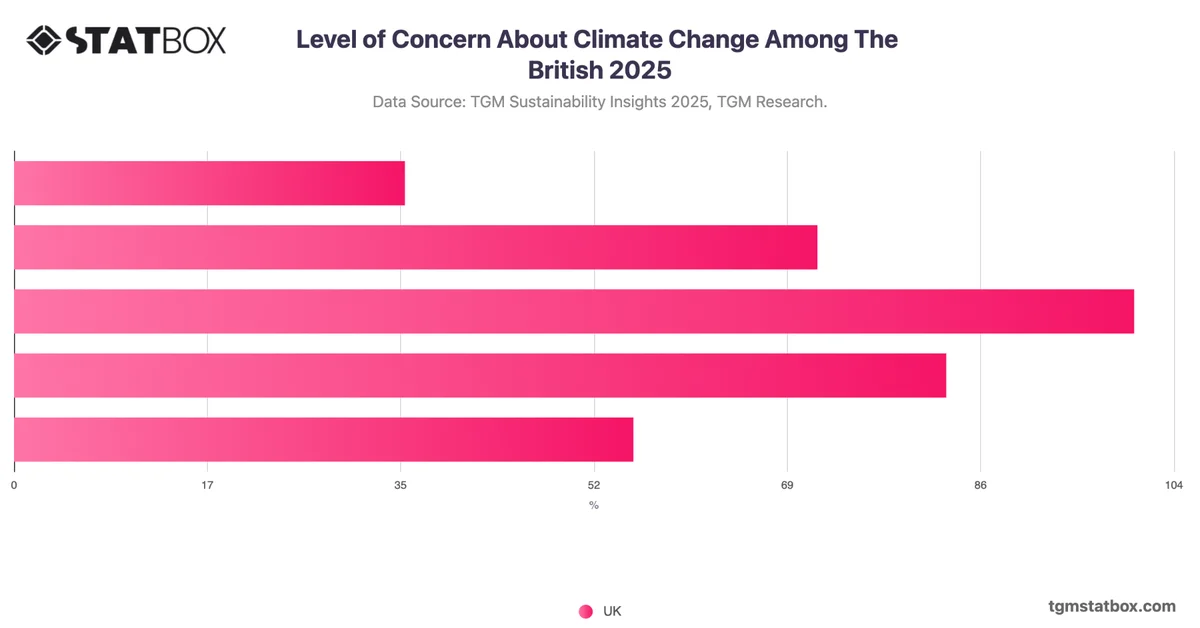
53% of Brits are very or extremely concerned about climate change.
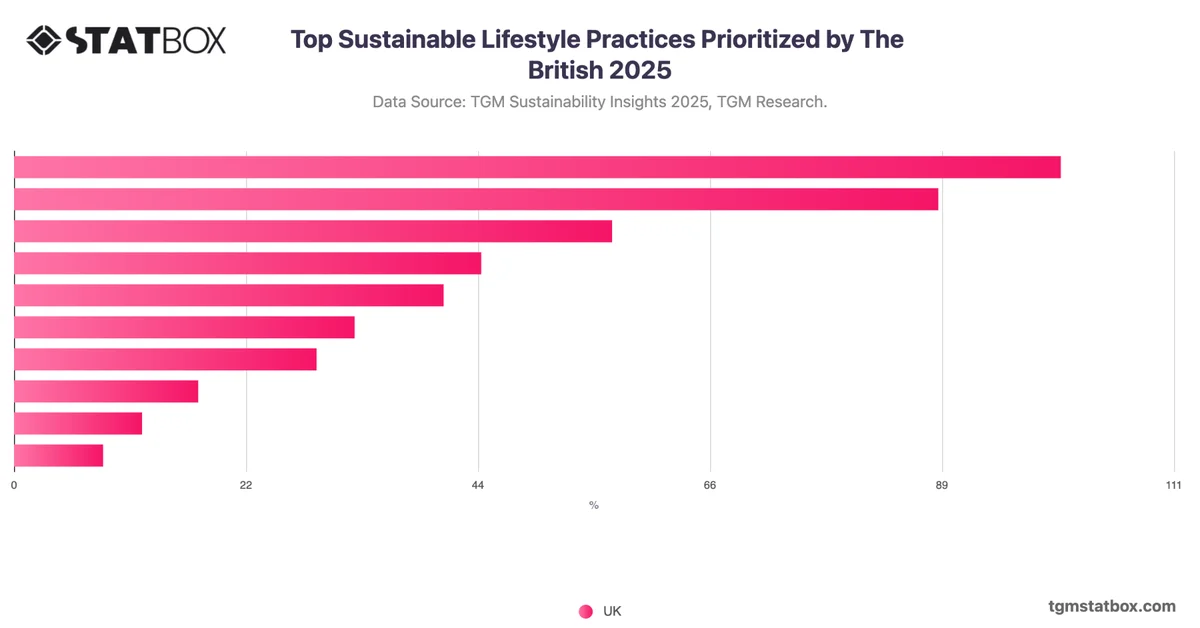
Recycling and composting are top sustainable practices in the UK.
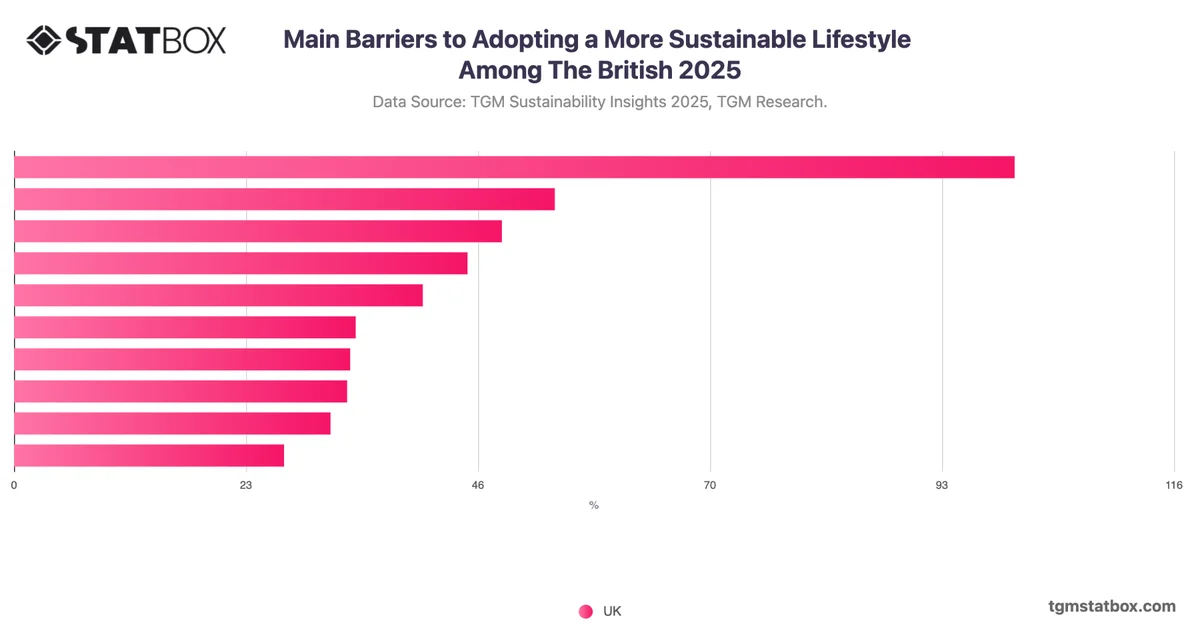
High costs are the main barrier to adopting more sustainable lifestyles.
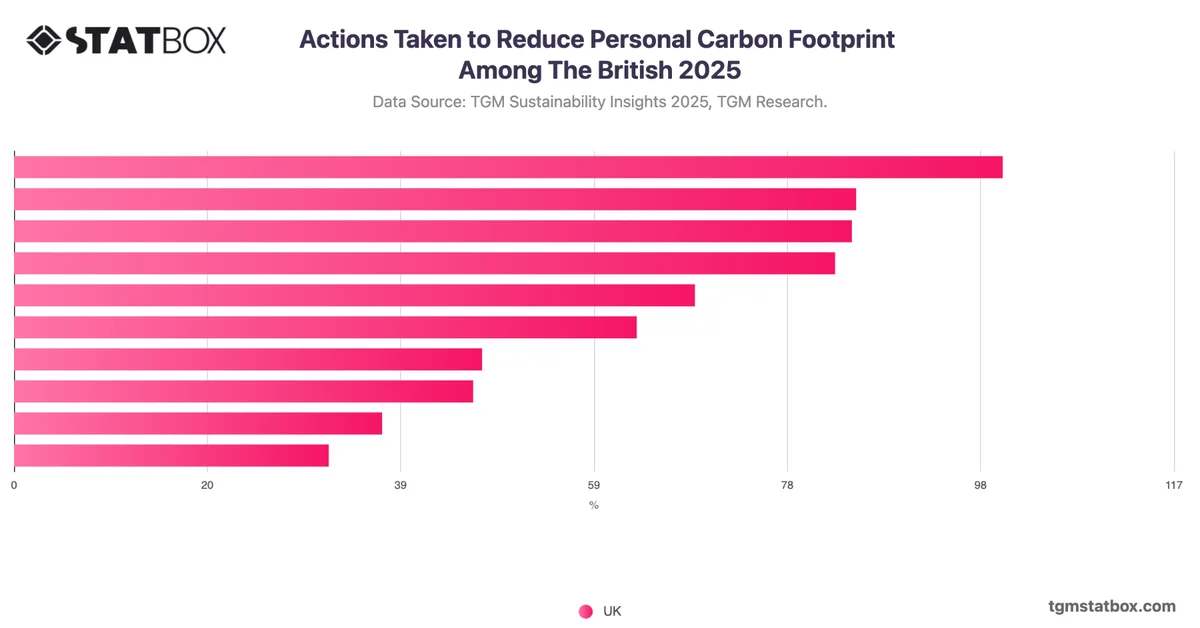
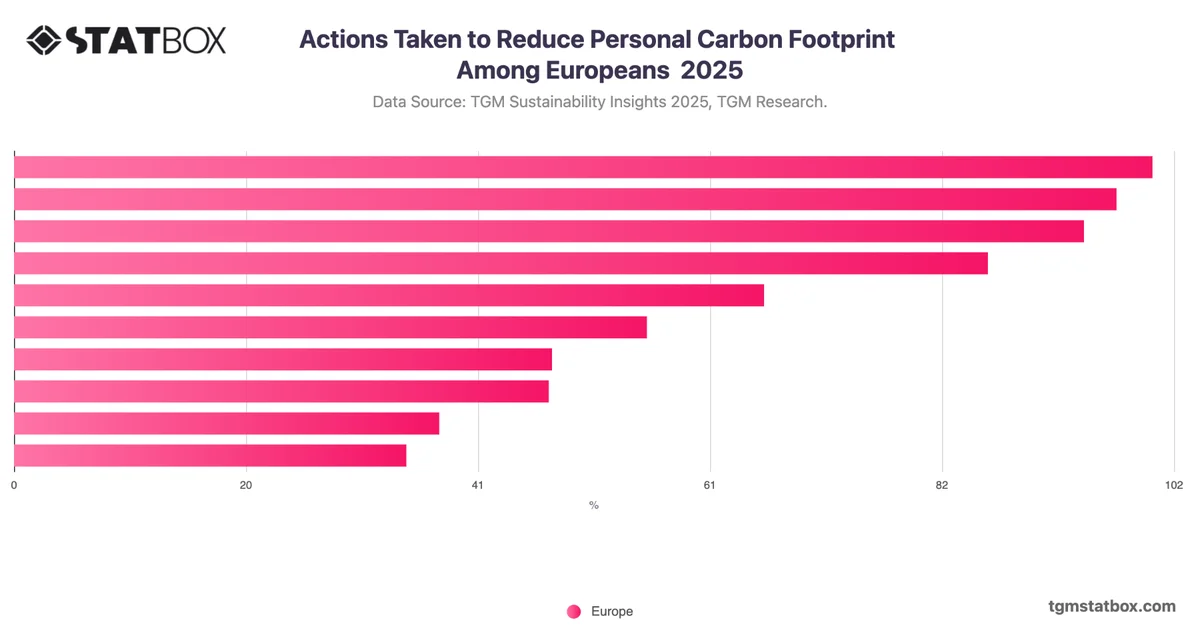
Over half of the population actively recycles to reduce their carbon footprint.
About this topic

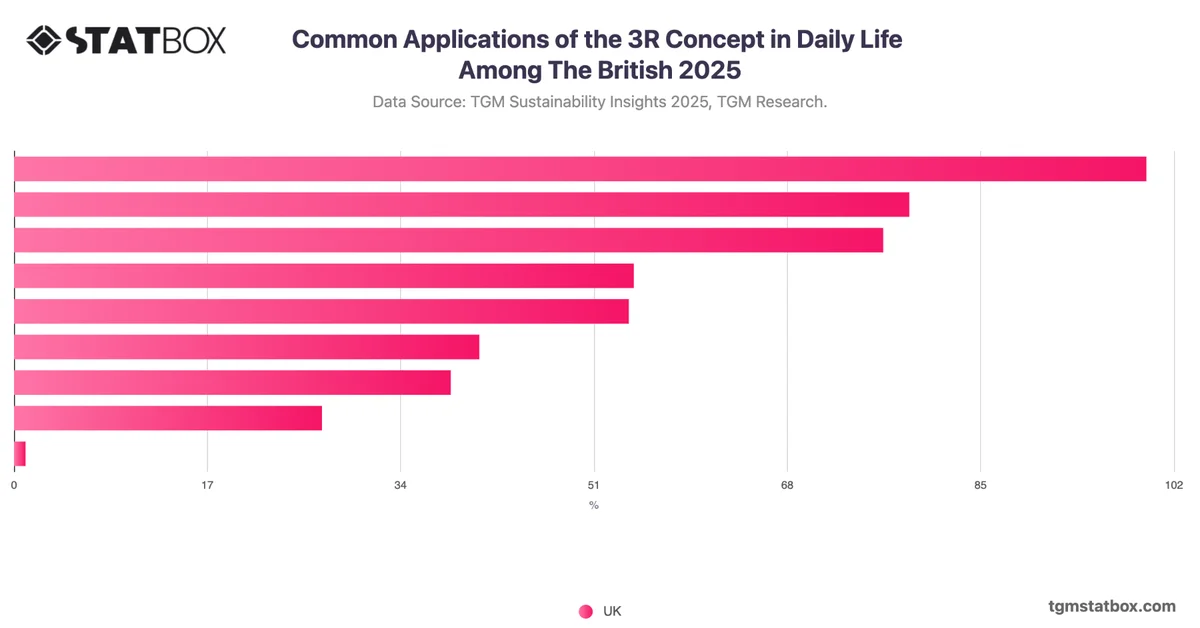
In the UK, sustainability often shows up in everyday household habits. Over half of people recycle and compost, and many also cut water use, adopt energy-efficient appliances, or use public transport. Actions like buying fewer durable goods or adjusting heating and cooling are also common. These choices reveal that Britons approach sustainability mainly through practical, home-based behaviors rather than major lifestyle shifts like plant-based diets or investing in renewable energy.
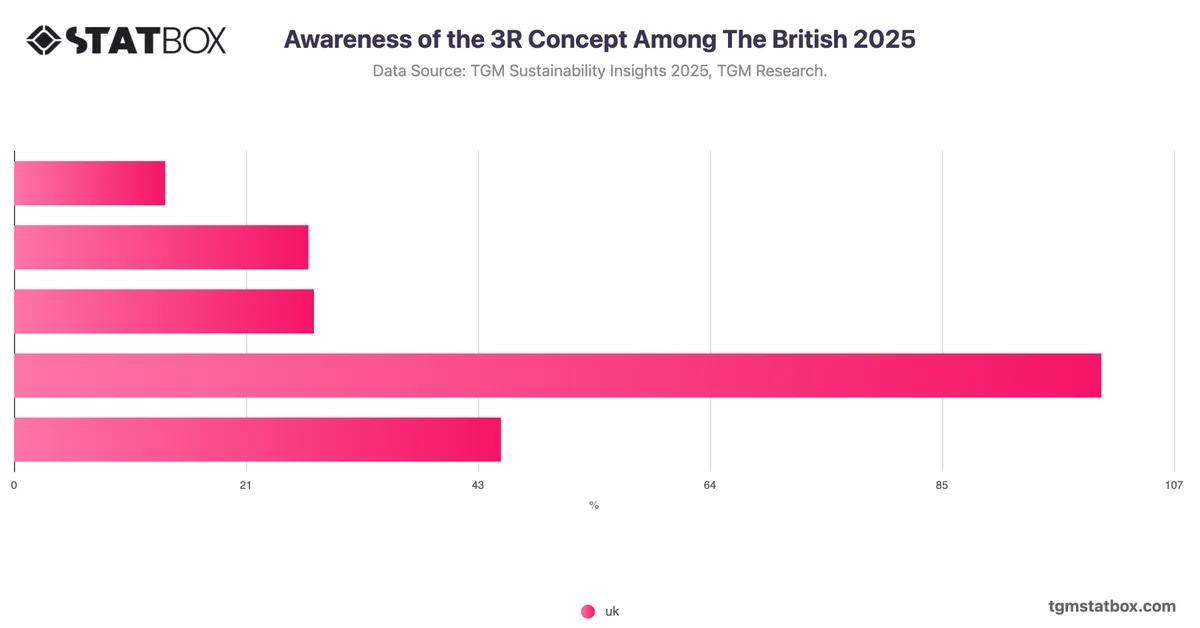
Two-thirds of Britons say they care about sustainability, but only 16% feel “extremely concerned.” This explains why easy habits (like recycling) are widely adopted, while disruptive changes remain rare. The UK public currently has breadth of concern but not depth of urgency. To create urgency, sustainability narratives must shift from abstract global risks to personal, immediate relevance (e.g., cost-of-living savings from green homes, health gains from low-carbon diets, local resilience to floods/heatwaves). Without a stronger emotional or financial trigger, deeper action will not scale.
The cost-of-living crisis dominates decision-making. With 43% citing price as the main barrier, sustainability often loses out to affordability. Even motivated households revert to cheaper, less sustainable options when budgets tighten. Convenience gaps, like uneven recycling services and patchy public transport, reinforce this.
The UK’s sustainability transition will accelerate if green = cheaper and easier. That means subsidies or tax incentives for low-carbon goods, expanding nationwide recycling standards, and investing in accessible public transport beyond London. Businesses that can position sustainable products as value-for-money will gain adoption fastest.
*Disclaimer: The information provided by TGM StatBox is intended for general informational purposes only. TGM StatBox does not assume liability for the completeness or accuracy of the information provided. Due to frequent updates, statistics may be more current than mentioned in the text. Please independently verify the information and consult experts as needed.
Reports hub

Charts library

Topics library

Consumer insights, data stories and product updates as we publish them. No other mail, and one click to leave.
Roughly two emails a month.
Our team can run the study behind the story — in 60+ countries, on your question, with the data belonging to you.
Type at least two characters to search.