Statistics library
Explore a wide range of consumer insights and statistics across industries. Discover charts on behaviors, preferences, attitudes, and market trends to find the data most relevant to your research and decision-making.
 Pro
Pro
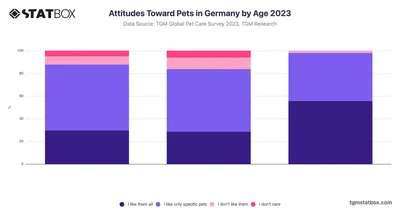
The survey shows a notable preference for liking all pets among older adults aged 35-44, with 55% expressing this attitude. Contrarily, younger age groups exhibit lower percentages.
 Pro
Pro
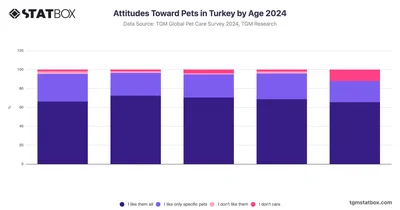
Turkish women are slightly more likely than men to like all pets. The 25-34 age group shows the highest overall pet appreciation, while those 55+ have the lowest.
 Pro
Pro
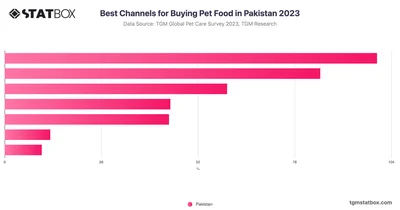
38.52% of respondents make pet food on their own, highlighting a preference for personalized nutrition and possibly cost-saving strategies among pet owners in Pakistan.
 Pro
Pro
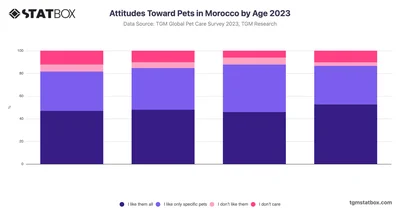
The majority of respondents, particularly males (52%) and those aged 45-54 (51%), expressed a broad appreciation for pets, with many indicating, "I like them all".
 Pro
Pro
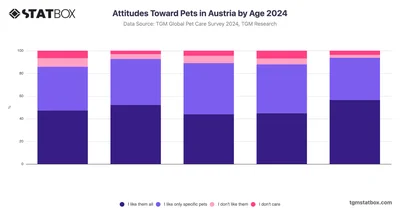
People aged 55+ demonstrate the highest overall fondness for pets at 56.46%, while those aged 35-44 are more likely to be selective about which pets they like (45.19%).
 Pro
Pro
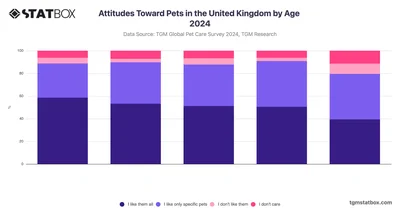
British younger adults showed the highest overall enthusiasm, with 58.6% indicating they like all pets, while this rate declines in older age groups.
 Pro
Pro
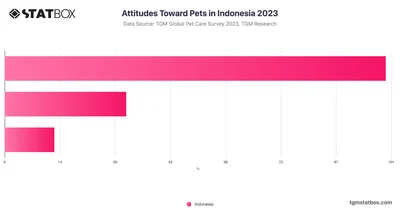
Most Indonesians express a preference for specific pets, with 69% of respondents indicating they like only certain types of animals.
 Pro
Pro
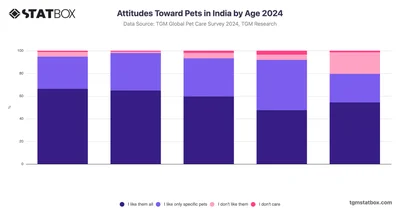
The majority of Indian respondents, particularly those aged 18 to 24, express a positive sentiment towards pets, with 66.41% stating, "I like them all".
 Pro
Pro
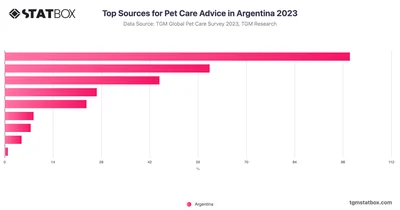
71% Argentina's pet owners primarily rely on veterinarians for guidance. Internet searches are another significant source. Advice from other pet owners is valuable for 19%.
 Pro
Pro
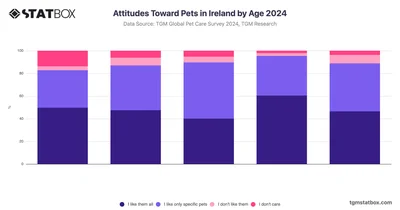
The 45-54 age group of Irish respondents emerged as the most pet-loving demographic, with 60.51% expressing fondness for all types of pets.
 Pro
Pro
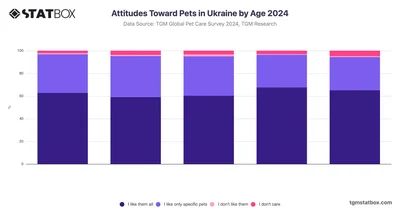
There is a clear gender difference in pet appreciation, with approximately 68% of Ukrainian females expressing fondness for all pets compared to 57% of males.
 Pro
Pro
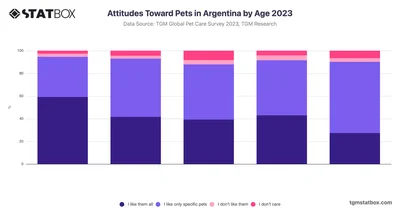
Among Argentinians aged 18-24, 59.13% prefer all types of pets, showcasing a broad acceptance of various species in this younger demographic.
 Pro
Pro
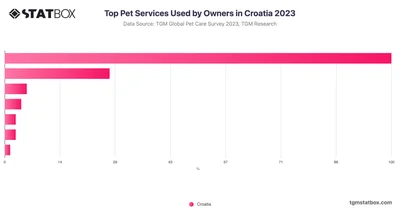
Croatian pet owners prioritize veterinarian services, with 70% using them. This trend aligns with global norms, where veterinary care is a crucial aspect of pet ownership
 Pro
Pro
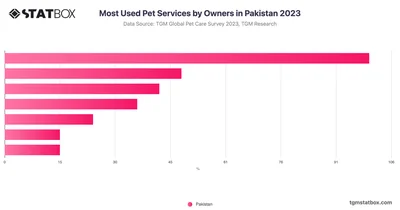
Grooming services and pet dietitians follow closely, with 16% and 14% of respondents using these services, respectively. Pet training and pet sitters are less commonly used.
 Pro
Pro
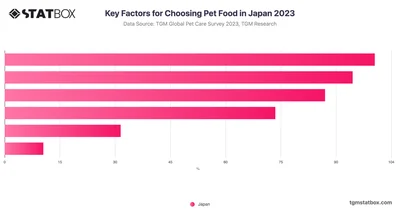
For Japanese pet owners, 67% prioritize quality when buying pet food, while 63% consider price an important factor.
 Pro
Pro
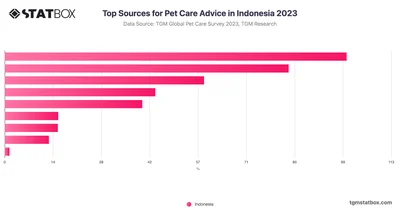
Indonesian pet owners primarily rely on internet searches, with 70.75% utilizing online resources to learn about best care practices for their pets.
 Pro
Pro
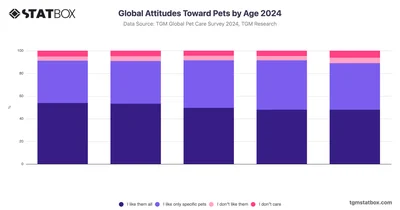
52.12% of females and 49.07% of males expressed a positive sentiment toward pets, with younger adults (18-24 years) showing the highest appreciation at 53.85%.
 Pro
Pro
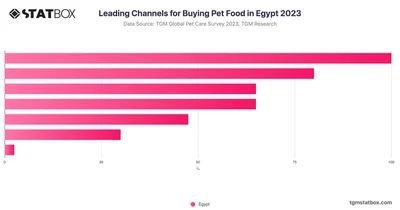
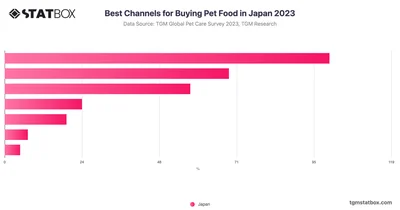
Both convenience stores and homemade pet food are significant sources. The high percentage of homemade pet food is notably above the global average.
 Pro
Pro
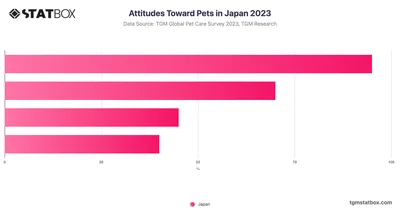
Approximately 28% of participants claim indifference towards pets, suggesting a cultural or personal detachment from pet ownership.
 Pro
Pro
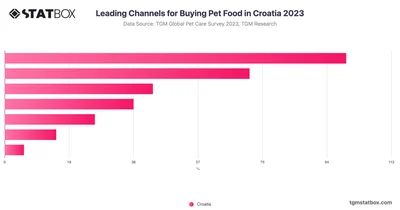
In Croatia, supermarkets dominate as the preferred choice for purchasing pet food, with 53% of respondents opting for this convenient option.
 Pro
Pro
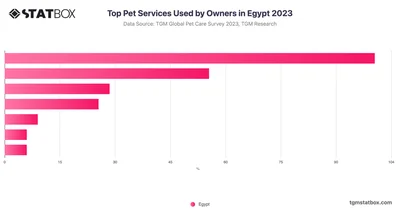
In Egypt, the most commonly used pet service is veterinary care, with 67% of pet owners utilizing this essential health service.
 Pro
Pro
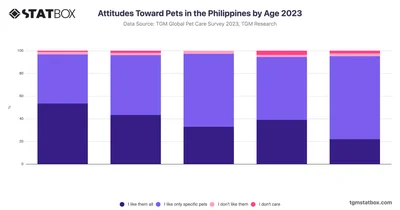
53% of Filipinos aged 18-24 like all pets, while 73% of those aged 55-64 prefer specific pets. Overall, interest in pets is high across all ages.
 Pro
Pro
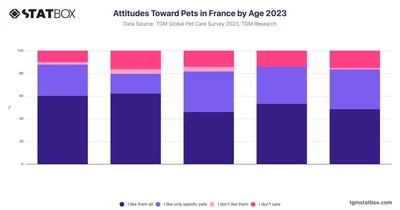
Among 18-24 year olds, 59% express a liking for all types of pets. This preference slightly increases in the 25-34 age group. However, there's a decline in older demographics.
 Pro
Pro
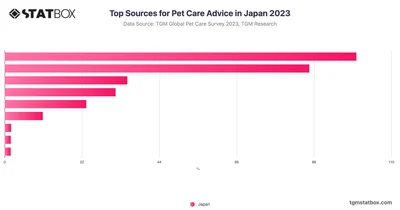
Japanese pet owners overwhelmingly rely on veterinarians, with 45.48% choosing them as their primary source for pet care advice.
 Pro
Pro
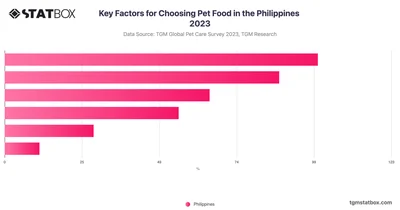
In the Philippines, quality emerges as the paramount factor when selecting pet food, with 81% of respondents prioritizing it. Price is also a crucial consideration at 71%.
 Pro
Pro
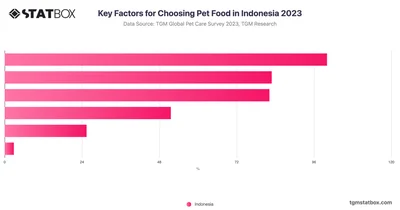
Indonesian pet owners prioritize quality, with 83.37% citing it as the most important factor in purchasing pet food, while 69.07% consider price a significant concern.
 Pro
Pro
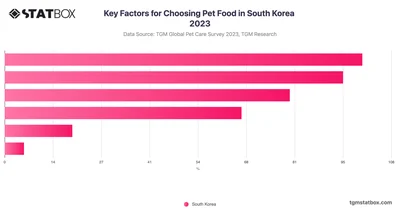
In South Korea, quality is the top priority for 74% of pet owners when selecting pet food, as they focus on ensuring the well-being of their pets.
 Pro
Pro
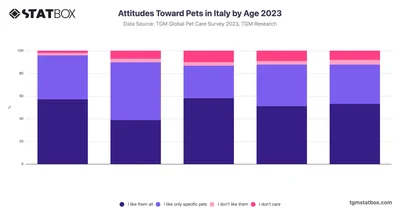
Among young Italians aged 18-24, 56% express a preference for all types of pets. This trend slightly decreases in the 25-34 age group, then rises again among those aged 35-44.
 Pro
Pro
Online platforms are the second most popular choice. The rise in e-commerce reflects the growing preference for a wider range of products available online.
 Pro
Pro
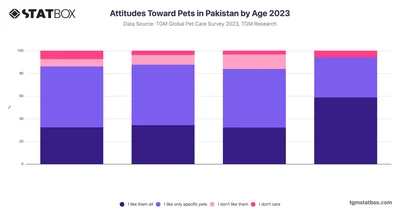
Despite varying age groups, a significant proportion of Indian youth (18-34 years) express a preference for specific pets, with over 53% favoring certain animals.