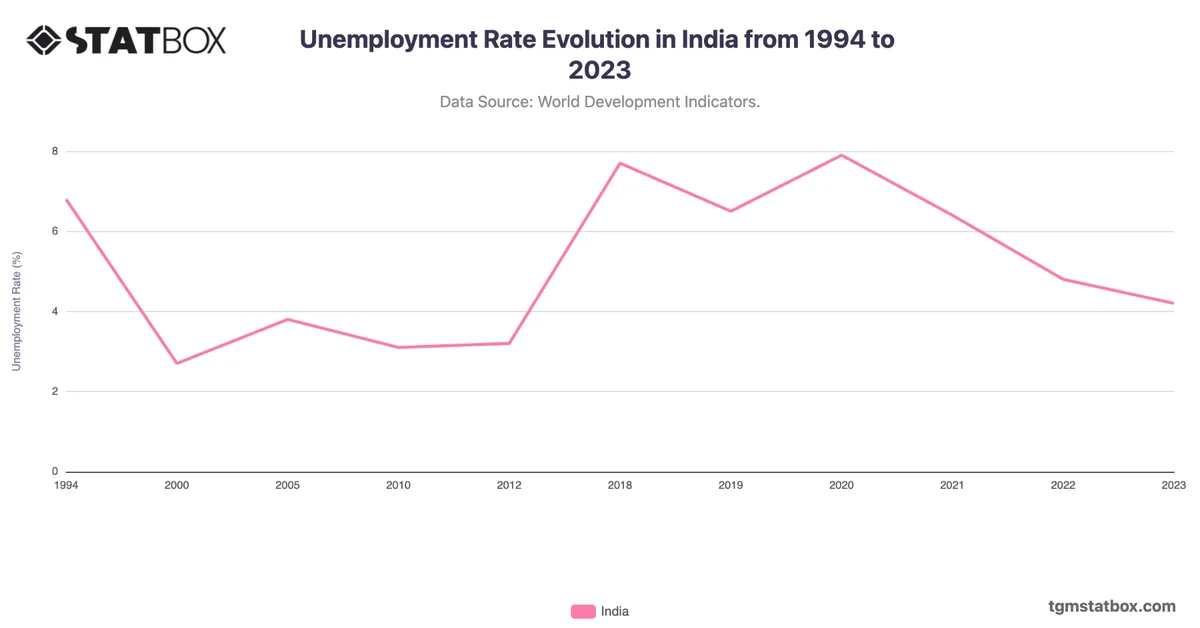
The Philippines’ unemployment rate has generally trended downward, starting from 8.1% in 1990 and peaking at 11.2% in 2000 due to various economic challenges. However, from the early 2000s, unemployment fell steadily, reaching a historic low of 2.2% in 2019, as economic growth strengthened and more job opportunities emerged in various sectors.
The pandemic caused a temporary rise to 3.4% in 2021, but the labor market quickly stabilized, with the rate decreasing to 2.6% by 2022. This stability reflects the resilience of the Philippine economy, supported by strong domestic consumption and a robust service sector.
The pandemic caused a temporary rise to 3.4% in 2021, but the labor market quickly stabilized, with the rate decreasing to 2.6% by 2022. This stability reflects the resilience of the Philippine economy, supported by strong domestic consumption and a robust service sector.
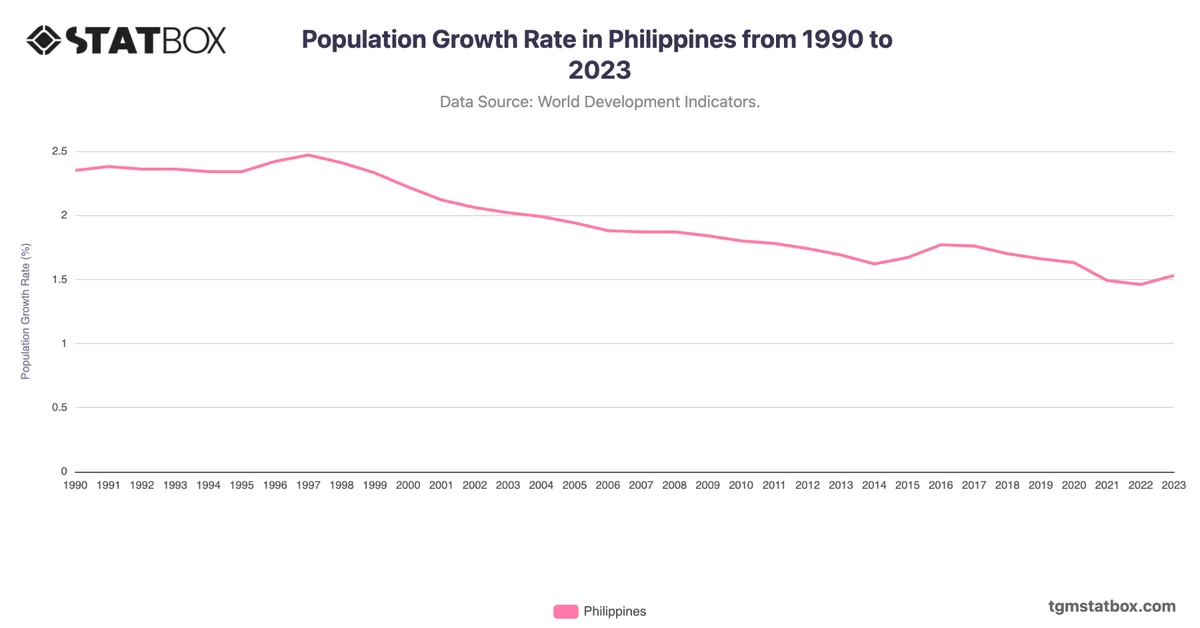
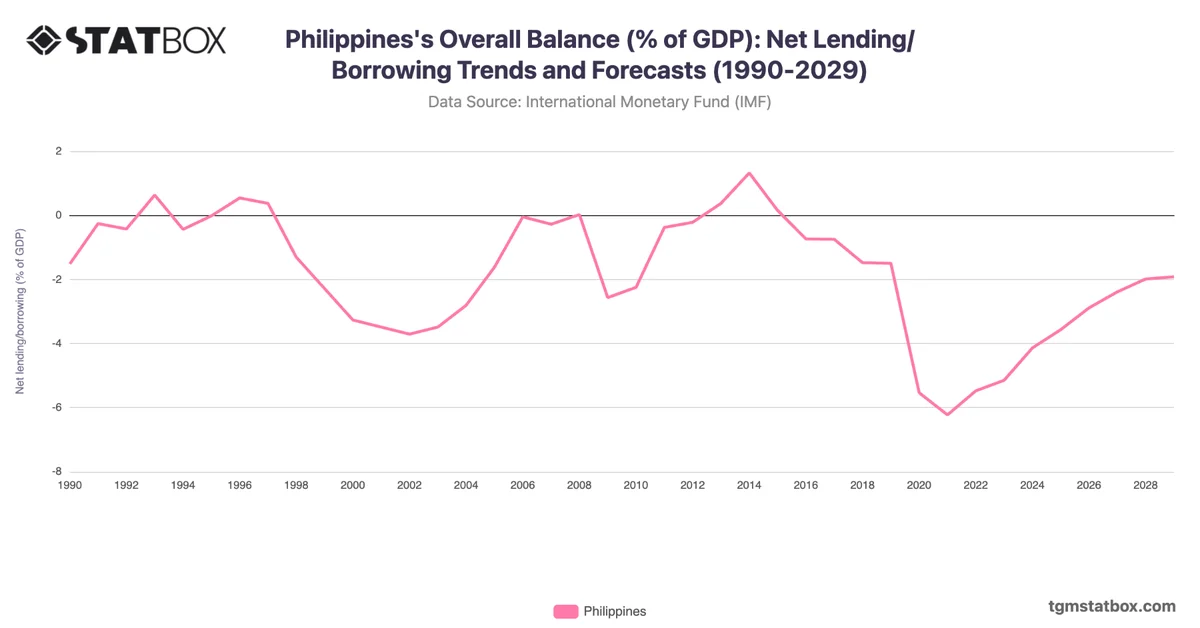
For a broader context, visit other statistics on Philippines’ population growth rate, Philippines GDP data, Philippines’ annual GDP growth rate.