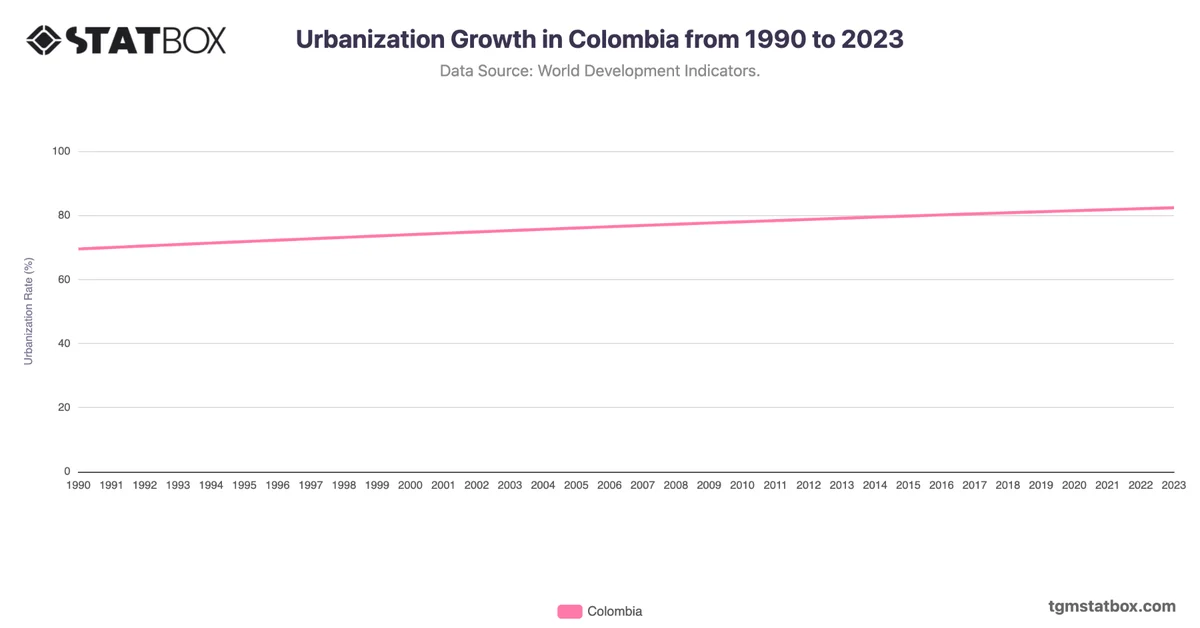
From 1990 to 2022, Colombia experienced a gradual decline in its fertility rate, dropping from 3.1 in 1990 to 1.7 by 2022. The 1990s saw a consistent annual decline of around 0.1, reflecting the broader adoption of family planning programs and improvements in education, particularly among women. Urbanization also played a key role, with more families opting for smaller household sizes due to economic considerations.
From the early 2000s onward, the fertility rate continued to decline at a slightly slower pace, stabilizing around 1.8 by the 2010s. Contributing factors include increased access to healthcare and modern contraception, as well as shifting cultural attitudes toward smaller families. By 2022, the fertility rate reached 1.7, aligning Colombia with global trends in declining birth rates across middle-income countries.
From the early 2000s onward, the fertility rate continued to decline at a slightly slower pace, stabilizing around 1.8 by the 2010s. Contributing factors include increased access to healthcare and modern contraception, as well as shifting cultural attitudes toward smaller families. By 2022, the fertility rate reached 1.7, aligning Colombia with global trends in declining birth rates across middle-income countries.
For a deeper dive into the topic, explore Colombia’s military personnel ratio, Colombia’s agriculture share in GDP, Colombia’s population growth trend.