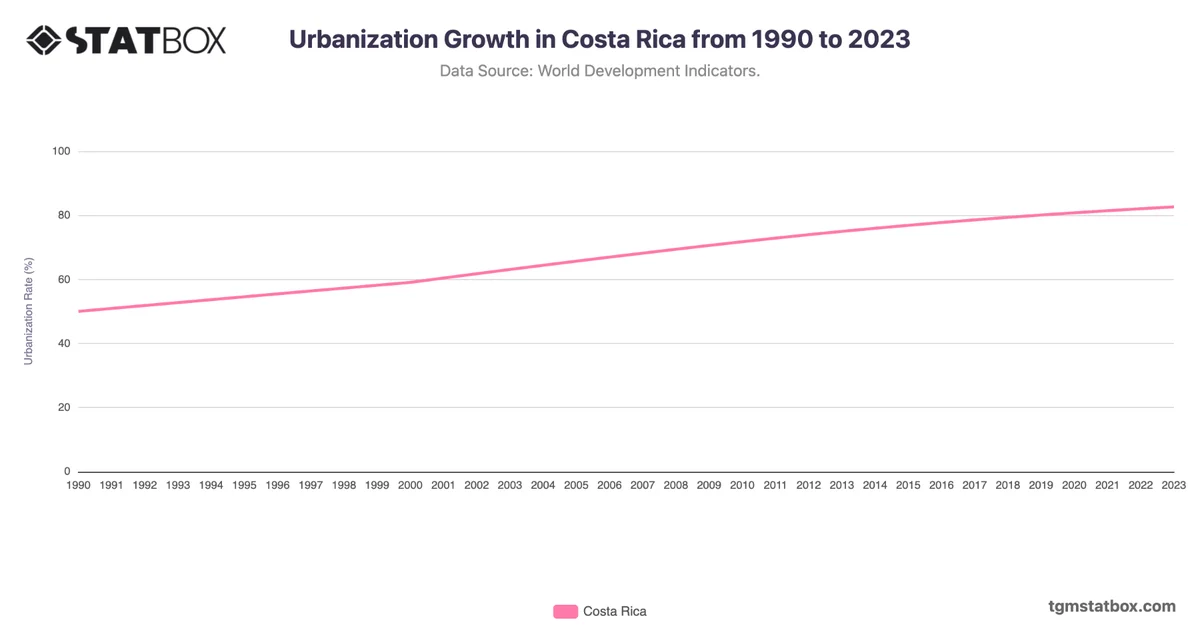
Costa Rica’s military personnel percentage decreased from 0.3% in the late 1980s to zero from 2002 onward, reflecting the country's constitutional decision to abolish its military in 1949. By the early 2000s, Costa Rica fully redirected military resources toward healthcare, education, and infrastructure, fostering a peaceful society where urbanization drove economic growth and social investments rather than defense spending.
This zero percentage reflects Costa Rica’s distinctive model, where urban expansion and social stability are prioritized over military forces. The lack of active military personnel has allowed the government to focus entirely on civilian infrastructure, positioning Costa Rica as a regional example of a non-military, peaceful state.
This zero percentage reflects Costa Rica’s distinctive model, where urban expansion and social stability are prioritized over military forces. The lack of active military personnel has allowed the government to focus entirely on civilian infrastructure, positioning Costa Rica as a regional example of a non-military, peaceful state.
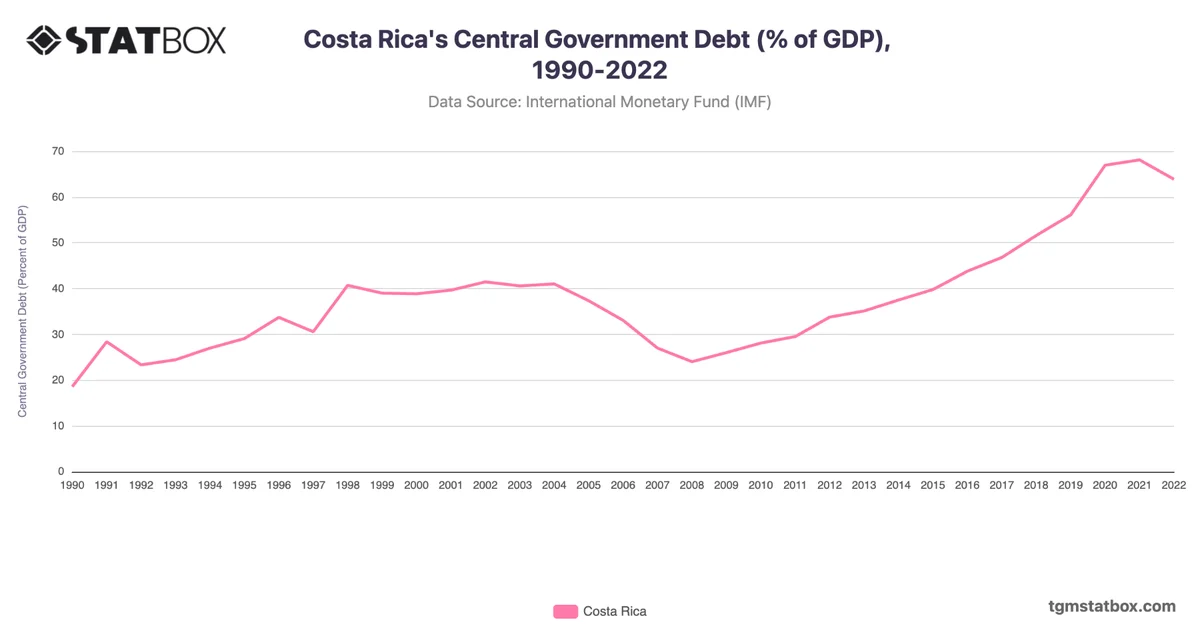
Explore related charts to gain a better understanding of Costa Rica’s median age shift, Costa Rica’s working-age population share, Costa Rica’s government debt ratio.