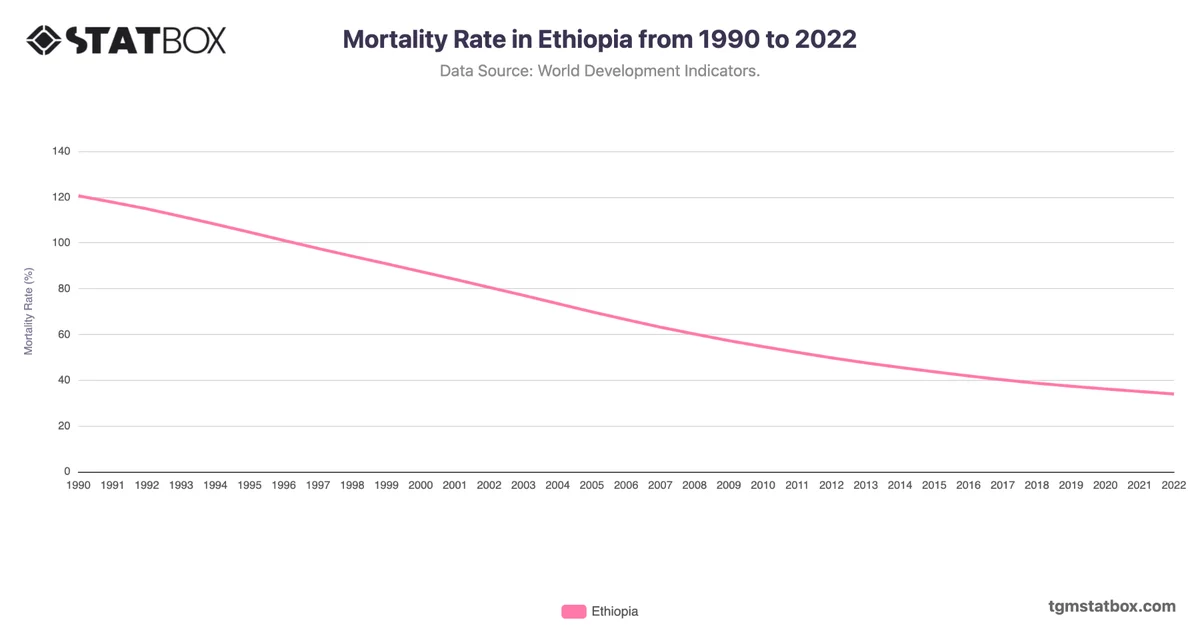
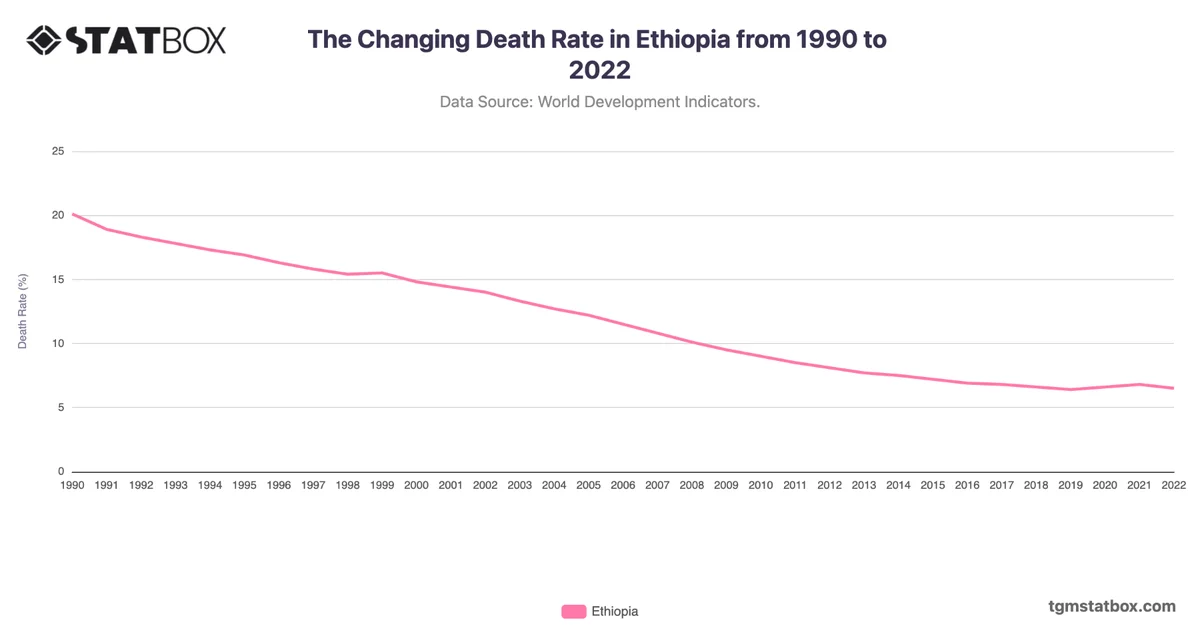
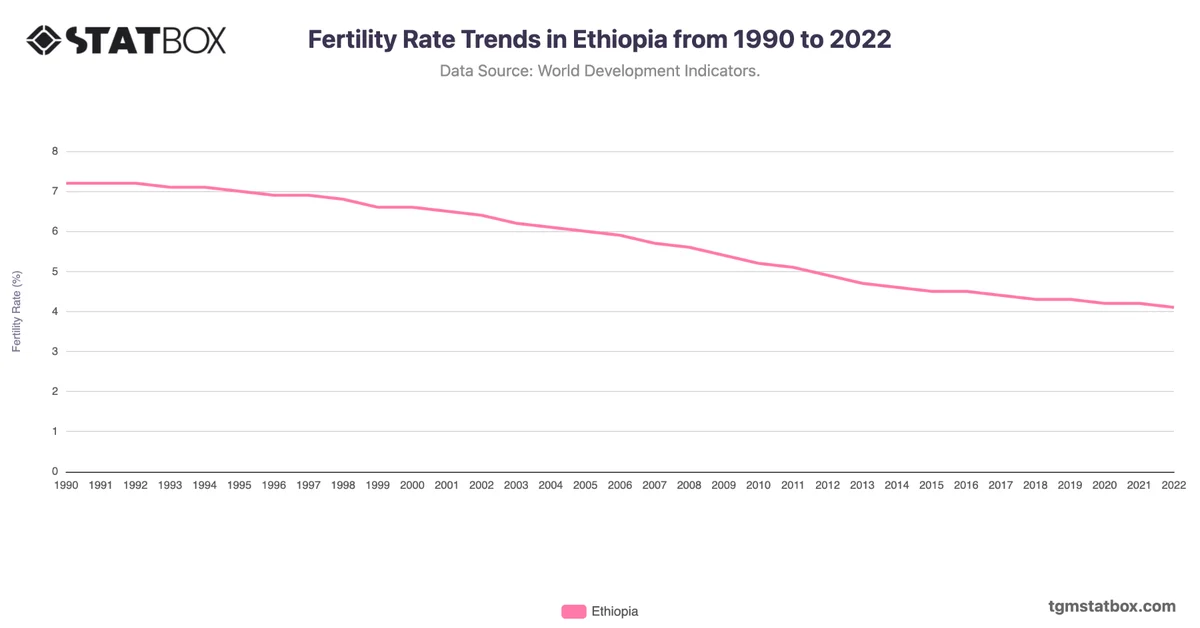
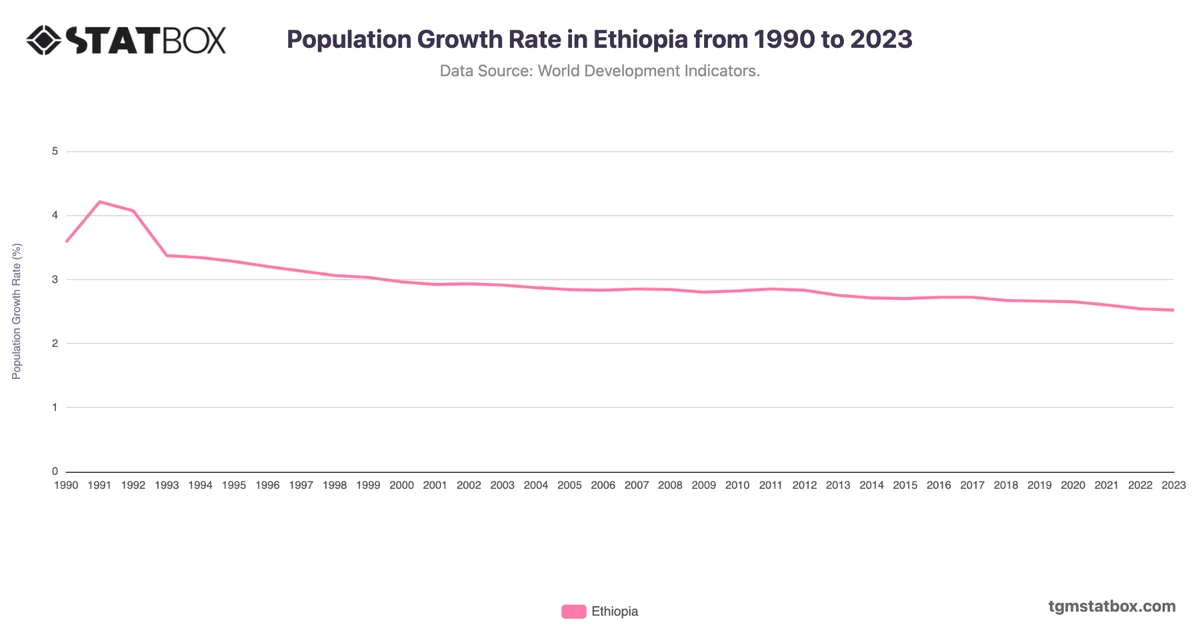
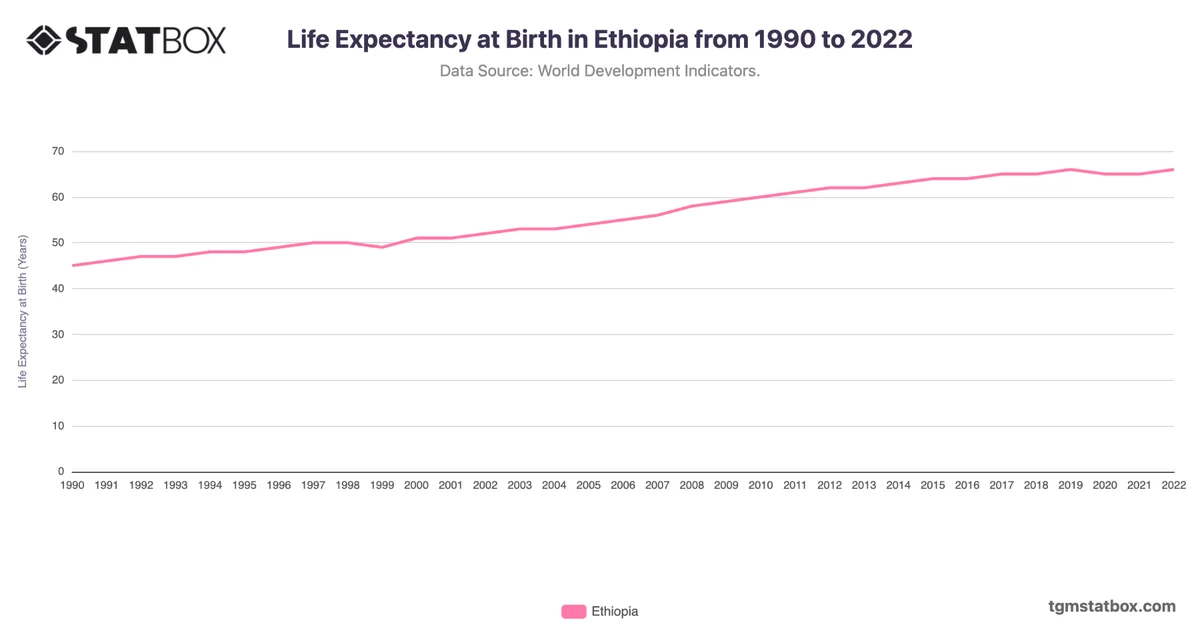
The chart illustrating the changing median age of Ethiopia's population from 2000 to 2030 indicates a steady increase from 15.1 years in 2000 to an anticipated 20.2 years by 2030. This upward trend signifies a gradual shift towards an older population, which reflects improvements in healthcare, reduced mortality rates, and changing fertility patterns.
Despite this increase, Ethiopia's median age remains low compared to global averages, highlighting a predominantly youthful demographic. A youthful population can drive economic growth and innovation if adequately supported by investments in education and skills development. However, this growth potential requires significant attention to infrastructure, healthcare, and employment opportunities. As the median age rises, Ethiopia must also prepare for the implications of an aging population, necessitating a focus on social services and economic diversification to ensure sustainable development in the coming decades.
Despite this increase, Ethiopia's median age remains low compared to global averages, highlighting a predominantly youthful demographic. A youthful population can drive economic growth and innovation if adequately supported by investments in education and skills development. However, this growth potential requires significant attention to infrastructure, healthcare, and employment opportunities. As the median age rises, Ethiopia must also prepare for the implications of an aging population, necessitating a focus on social services and economic diversification to ensure sustainable development in the coming decades.
Discover additional trends and data on Ethiopia’s urban growth, Ethiopia’s working age demographic share, Ethiopia’s population growth rate.