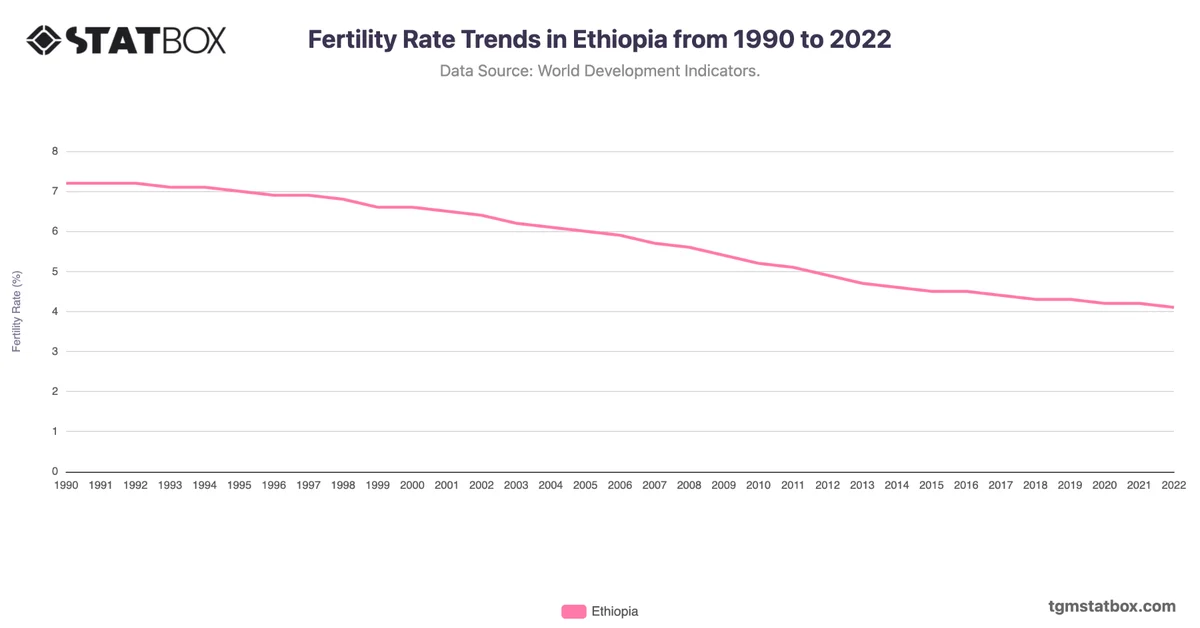
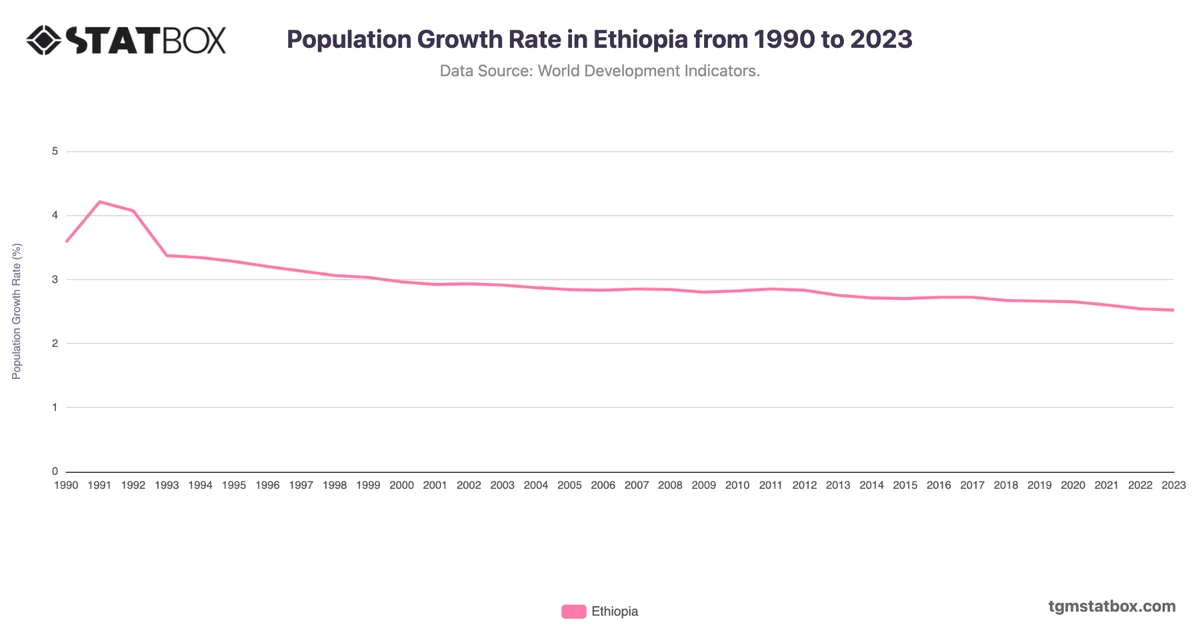
Ethiopia's population expanded significantly between 1990 and 2023, rising from 47.9 million to 126.5 million. This rapid growth is largely attributed to high fertility rates and a young population structure, with a large percentage of people in reproductive age. From the 1990s to the early 2000s, population growth was steady, driven by economic recovery following periods of political instability and famine.
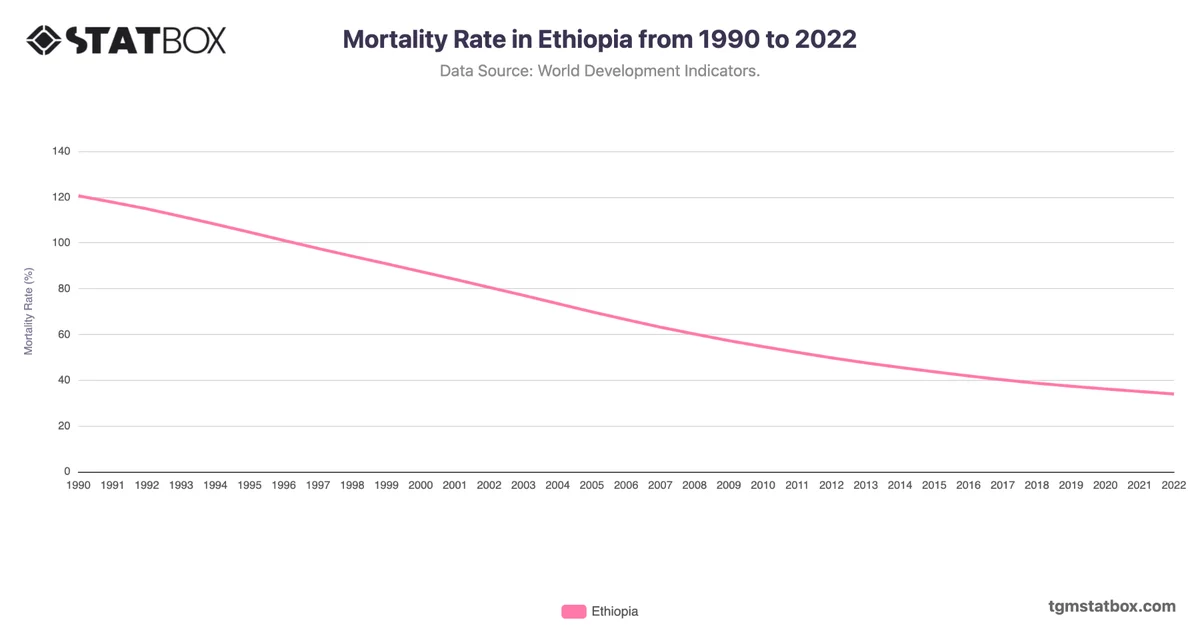
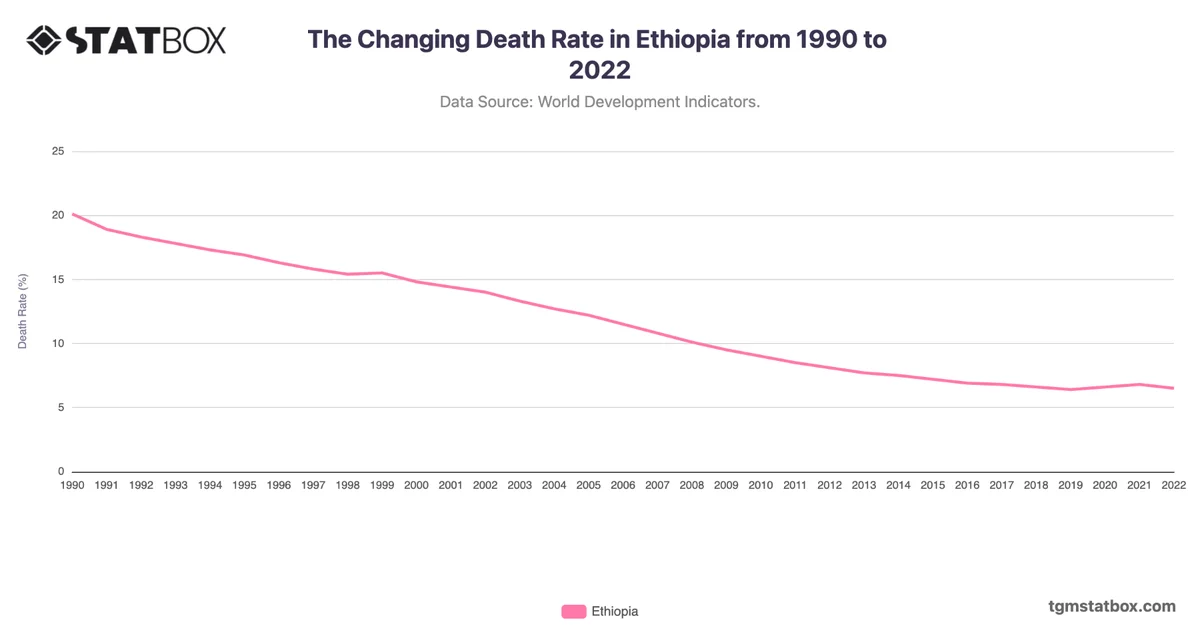
The growth rate accelerated after 2000, as the country experienced improvements in healthcare, reducing mortality rates, especially among children. Economic reforms, agricultural development, and infrastructural projects further spurred rural and urban population increases. Additionally, migration within the country, with people moving from rural areas to expanding cities such as Addis Ababa, played a key role in urban population growth.
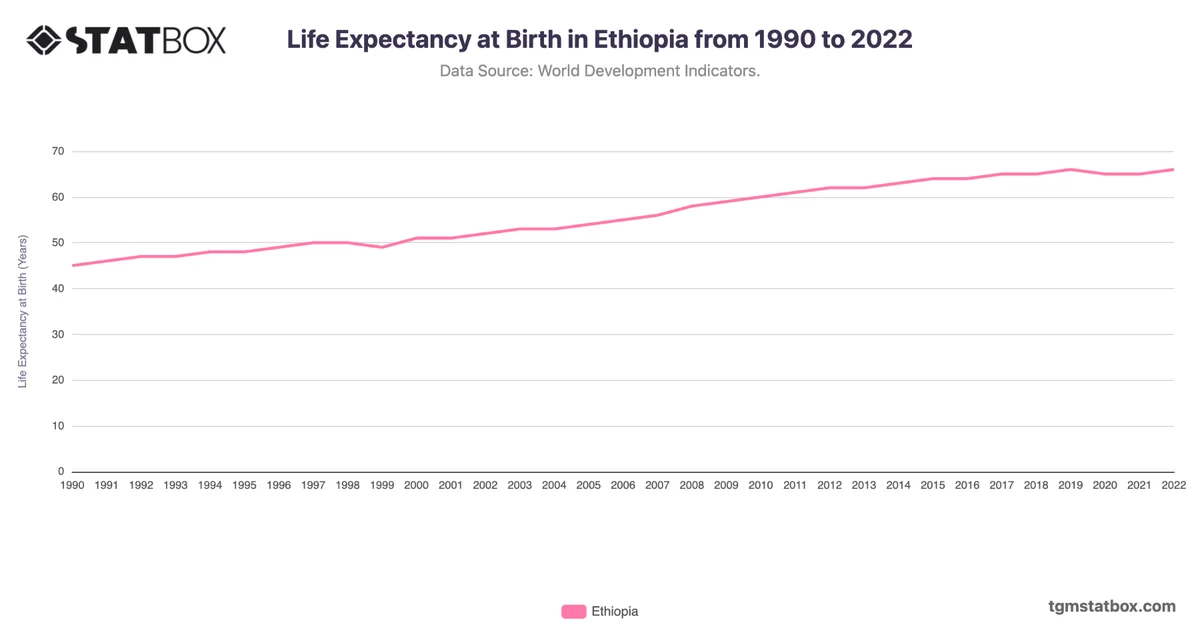
By 2010, Ethiopia's growth rate remained high, reaching over 120 million by 2021, signaling persistent high birth rates, but also greater life expectancy due to enhanced healthcare services. The population trends reflect the pressures of a growing demographic on infrastructure, agriculture, and urban planning, while also emphasizing Ethiopia’s demographic transition in the context of economic and social transformation.
The growth rate accelerated after 2000, as the country experienced improvements in healthcare, reducing mortality rates, especially among children. Economic reforms, agricultural development, and infrastructural projects further spurred rural and urban population increases. Additionally, migration within the country, with people moving from rural areas to expanding cities such as Addis Ababa, played a key role in urban population growth.
By 2010, Ethiopia's growth rate remained high, reaching over 120 million by 2021, signaling persistent high birth rates, but also greater life expectancy due to enhanced healthcare services. The population trends reflect the pressures of a growing demographic on infrastructure, agriculture, and urban planning, while also emphasizing Ethiopia’s demographic transition in the context of economic and social transformation.
Discover additional trends and data on Ethiopia’s shifting population age, Ethiopia’s mortality shift, Ethiopia’s mortality rate.