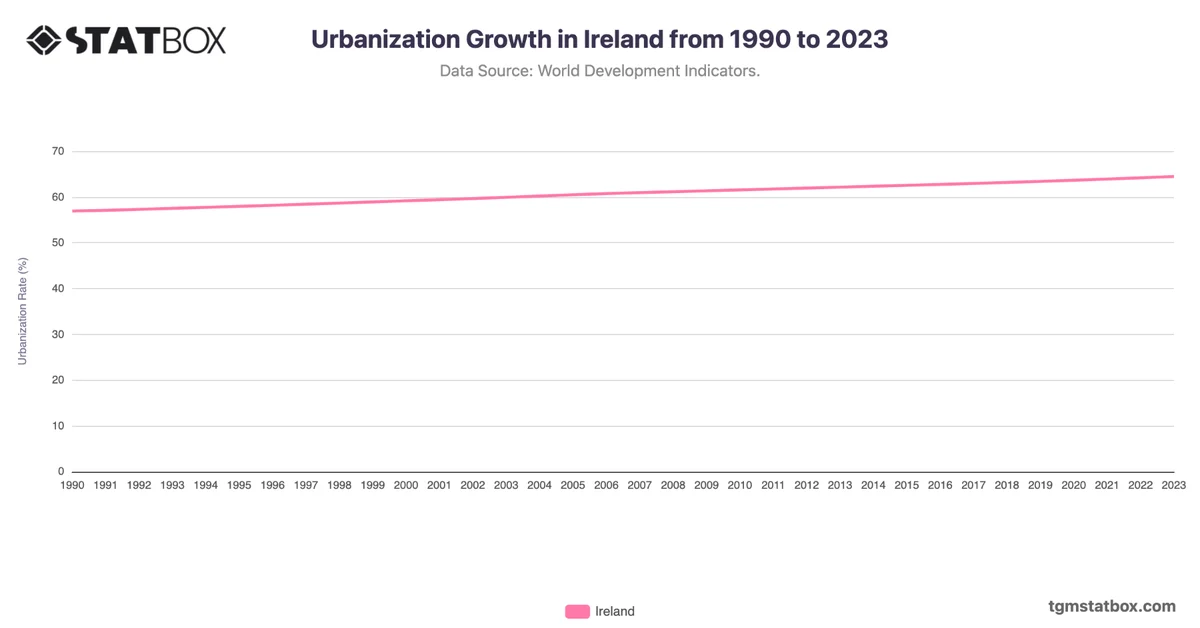
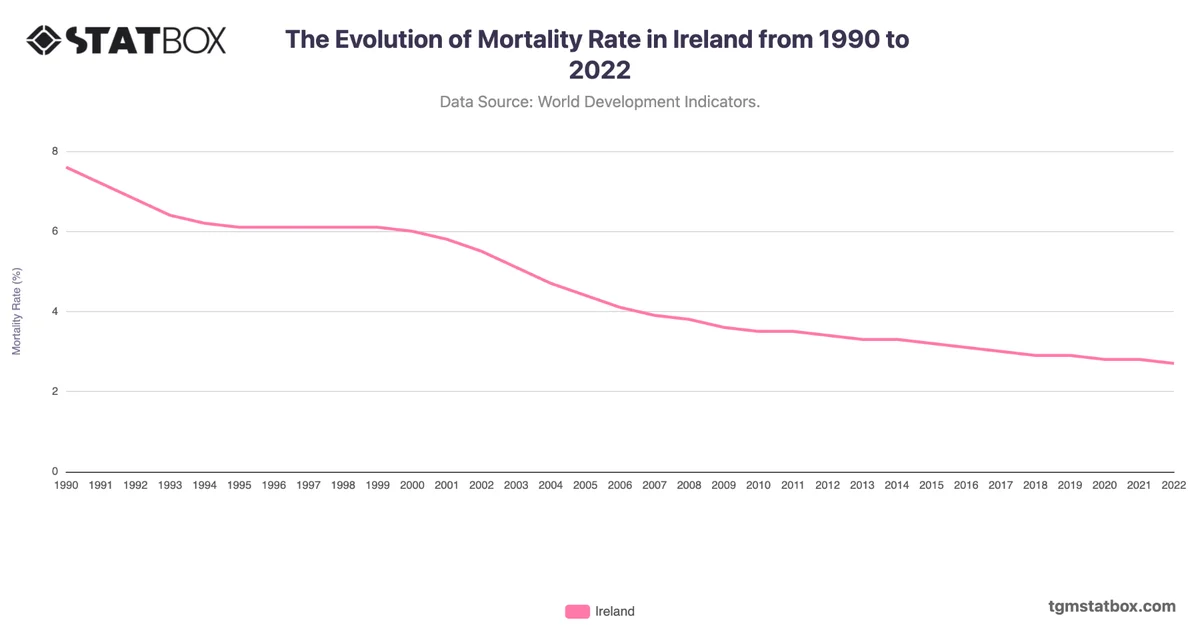
Ireland’s median age has climbed from 31.5 years in 2000 to an anticipated 39.9 years by 2030, reflecting a transition toward an older population. Between 2000 and 2010, the median age rose gradually from 31.5 to 33.3, with factors such as improved healthcare, lower birth rates, and a rise in urban living contributing to this shift. Economic growth and urbanization have enhanced living standards and healthcare access, contributing to longer life expectancy and an evolving demographic profile.
Post-2010, the median age increased more rapidly, reaching 38.4 by 2023. As urban areas continue to grow, the trend of smaller family sizes and extended life expectancy supports further increases in the median age. Ireland’s projected median age of 39.9 by 2030 highlights the societal shifts that come with an aging population, including changing workforce demographics and greater demands on healthcare and social services.
Post-2010, the median age increased more rapidly, reaching 38.4 by 2023. As urban areas continue to grow, the trend of smaller family sizes and extended life expectancy supports further increases in the median age. Ireland’s projected median age of 39.9 by 2030 highlights the societal shifts that come with an aging population, including changing workforce demographics and greater demands on healthcare and social services.
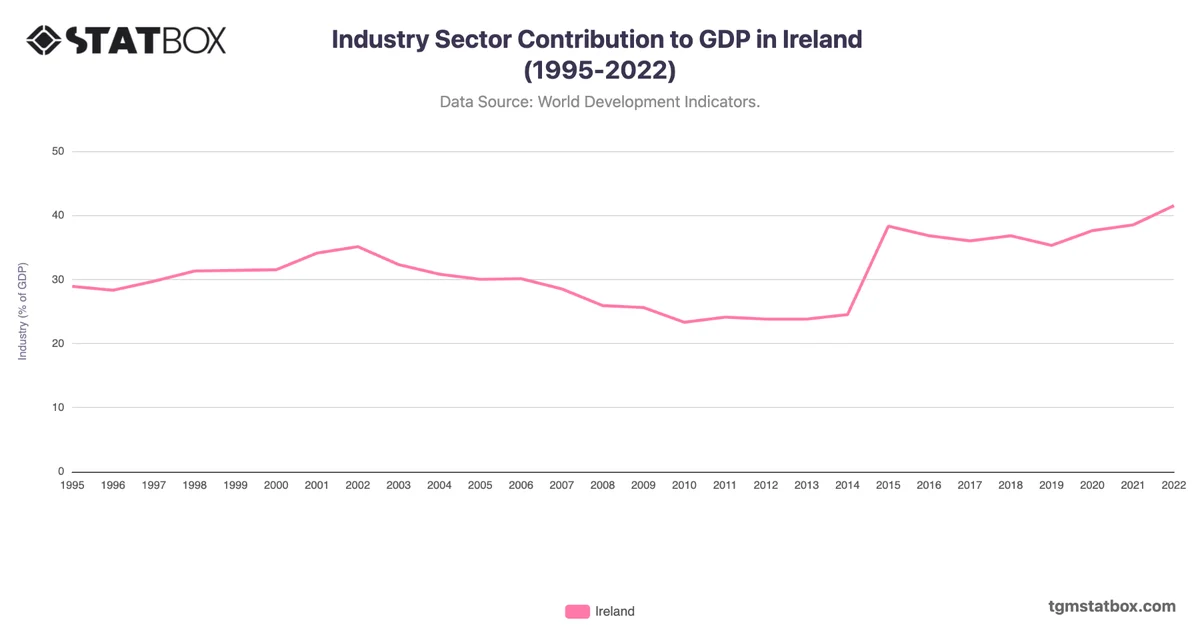
Explore related charts to gain a better understanding of Ireland’s population growth trends, Ireland’s industry sector share in GDP, Ireland’s mortality rate shift.