Chart

Urbanization Growth in Ireland from 1990 to 2023

Urbanization Growth in Ireland from 1990 to 2023

Share the statistic on social media channels or embed the statistic in your website using "Embed Code", where available.

Share chart

Embed chart
Select Citation

Cite this statistic and select one of the following formats: APA, Chicago, Harvard, MLA & Bluebook


  • APA
  • Chicago
  • Harvard
  • MLA
  • Bluebook
  • IEEE
TGM StatBox. (2024). Urbanization Growth in Ireland from 1990 to 2023. TGM StatBox.
Insights

Key Takeaways

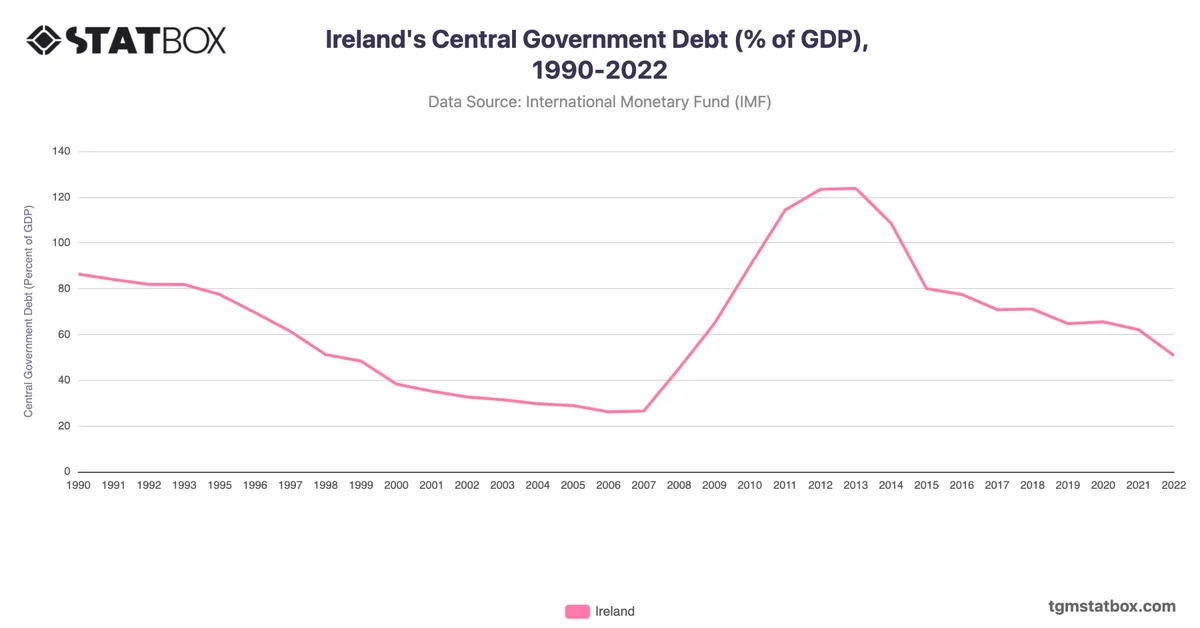
Ireland's urbanization growth from 1990 to 2023 reflects its transition into a modern, service-based economy. In 1990, urbanization was at 56.9%, with gradual increases as economic policies attracted foreign investment and accelerated urban growth. By the mid-2000s, urbanization reached 60.5%, supported by a booming economy and housing developments. Even the economic downturn in 2008 did not significantly impact urbanization, with levels continuing to rise, reaching 61.5% by 2010. The trend continued into the 2010s as urban employment opportunities expanded and Ireland’s cities attracted a skilled workforce. By 2020, urbanization had reached 63.7%, and by 2023, it stood at 64.5%, indicating sustained growth. This rise in urbanization is closely linked to economic reforms, investment in technology sectors, and urban infrastructure improvements, positioning Ireland as a dynamic urbanized economy in Europe.

For a deeper dive into the topic, explore Ireland’s government debt-to-GDP ratio, Ireland’s share of military personnel, Ireland’s manufacturing sector share of GDP.

AI-powered chart insight: This summary is automatically generated to help you understand the chart at a glance. It is intended as an overview; view the full chart and underlying data for complete context.

Charts library

Further Recommended Ireland Statistics

Statbox vector
The briefing
New data, in your inbox

Consumer insights, data stories and product updates as we publish them. No other mail, and one click to leave.

Roughly two emails a month.

Research services
Have a question our newsroom hasn't answered? Ask it directly.

Our team can run the study behind the story — in 60+ countries, on your question, with the data belonging to you.